Gemini 3 Deep Dive: The AI Model That Redefines the $450B Agentic Future

Google's Gemini 3 just broke the LMArena leaderboard with a 1501 Elo score, claiming the global number one position ahead of GPT-5 Pro, Claude Sonnet 4.5, and every other frontier model. This isn't incremental progress. Seven months after Gemini 2.5, Google has delivered a model that demonstrates PhD-level reasoning, generates complete user interfaces from single prompts, and orchestrates autonomous coding workflows across editor, terminal, and browser simultaneously. With the agentic AI market projected to surge from $7 billion in 2025 to $93 billion by 2032, Gemini 3 represents Google's definitive entry into the autonomous agent era, when AI systems transition from answering questions to executing complex, multi-step tasks without constant human supervision.
- Gemini 3 Pro achieves state-of-the-art performance across every major benchmark
- The model introduces generative UI capabilities that dynamically create custom interfaces, interactive simulations, and magazine-style layouts in real-time without explicit design instructions
- Google Antigravity provides an agentic development platform where AI agents autonomously code, test, and debug across multiple tools.
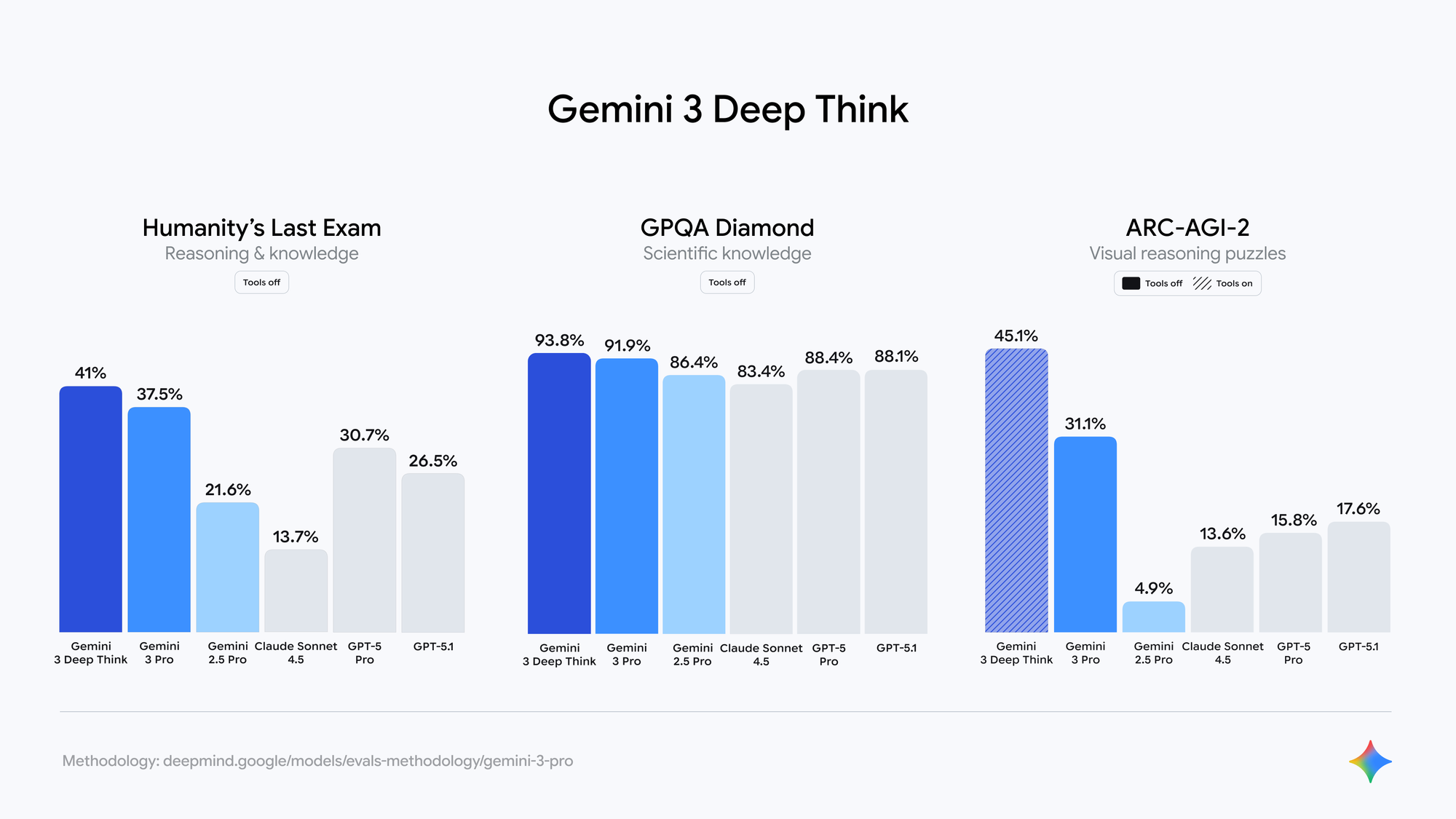
- Deep Think mode pushes reasoning performance to 45.1% on ARC-AGI-2, demonstrating unprecedented ability to solve novel problems requiring abstract reasoning and pattern recognition
- The model processes a 1 million-token context window with native multimodal understanding across text, images, video, audio, and code within a unified architecture
- Enterprise adoption is accelerating, with 45% of Fortune 500 companies actively piloting agentic systems that complete 12x more complex tasks than traditional LLMs through dynamic feedback loops
- The agentic AI market is expected to reach between $93-199 billion by 2032-2034, driven by workplace automation, enterprise process optimization, and autonomous decision-making systems
The Benchmark Breakthrough That Changes Competitive Positioning
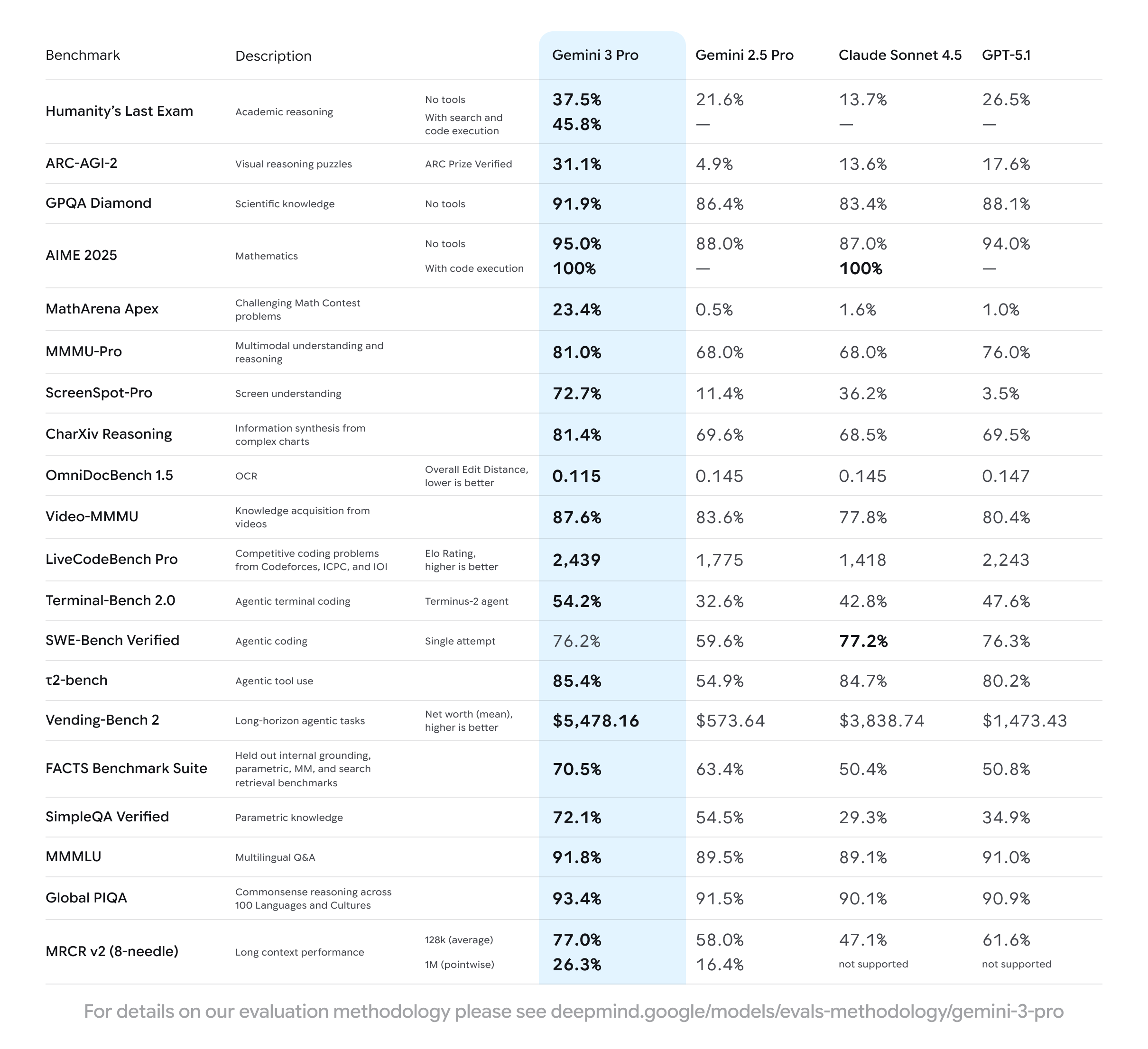
Gemini 3 Pro doesn't just edge out competitors, it establishes new performance ceilings across multiple dimensions.
Performance Comparison
Key Performance Highlights
Reasoning & Science:
- PhD-level reasoning on Humanity's Last Exam: 37.5% (previous record: 31.6% by GPT-5 Pro)
- AIME 2025 mathematics: 95% without tools, 100% with code execution
- GPQA Diamond scientific knowledge: 91.9% accuracy
Coding & Development:
- 76.2% on SWE-bench Verified (real GitHub issues)
- 35% higher accuracy vs Gemini 2.5 Pro (GitHub testing)
- 50%+ improvement in solved tasks (JetBrains testing)
- 1487 Elo on WebDev Arena for vibe coding
Multimodal Understanding:
- Complex image reasoning: 81% (MMMU-Pro)
- Video comprehension: 87.6% (Video-MMMU)
- Factual accuracy: 72.1% (SimpleQA Verified)
- Surpasses Claude Sonnet 4.5 and ChatGPT 5.1 on visual tasks
Previous frontier models excelled in narrow domains. Gemini 3 Pro ranks at or near the top across every category simultaneously, creating a genuine general-purpose foundation for agentic applications.
Why Generative UI Marks a Paradigm Shift
Generative UI represents something fundamentally different from what came before. Traditional AI models generate text responses. Gemini 3 generates complete interactive experiences tailored to each query's specific needs.
How Generative UI Works
Traditional AI Response:
User: "Explain mortgage options"
AI: [Returns 500 words of text explanation]
Gemini 3 Generative UI:
User: "Explain mortgage options"
Gemini 3: [Generates custom mortgage calculator with:
- Interactive sliders for loan amount, interest rate, term
- Real-time payment calculations
- Side-by-side comparison tables
- Visual amortization charts
- Follow-up prompt suggestions]
Real-World Examples
What Makes This Different
Autonomous Format Decisions:
- Model analyzes query intent
- Determines optimal presentation method
- Constructs appropriate interface automatically
- Includes images, tables, grids, interactive tools
- Adds follow-up prompts contextually
"Vibe Coding" at Interface Level:
- Describe end goal in natural language
- Model assembles content + user experience
- Generates actual code on-the-fly
- Customizes layout, interaction patterns, styling
Early Demonstrations:
- Building working applications from screenshots
- Candy-powered starship simulators from descriptions
- Full front-end interfaces with single prompt
- Operating system interfaces from text descriptions
"Visual layout generates an immersive, magazine-style view complete with photos and modules. These elements don't just look good but invite your input to further tailor the results."
Source: Gemini 3 app
Business Impact
Companies can now:
- Prototype interfaces without designers or front-end engineers
- Deliver answers in optimal format without user specification
- Collapse multiple roles (content + design + development)
- Reduce time from concept to working prototype
How Antigravity Transforms Development Workflows
Google Antigravity reimagines software development for the agentic era. Unlike traditional setups where an AI chatbot sits in the corner suggesting code, Antigravity puts AI agents in charge of a dedicated workspace.
Antigravity Architecture
Three Integrated Components:
- Editor Workspace - Direct code writing and modification
- Terminal Access - Command execution, testing, debugging
- Browser Preview - Live results and UI testing
All controlled autonomously by AI agents with full context.
What Agents Can Do Autonomously
Platform Integration & Results
Major Platforms Using Gemini 3:
- Cursor: "Noticeable improvements in frontend quality, works well for solving the most ambitious tasks"
- JetBrains: 50%+ improvement in solved benchmark tasks
- Tested on: thousands of lines of front-end code, OS interface simulation
- GitHub: 35% higher accuracy on software engineering challenges
- Figma: "Translates designs with precision, generates wide inventive range of styles, layouts, interactions"
Benchmark Performance
WebDev Arena Leaderboard:
- Gemini 3 Pro: 1487 Elo
- Vibe coding leader (natural language to working apps)
Terminal-Bench 2.0:
- Score: 54.2%
- Tests: Tool usage via terminal operations
SWE-bench Verified:
- Score: 76.2%
- Tests: Real GitHub issues (not synthetic problems)
Developer Experience Transformation
Before (Traditional Coding Assistant):
Developer writes → AI suggests → Developer implements → Developer tests
Developer debugs → AI suggests fix → Developer implements → Repeat
After (Antigravity Agentic Coding):
Developer describes goal → AI plans + codes + tests + debugs + iterates
Developer reviews final result → Approves or requests changes
Reported Productivity Gains:
- 4x faster code debugging
- Dramatically reduced prototype-to-production time
- Multi-file context understanding (1M token window)
- Autonomous error recovery and iteration
"The agent can work with your editor, across your terminal, across your browser to make sure that it helps you build that application in the best way possible."
Path to better AI - Koray Kavukcuoglu, CTO, Google DeepMind
The Deep Think Mode Advantage for Complex Reasoning
Gemini 3 Deep Think represents Google's answer to problems requiring extended reasoning rather than immediate responses.
How Deep Think Works
Standard Mode:
- Immediate response generation
- Single-pass reasoning
- Optimized for speed
Deep Think Mode:
- Parallel thinking processes
- Reinforcement learning
- Multiple solution path exploration
- Extended computational steps
- Optimized for accuracy over speed
Standard vs Deep Think
Why ARC-AGI-2 Matters
Traditional Benchmarks:
- Measure pattern recognition from training data
- Test memorization and recall
- Can be "gamed" with larger datasets
ARC-AGI-2:
- Tests abstract reasoning on novel problems
- Measures genuine problem-solving ability
- Designed to prevent memorization
- Requires adaptation to unfamiliar scenarios
Deep Think's 45.1% score = unprecedented progress on adaptation to new problem types
Technical Architecture
"Thinking Tokens" Approach:
- Input received → Model receives query
- Exploration phase → Tests multiple solution paths
- Hypothesis testing → Evaluates different approaches
- Refinement → Improves reasoning quality
- Final response → Generates optimized answer
Multimodal Advantage:
Unlike OpenAI's o1 (text-only), Deep Think applies extended reasoning to:
- Images
- Videos
- Code
- Documents
- Audio
Availability & Access
The Gemini 3 model is currently in its safety testing phase, with a planned release in the "coming weeks" (anticipated for December 2025). This release will be exclusively available to Google AI Ultra subscribers, who pay a monthly fee of $250.
The $450B Market Thesis Driving Enterprise Adoption
The agentic AI market isn't speculative multiple research firms project explosive growth with remarkable consensus.
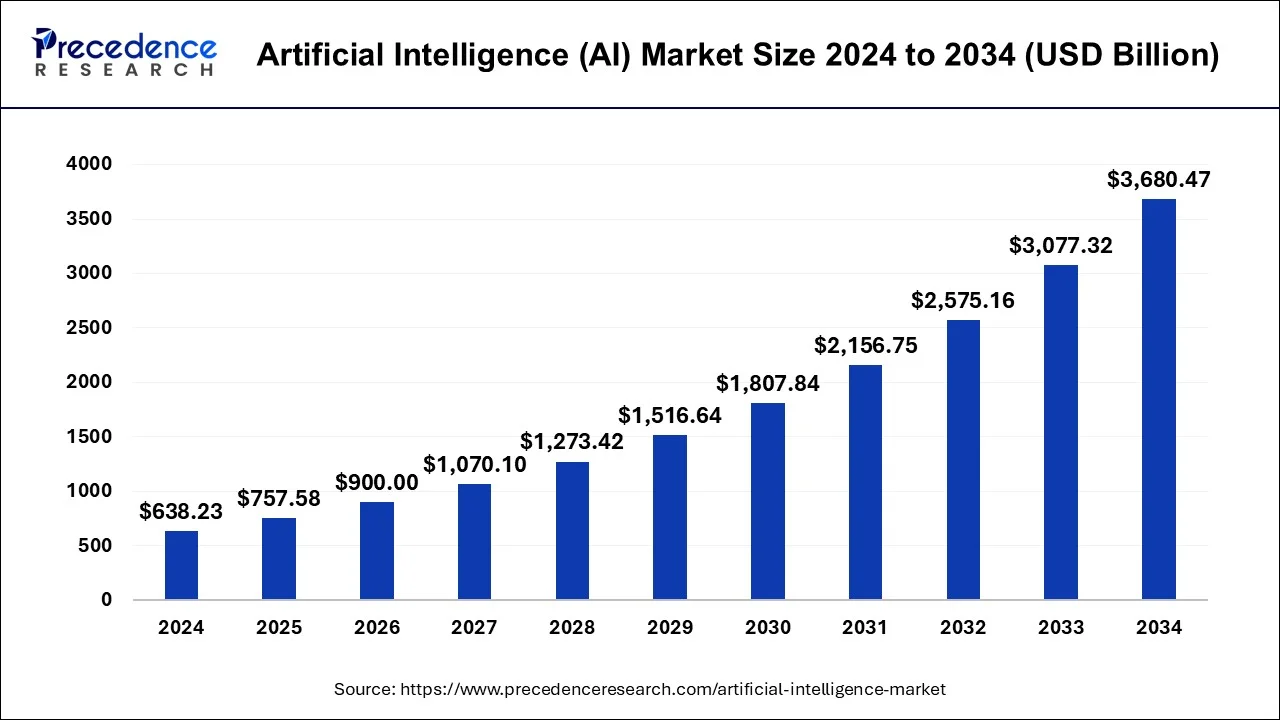
Consensus: CAGR between 41-57% across all major research firms
Current Enterprise Adoption (2025)
Fortune 500 Companies:
- 45% actively piloting agentic systems
- 14% have deployed AI agents
- 12% partial scale implementation
- 2% full deployment
- 23% running pilot programs
- 61% exploring or preparing deployment
Measurable Business Impact
Productivity Gains:
- 12x more complex tasks vs traditional LLMs (dynamic feedback loops)
- 4x faster debugging cycles
- 30% reduction in customer service costs
- 40% reduction in fraudulent activity detection
- 80% reduction in contract review error rates
Real Enterprise Results:
- Walmart: 22% increase in e-commerce revenue
- JPMorgan: 80% reduction in contract review errors
- Multiple firms: 50%+ improvement in document processing
Investment & Developer Activity
Venture Funding:
- $9.7 billion invested in agentic AI startups (Jan 2023 - May 2025)
Developer Ecosystem Growth:
- 920% increase in repositories using agentic frameworks
- AutoGen, AutoGPT, BabyAGI
- Early 2023 to mid-2025
Government Investment:
- India: $1.25 billion AI mission
- China: $3.4+ billion national AI projects
- UK: $17 billion infrastructure commitment (Jan 2025)
Regional Market Leadership
Market Share 2024:
The consistently high CAGR projections (41-57% range) underscore strong consensus about exponential growth. Even conservative estimates place the market above $50 billion by 2030. More aggressive projections approach $200 billion by mid-decade.
Enterprise Adoption Metrics:
Real deployment data supports these projections. Approximately 45% of Fortune 500 companies are actively piloting agentic systems in 2025. Capgemini's research shows 14% of organizations have deployed AI agents (12% partial scale, 2% full deployment), 23% run pilot programs, and 61% actively explore or prepare for deployment.
Measurable Business Value:
Agentic systems complete 12x more complex tasks compared to traditional LLMs through dynamic feedback loops and autonomous decision-making. Companies report:
- 30% reduction in customer service costs
- 40% decrease in fraudulent activity detection time
- 4x faster debugging cycles in software development
- 80% reduction in contract review error rates
- 50%+ improvement in document processing accuracy
Walmart achieved 22% increase in e-commerce revenue through agentic implementations. JPMorgan reduced contract review errors by 80%. These aren't projected benefits. They're measured results from production deployments.
Investment and Developer Activity:
Over $9.7 billion in venture funding flowed into agentic AI startups between January 2023 and May 2025. Developer activity shows a 920% increase in repositories utilizing agentic frameworks (AutoGen, AutoGPT, BabyAGI) from early 2023 to mid-2025.
Government investment accelerated with India pledging $1.25 billion for AI initiatives and China allocating over $3.4 billion for national agentic AI programs. The UK committed $17 billion for AI infrastructure in January 2025.
Regional Leadership:
North America leads with 38-46% market share, driven by early technology adoption, concentration of leading AI vendors (Microsoft, Google, AWS), aggressive Fortune 500 deployment, and clear regulatory frameworks. Asia Pacific shows fastest growth trajectory, fueled by government-led initiatives, enterprise deployments across banking/finance/telecom sectors, and cloud infrastructure expansion.
Market Structure:
Three offering categories are crystallizing. Agentic AI infrastructure (cloud orchestration, model hosting, memory frameworks) dominates with largest share. SaaS platforms embed agents into workflow tools. Professional services expand as enterprises require deployment, integration, and optimization guidance.
Strategic Implementation Across Business Functions
Enterprise deployment patterns reveal where agentic AI delivers immediate value versus longer-term potential.
Workplace Productivity (Largest Adoption):
Microsoft Copilot, Google Gemini Workspace integration, and platforms from Zoom and Notion demonstrate how agents reduce friction in distributed work environments. These systems operate as digital companions, minimizing context-switching overhead and boosting responsiveness. Applications include email management, calendar optimization, meeting summaries, and cross-tool workflow automation.
Customer Experience Automation:
Agents handle routine inquiries, resolve issues, and deliver personalized support at scale. Modular design allows department-specific customization. Sales agents differ from HR agents, which differ from engineering support agents. This flexibility accelerates deployment since companies don't build everything from scratch. Results show 30% service cost reduction, faster response times, 24/7 availability, and improved satisfaction.
Software Development:
Beyond Antigravity's capabilities, agents automate testing, update legacy code, and handle complex operational tasks. The 1 million token context window enables understanding full codebases, maintaining consistency across files, and self-debugging. JetBrains, GitHub, Cursor, Replit, and Manus all report substantial improvements when integrating Gemini 3's agentic coding.
Data Analytics and Business Intelligence:
Instead of analysts writing SQL queries and building reports, agents navigate data systems autonomously, synthesize findings, and generate visualizations based on natural language requests. The advantage compounds when agents access multiple sources simultaneously (CRM, ERP, financial systems, external data) to build comprehensive unified views.
Enterprise Operations:
Financial planning benefits from scenario analysis automation and forecast modeling. Supply chain applications include procurement optimization and logistics planning. Legal implementations focus on contract evaluation and compliance checking. Healthcare deployments handle patient management, diagnostic support, and multilingual medical transcription.
Implementation Success Patterns:
Agents thrive in structured environments with clear success criteria, reliable data sources, and measurable outcomes. They struggle with high ambiguity, edge cases requiring human judgment, and high-stakes decisions where hallucination carries serious consequences.
Successful deployments layer human oversight for critical decisions while allowing autonomous execution for routine operations. The recommended approach: pilot with structured, low-risk tasks (weeks 1-4), scale to additional use cases with approval gates (months 2-6), then optimize by reducing oversight for proven workflows (months 6+).
Timeline & Magnitude: The Critical Questions
Not Whether, But When and How Much:
The adoption curves and $9.7B investment flows confirm agentic AI will reshape work. The debate is speed and scale.
Consensus View:
- 2025-2026: Structured task automation (HR, customer service)
- 2027-2028: Expansion to complex reasoning tasks
- 2029-2030: Widespread autonomous workflow orchestration
Gemini 3's Significance:
- Technical credibility after early stumbles
- Scale execution across Search, Gemini app, Cloud
- Distribution advantage: 2B AI Overview users, 650M Gemini users
- Ecosystem integration when capabilities converge
"When frontier model capabilities converge, ecosystem integration and user access become the differentiators."
— Market Analysis, 2025
Conclusion
The transition from predictive models to agentic systems represents a generational shift in how businesses interact with AI. Gemini 3's technical achievements 1501 LMArena Elo, 76.2% on real-world coding challenges, autonomous interface generation, million-token context processing establish new capability baselines.
But technical benchmarks matter less than execution patterns. The question isn't whether your model scores 91.9% or 89% on GPQA Diamond. It's whether agents can reliably handle the specific workflows your business needs automated, with acceptable error rates, at costs that justify deployment.
Gemini 3 demonstrates that general-purpose agentic capabilities have arrived. The market's rapid expansion from $7 billion to projected $93-199 billion reflects enterprise recognition that these systems deliver measurable value today, not five years from now.
Organizations piloting agentic AI in 2025 are building competitive advantages that will compound as the technology matures. Those waiting for perfect solutions risk falling behind competitors who are learning to direct autonomous agents effectively right now, while capabilities are still improving and deployment patterns are still being established.
FAQ
What makes Gemini 3 different from previous Google AI models?
Gemini 3 achieves 1501 LMArena Elo (top globally), creates custom interfaces autonomously through generative UI, and enables agentic coding via Antigravity. It outperforms Gemini 2.5 Pro across all benchmarks while requiring less prompting.
How does Deep Think mode improve performance?
Deep Think trades speed for accuracy by taking extra reasoning steps before responding. It achieves 45.1% on ARC-AGI-2, excelling at novel problems requiring abstract reasoning rather than pattern matching.
What is the agentic AI market size?
Current market: $7B (2025). Projections: $93-199B by 2032-2034 with 41-57% CAGR. Growth driven by enterprise automation and autonomous decision-making systems.
Can Gemini 3 replace human developers?
No. It automates routine tasks but requires human oversight for architecture, requirements validation, and edge cases. Developers shift from coding to directing agents and maintaining systems.
How can businesses start using Gemini 3?
Available now: Google AI Studio, Vertex AI, Gemini CLI, Antigravity (developers). Consumer access: Gemini app, AI Mode in Search via Google AI Pro ($20/month) or Ultra ($250/month).