Otterly alternatives for AI visibility in 2026
Seven Otterly alternatives for AI visibility teams, compared by best fit: ecommerce store visibility, enterprise AEO, prompt tracking, and SEO-suite workflows.
TL;DR Otterly alternatives split into 7 practical jobs. Mention Network fits ecommerce store and product visibility, Profound fits enterprise AEO, Peec fits clean prompt tracking, SE Ranking and Semrush fit SEO teams, Ahrefs Brand Radar fits large-scale brand research, and Rankscale fits broad engine coverage.
How they stack up:
Otterly made AI visibility easy to test. You add prompts, track mentions and citations, then see whether ChatGPT, Perplexity, Google AI Overviews, or Copilot includes your brand.
That is useful. It is also where many teams outgrow it. The Otterly alternatives below are grouped by the job they solve, because 7 of 7 have a different center of gravity.
Otterly's pricing page says its Lite plan starts at $29/month with 15 search prompts, with standard tracking across ChatGPT, Google AI Overviews, Perplexity, and Microsoft Copilot. Gemini and Google AI Mode appear as add-ons. Verified as of July 16, 2026.
The question is whether you need a cheaper tool, a deeper tool, or a tool that measures a different unit entirely. Good Otterly alternatives should make that trade-off visible before you buy.
The 7 best Otterly alternatives at a glance
| Alternative | Best fit | Why teams pick it |
|---|---|---|
| Mention Network | Ecommerce stores | Measures store and product visibility in buying answers |
| Profound | Enterprise AEO | Daily structured prompts, citations, sentiment, ranking, competitors |
| Peec AI | Marketing teams | Clean prompt tracking across ChatGPT, Perplexity, and Gemini |
| SE Ranking | SEO teams | AI visibility inside an SEO workflow, with competitor snapshots |
| Semrush AI Visibility Toolkit | Existing Semrush users | AI visibility tied to a mature SEO reporting stack |
| Ahrefs Brand Radar | Brand research | Large search-backed prompt database and citation research |
| Rankscale | Broad engine coverage | Tracks visibility across many AI engines and countries |
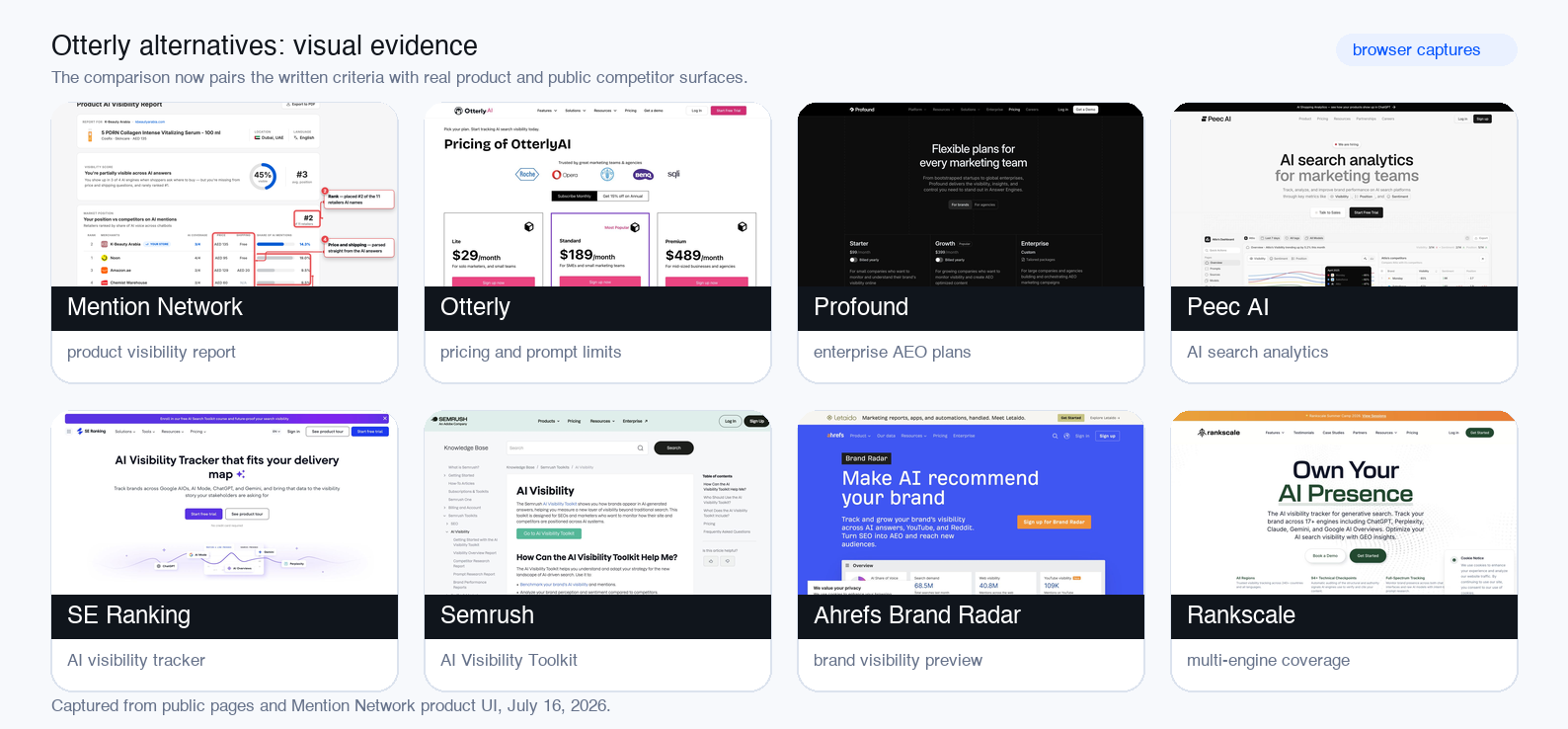
The visual check below pairs Mention Network's product report with the public surfaces used to verify the competing tools. It is not a scoring screenshot. It is the evidence layer behind the comparison criteria.
When should you switch from Otterly?
Switch when the question changes from "Are we mentioned?" to "What should we fix?"
Otterly is strongest when a team needs visibility monitoring without much setup. It tracks prompts and brand mentions across major AI search surfaces. That is enough for awareness, stakeholder education, and early monthly reporting.
The ceiling appears when visibility becomes operational. Teams need to know which competitor replaced them, which sources the model used, which prompt groups are worth money, whether product pages are readable, and which content change should ship next.
For ecommerce, the gap is sharper. A store can sell a famous brand and still be absent from where-to-buy answers. Brand visibility and store visibility are different measurements, which is why the best alternative is not always another generic prompt tracker.
1. Mention Network: best Otterly alternative for ecommerce stores
Mention Network is our product, so treat this as a disclosed comparison. The reason it belongs here is scope: it measures store and product visibility, not only brand mentions.
Mention Network's AI Visibility Check currently runs 5 buyer intents across 4 assistants, creating 20 answer receipts for a product or store check. It records whether the store appears, rank, competitors, price and shipping when stated, and the raw answer evidence. That makes it better suited to merchants asking, "Does AI recommend my store when a shopper is ready to buy?"
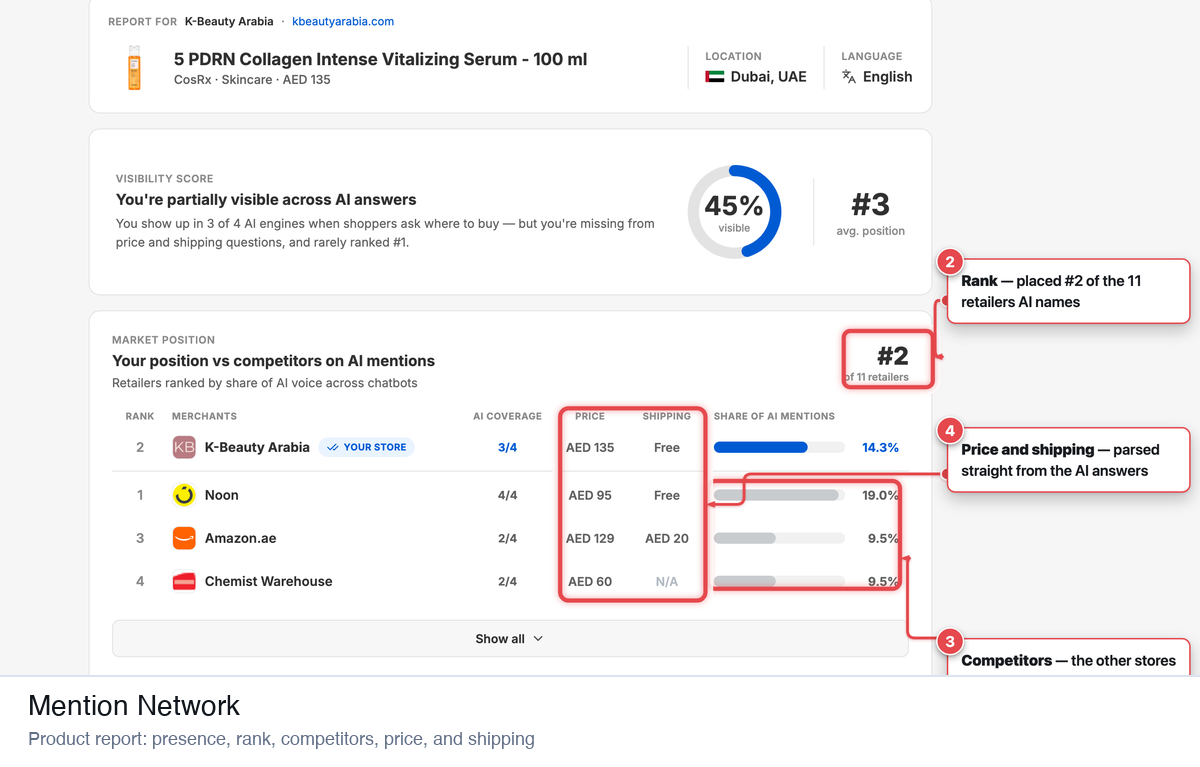
Use Mention Network if:
| You need | Why it matters |
|---|---|
| Store-level visibility | Resellers can be invisible even when the manufacturer is named |
| Product-level evidence | Ecommerce answers often choose specific products and sellers |
| Diagnosis after measurement | A dashboard is not enough if the product page is unreadable |
| Shopify-first workflow | Store data, product facts, and AI answers need to meet |
Read the full ecommerce framework in AI product visibility and the category-level tool guide in best AI visibility tools.
2. Profound: best for enterprise AEO programs
Profound is the heavy-duty Otterly alternative for teams that treat AI search as an enterprise channel.
Profound's pricing FAQ says it runs structured prompts across AI platforms daily and tracks citations, sentiment, ranking, and competitive presence. Verified as of July 16, 2026.
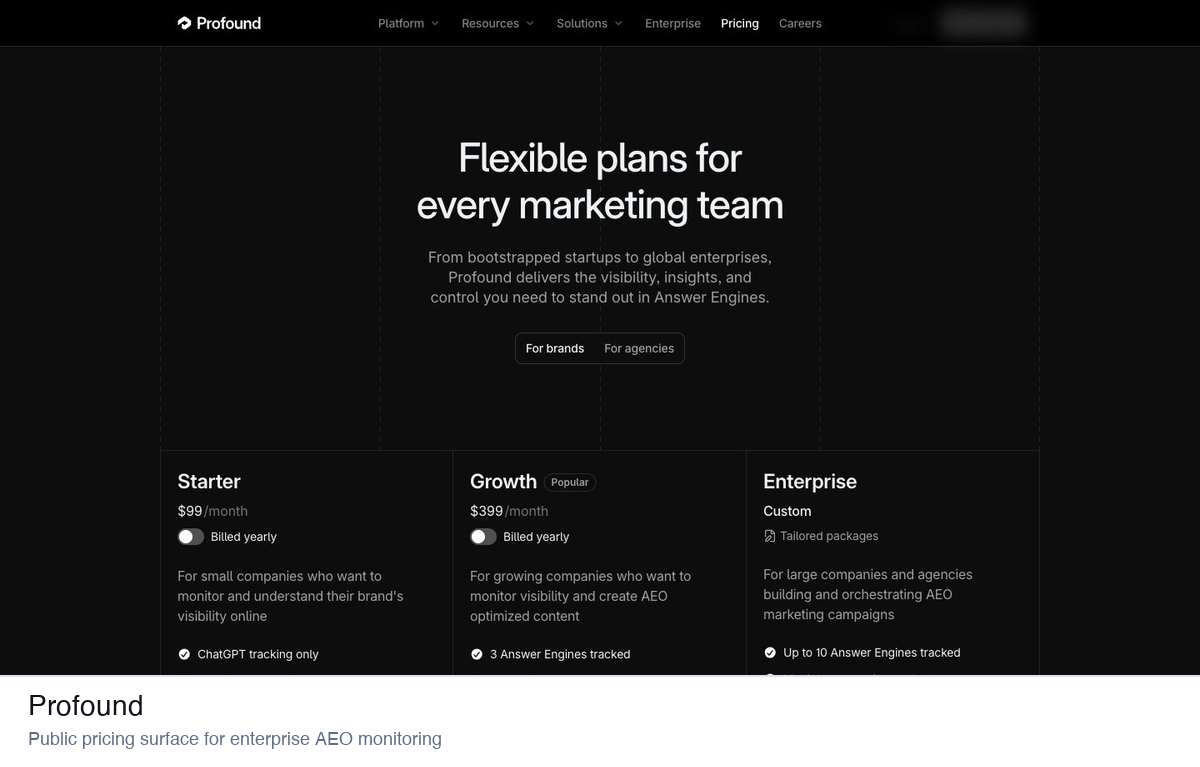
That combination matters when a team has analysts, stakeholders, exports, and a content operation ready to act. Profound is usually more platform than a small store needs, but it fits brands that want answer-engine visibility monitored with rigor.
Pick Profound if you need:
| Strength | Best-fit team |
|---|---|
| Daily structured prompt runs | Enterprise SEO, AEO, or brand teams |
| Citation and sentiment analysis | Reputation and communications teams |
| Competitive presence tracking | Category leaders with named rivals |
| Custom prompt strategy | Teams with analysts or agencies |
Skip it if your real question is narrower: "Why is my Shopify store missing from where-to-buy answers?"
3. Peec AI: best clean prompt tracker for marketing teams
Peec AI is a focused AI search analytics platform for marketers.
Peec's homepage says it helps teams analyze brand performance across ChatGPT, Perplexity, and Gemini, with visibility tracking, competitor benchmarks, and AI search optimization. Verified as of July 16, 2026.
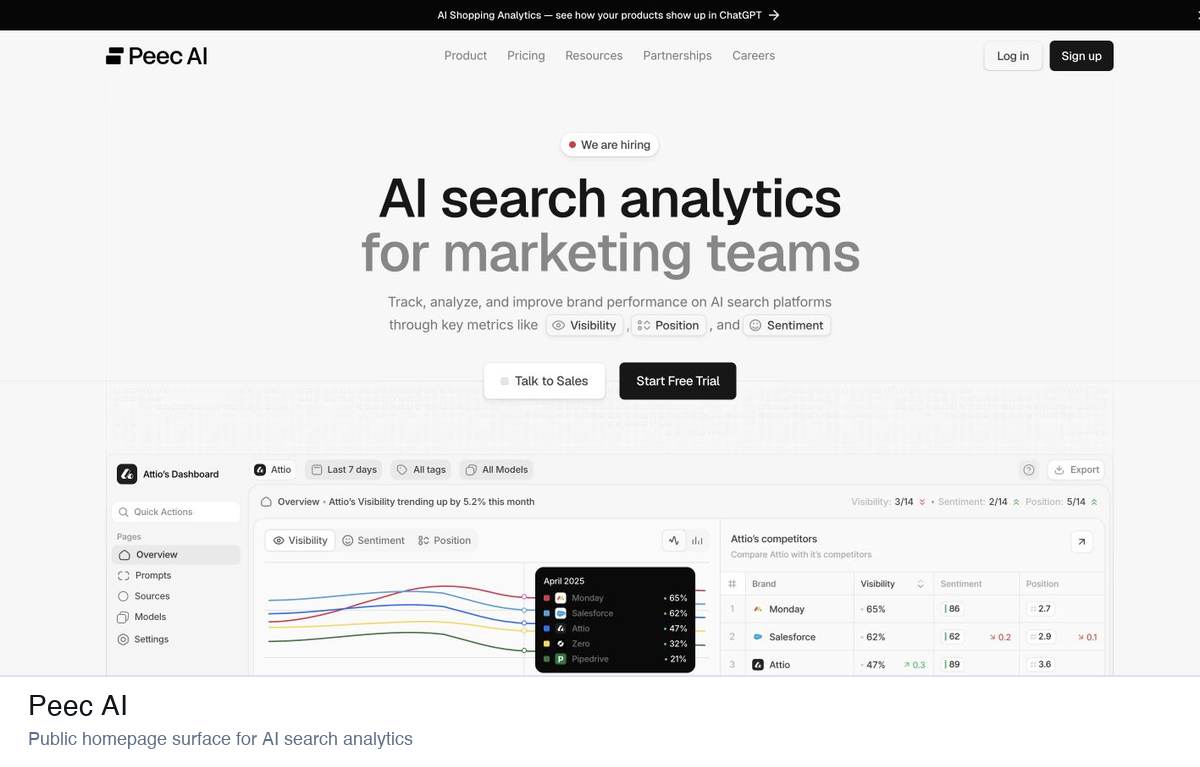
The appeal is clarity. Peec is not trying to replace a full SEO suite. It gives marketing teams a clean way to watch prompts, citations, and competitive movement without drowning them in classic SEO features.
Pick Peec if:
| You care about | Peec fit |
|---|---|
| Prompt-set tracking | Strong |
| Competitor benchmarks | Strong |
| Simple marketer workflow | Strong |
| Ecommerce product diagnosis | Limited compared with a store-specific tool |
Peec is the sensible middle option when Otterly feels light but Profound feels too enterprise.
4. SE Ranking: best for SEO teams adding AI visibility
SE Ranking is a good Otterly alternative when AI visibility needs to live beside rank tracking, keyword research, and SEO reporting.
SE Ranking's AI Visibility Tracker page says its free checker allows 5 checks per day, and the full toolkit tracks brand mentions, links, positions inside AI answers, and competitor visibility for target prompts. Verified as of July 16, 2026.
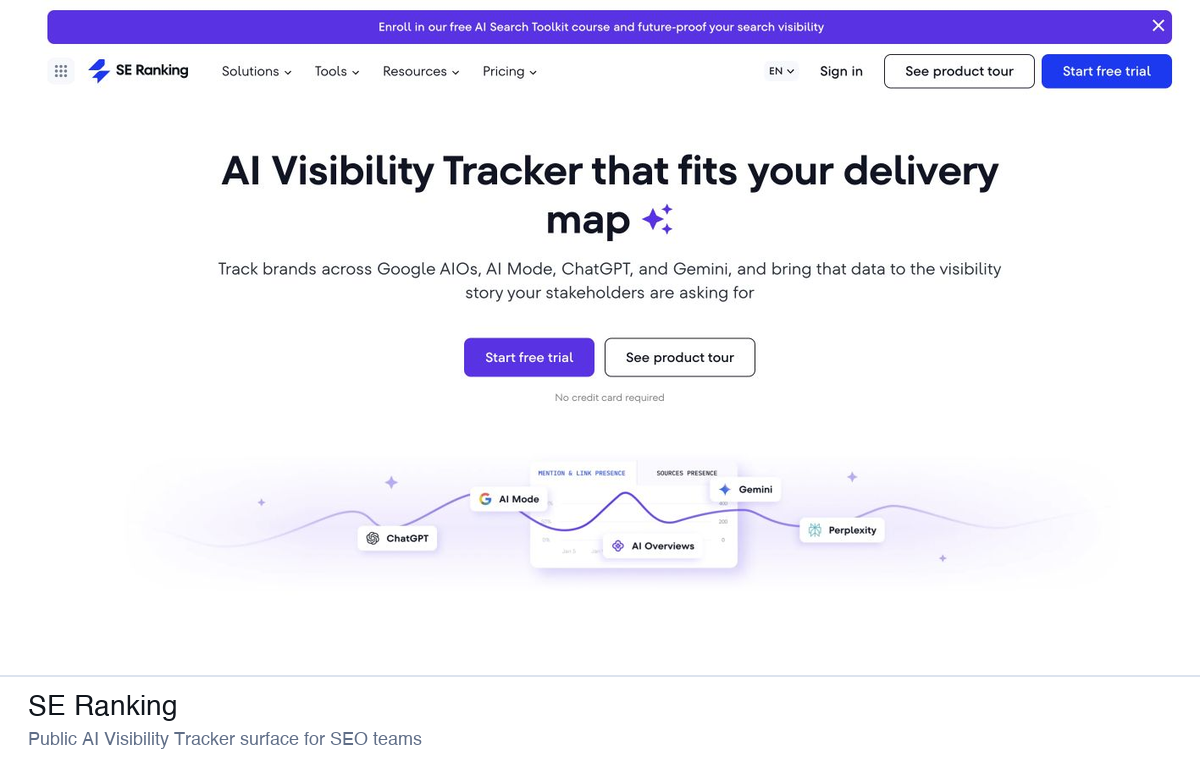
That makes it useful for SEO teams that want adoption without a new operating model.
Pick SE Ranking if:
| Team reality | Why SE Ranking fits |
|---|---|
| You already run SEO reporting | AI visibility can sit in the same workflow |
| You need competitor snapshots | The checker supports up to 5 competitors |
| You want prompt-level monitoring | AI Results Tracker handles target prompts |
| You need deep ecommerce diagnosis | Pair it with a store-specific audit |
SE Ranking is not the deepest AI visibility platform. It is the practical bridge for SEO teams.
5. Semrush AI Visibility Toolkit: best for existing Semrush users
Semrush is the Otterly alternative for teams that already live inside Semrush.
Semrush's AI Visibility Toolkit documentation says the toolkit shows how brands appear in AI-generated answers and helps SEOs and marketers monitor their site and competitors across AI systems. Verified as of July 16, 2026.
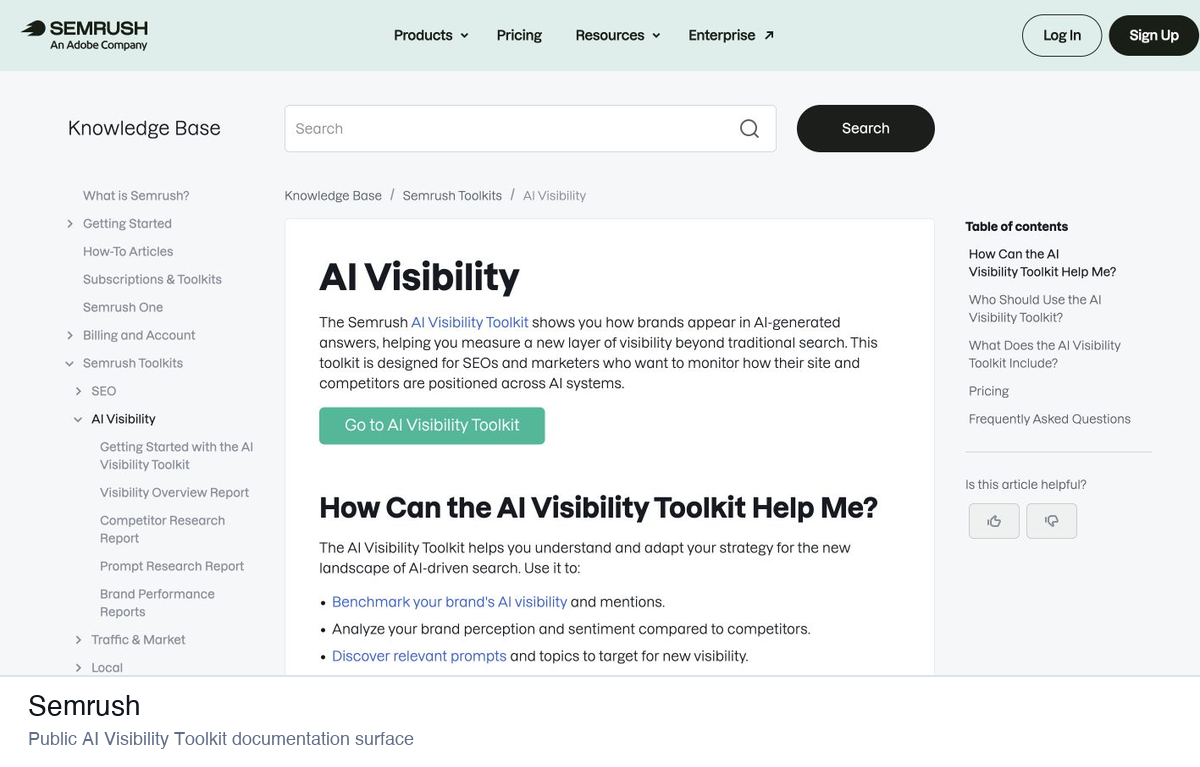
The main benefit is continuity. AI visibility becomes another reporting layer inside a tool many SEO teams already understand.
Pick Semrush if:
| You need | Semrush fit |
|---|---|
| Executive-ready reporting | Strong |
| SEO and AI visibility in one stack | Strong |
| Competitor monitoring | Strong |
| Prompt-level AI experimentation | Less focused than pure AI platforms |
Semrush is rarely the cheapest path. It is often the cleanest path for a team already paying for the ecosystem.
6. Ahrefs Brand Radar: best for large-scale brand research
Ahrefs Brand Radar is less like a small prompt tracker and more like a searchable visibility database.
Ahrefs' Brand Radar help doc says it tracks how any brand shows up in AI search in more than 405 million search-backed prompts, with share-of-voice benchmarks, top cited pages, cited domains, and mention opportunities. Verified as of July 16, 2026.
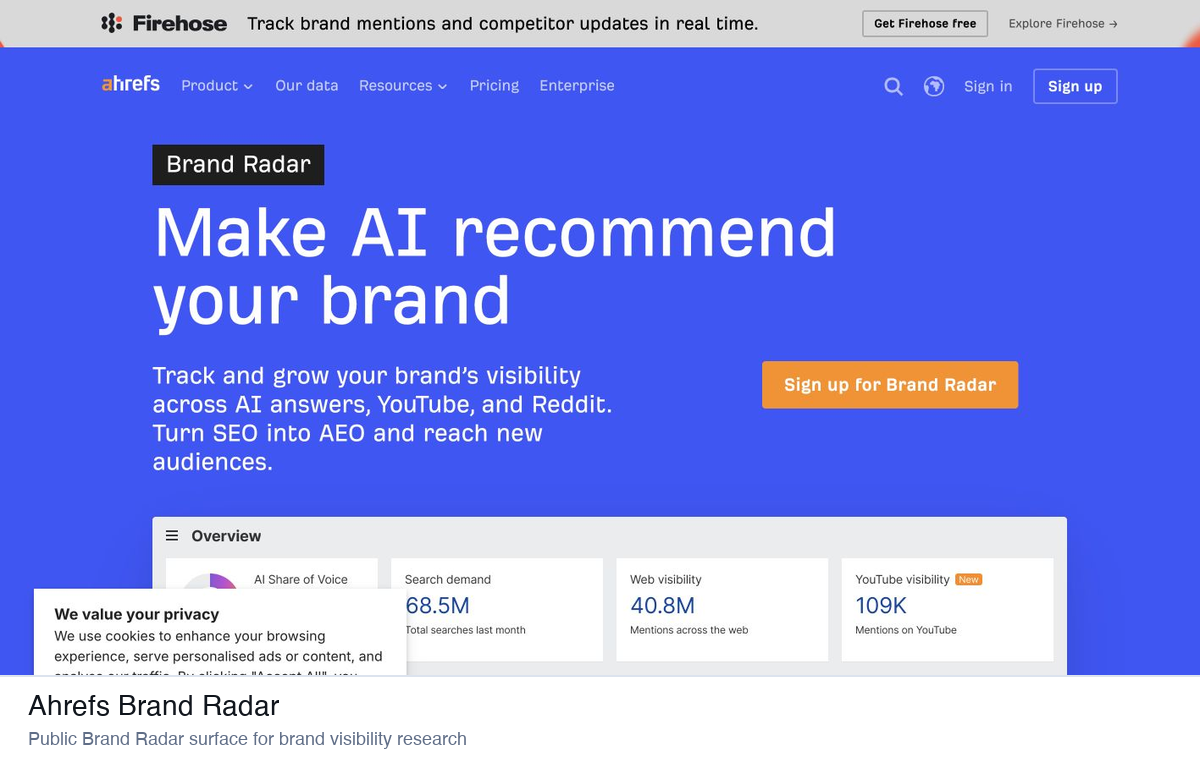
That is useful when the question is macro: how visible is a brand across a large prompt universe?
Pick Ahrefs Brand Radar if:
| Job | Fit |
|---|---|
| Search-backed brand research | Strong |
| Citation opportunity mining | Strong |
| Competitor share of voice | Strong |
| Tracking a small custom prompt set | A lighter tool may be easier |
It is best for teams already comfortable with Ahrefs data and research workflows.
7. Rankscale: best for broad engine coverage
Rankscale is worth considering when coverage breadth matters.
Rankscale's homepage says it tracks brand visibility across 17+ engines, including ChatGPT, Perplexity, Claude, Gemini, and Google AI Overviews, across 240+ countries and languages. Verified as of July 16, 2026.
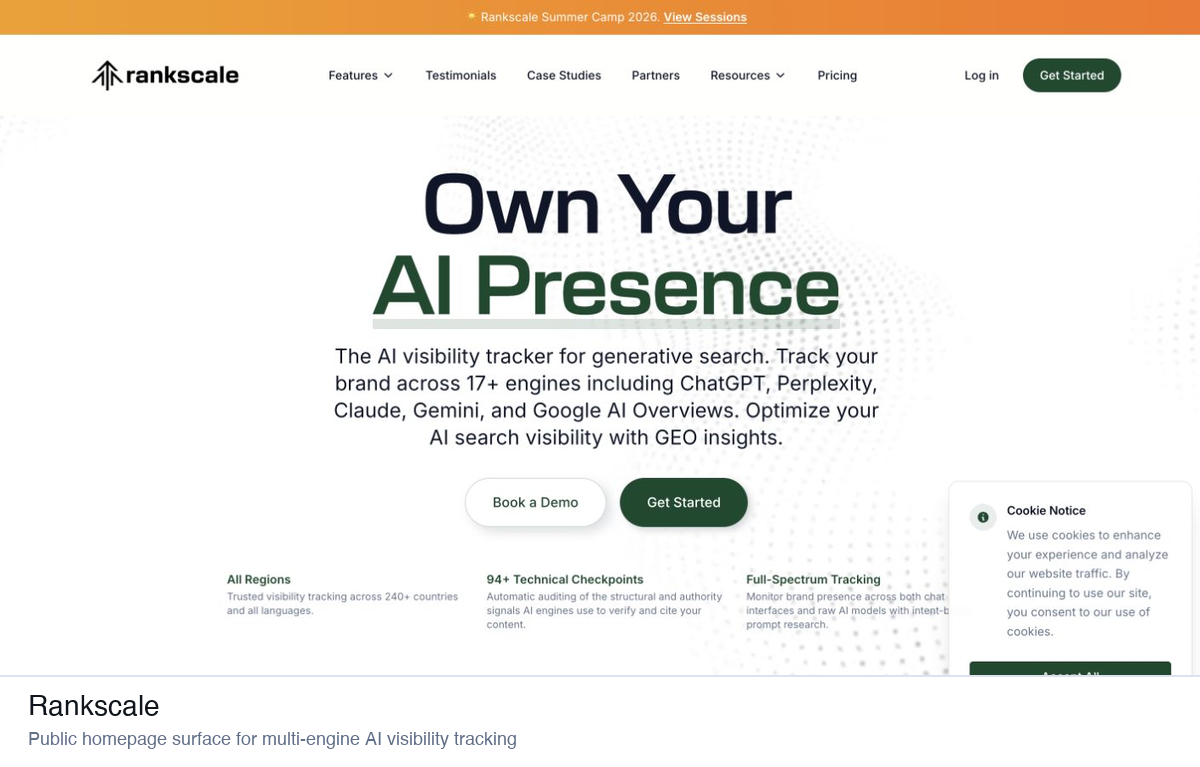
That is the use case: broad model and region coverage.
Pick Rankscale if:
| Need | Fit |
|---|---|
| Many AI engines | Strong |
| Multi-country tracking | Strong |
| Broad GEO monitoring | Strong |
| Ecommerce product recommendations | Check fit carefully |
For global teams, broad coverage can matter more than deep page-level diagnosis.
Which Otterly alternative should you choose?
Use the job as the filter. The strongest Otterly alternatives are the ones that match your operating model, not the ones with the longest feature list.
| If your job is... | Choose... |
|---|---|
| Find whether AI recommends your store or products | Mention Network |
| Run enterprise answer-engine visibility | Profound |
| Track prompts cleanly with a marketing team | Peec AI |
| Add AI visibility to rank tracking | SE Ranking |
| Keep AI reporting inside a Semrush stack | Semrush AI Visibility Toolkit |
| Research AI brand visibility at huge prompt scale | Ahrefs Brand Radar |
| Watch many engines and countries | Rankscale |
Otterly is still useful for simple monitoring. The reason to switch is not that Otterly is bad. It is that AI visibility has moved from a curiosity into a workflow, and different teams now need different workflows.
For ecommerce, start with the unit that pays: whether AI recommends your store when a shopper asks where to buy. If you are weighing a specific rival tool, our AthenaHQ alternative for ecommerce comparison applies the same job-first filter. Run the free AI visibility check, then use the evidence to decide whether you need a tracker, a full platform, or a store-level fix.
The bottom line: 7 Otterly alternatives solve 7 different jobs, so pick by measurement unit first and feature list second.
FAQ
What is the best Otterly alternative for ecommerce stores?
Mention Network is the ecommerce-focused alternative because it measures whether AI recommends the store and product, not only whether a brand name appears in an answer.
What is the best enterprise Otterly alternative?
Profound is the strongest fit for enterprise AEO teams that need daily structured prompt tracking, citations, sentiment, ranking, competitors, and exports.
Is Otterly still worth using?
Yes. Otterly is still useful for basic AI search monitoring, especially when a team is just learning which prompts mention the brand.
Which Otterly alternative is best for SEO teams?
SE Ranking and Semrush fit SEO teams best because they connect AI visibility to familiar SEO workflows, reporting, competitor tracking, and content operations.
Run a free check: See how AI answers describe your store right now. Run a free AI visibility check.