
How to Optimize Your Store for ChatGPT Shopping: The 2026 Merchant Guide


The digital shelf has evolved from a list of blue links into a sophisticated, reasoning partner. With the full-scale rollout of ChatGPT Shopping, consumers are no longer just "searching" for products they are describing their lives and letting AI architect the solutions. Imagine a user asking ChatGPT to "design a Japandi-style living room for a small apartment" and the AI not only generating the 3D visual but immediately providing clickable purchase links to the exact rug, sofa, and lamp that fit that design. In this new era, if your store isn't "AI-referable", you aren't just losing rank, you are becoming invisible to the most high-intent shoppers in the world.
- The Death of Keyword Stuffing: Why ChatGPT prioritizes "Semantic Clarity" and problem-solving context over traditional exact-match keywords.
- The OAI-SearchBot Mandate: The critical technical step of white-listing OpenAI’s dedicated shopping crawler in your robots.txt.
- Visual Discovery & Recommendation: How ChatGPT uses multi-modal AI to match a user’s design description to your specific product aesthetic.
- Trust as a Ranking Signal: The role of "Narrative Equity" how reviews from Reddit, YouTube, and blogs influence your AI "referral weight".
- From Search to Agency: Preparing for the Agentic Commerce Protocol (ACP) where AI doesn't just find your product but executes the sale.
Beyond Keywords: Writing for Semantic Intent
ChatGPT does not look for "cheap coffee makers", it looks for "the best budget espresso machine for a beginner who values durability".
Traditional SEO taught us to repeat "Men's Blue Running Shoes" five times in a description. ChatGPT, however, "reads" like a human expert. It analyzes the utility and context of your product. To optimize for this, your product descriptions must move away from marketing fluff and toward "attribute-rich narratives".
Instead of saying "High-quality fabric", say "Durable 100% organic cotton that withstands frequent washing without pilling". This level of detail allows the AI to answer specific user constraints, such as "Find me a t-shirt that won't fall apart in the dryer". Your content should follow a Problem-Solution-Constraint framework:
- Who it's for: (e.g., "Perfect for urban commuters...")
- The Problem it solves: (...who need to stay dry without overheating...)
- The Constraints it meets: (...in a compact size that fits in a briefcase")
Optimizing Your Robots.txt for OAI-SearchBot
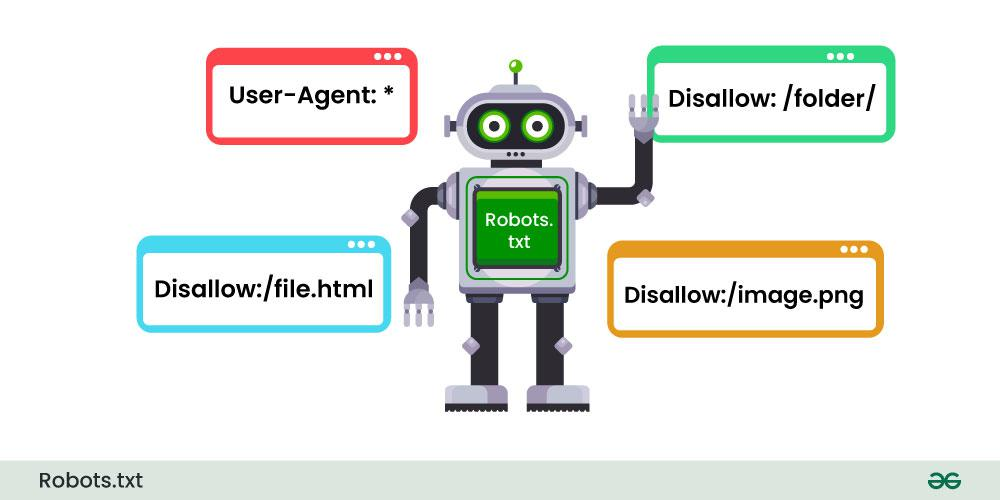
If you are blocking OpenAI’s crawlers to protect your content, you are inadvertently hiding your products from the world’s most powerful shopping engine.
Many store owners, fearing their data will be used to train AI models without consent, have implemented site-wide blocks on GPTBot. However, OpenAI has decoupled its training crawler from its search crawler. To appear in ChatGPT Shopping, you must explicitly allow OAI-SearchBot. This specific bot does not train the model, it fetches live pricing, availability, and product details to display in real-time chat responses.
For Shopify users, this requires a quick update to your robots.txt.liquid file. By ensuring OAI-SearchBot has full access to your /products and /collections paths, you ensure that when a user asks for a recommendation, the AI can "verify" your product exists and is ready for purchase. Without this access, the AI will default to citing larger marketplaces like Amazon or Walmart where your data is already indexed.
The "Design-to-Delivery" Loop: Visual and Aesthetic Optimization
AI can now "design" a room or an outfit and recommend your shop to fulfill that vision based on your visual metadata.
We are entering the age of "Visual Intent". If a user asks ChatGPT to "Design a minimalist home office with a tech-focused vibe”, the AI uses its vision capabilities to understand what that looks like. It then queries its index for products that match that aesthetic. If your alt-text and product titles are generic (e.g., "Black Desk"), you will be ignored.
To capture this traffic, your image metadata must be descriptive and aesthetic-focused. Use alt-text like "Minimalist matte black standing desk with hidden cable management, ideal for tech-focused home offices". This allows the AI to "see" your product as a component of the user's larger design dream. This "Design-to-Delivery" loop is the primary way home decor, fashion, and lifestyle brands will generate organic leads in 2026.
Leveraging Structured Data as Your "AI Sales Pitch"
Structured data is the primary "language" ChatGPT uses to compare your products against competitors in a fraction of a second.
While an LLM can parse a paragraph, it trusts structured data. Implementing comprehensive JSON-LD schema (specifically Product, Offer, and AggregateRating) is non-negotiable. This metadata provides the AI with a "spec sheet" it can use to fill out comparison tables inside the chat.
Narrative Equity: Building Authority Outside Your Storefront
ChatGPT’s recommendations are heavily influenced by "off-page" signals, particularly discussions on Reddit, expert review sites, and YouTube.
When ChatGPT recommends a product, it often summarizes why it is doing so, citing "User consensus on Reddit" or "Expert reviews from Wirecutter". This is what we call Narrative Equity. If your brand is only mentioned on your own website, the AI views your claims as unverified.
To rank in ChatGPT Shopping, you need a "distributed" brand presence. This means:
- Encouraging detailed reviews: AI looks for specific sentiment, not just star counts (e.g., "The battery lasted 3 days" is better than "Great product").
- Monitoring Community Sentiment: Being part of the conversation in niche subreddits or forums where the AI "listens" for authenticity.
- Citation-Ready PR: Getting mentioned in listicles (e.g., "Top 10 Eco-Friendly Kitchen Gadgets") gives the AI the "authority" it needs to cite your link with confidence.
Conclusion: The Conversational Pivot
The transition to ChatGPT Shopping is the most significant shift in commerce since the launch of the smartphone. We are moving from an era where brands "pushed" products through ads to an era where AI "pulls" products to satisfy deep human intent. Optimizing for this shift requires a blend of technical precision like unblocking OAI-SearchBot and creative storytelling that treats the AI as a sophisticated partner. The retailers who succeed in 2026 will be those who stop trying to "trick" the algorithm and start providing the structured, honest, and contextual data that a helpful AI assistant needs to do its job. Your store is no longer a destination, it is a data source for the world's most powerful shopping agent.
Frequently Asked Questions (FAQ)
What is GEO (Generative Engine Optimization)?
GEO is the process of optimizing your website and product data specifically to be cited and recommended by AI engines like ChatGPT, Gemini, and Perplexity.
How do I know if ChatGPT is finding my products?
You can check your GA4 (Google Analytics) traffic for referrals from chatgpt.com. You can also "audit" your brand by asking ChatGPT directly for recommendations in your niche and seeing if your store appears.
Do I need to pay for ads in ChatGPT Shopping?
As of late 2025, ChatGPT Shopping results are primarily organic and based on relevance. However, OpenAI has begun testing "sponsored information" mockups, so a paid model likely exists in the near future.
Can I block ChatGPT from training on my data but still appear in search?
Yes. You can disallow GPTBot (the training crawler) in your robots.txt while allowing OAI-SearchBot (the search/shopping crawler).
Why does ChatGPT link to Amazon instead of my own Shopify store?
This usually happens because Amazon has superior structured data and a higher "trust score" in the AI's index. Closing the "Citation Gap" requires improving your on-site Schema.org and obtaining more third-party mentions.