How AI Search Engines Mention Your Brand

ChatGPT reaches 800 million weekly users and processes over 1 billion daily queries, while more than 58% of Google searches now end without a click as AI delivers instant results. When AI assistants answer questions, they decide which brands get mentioned and which remain invisible. If your brand isn't appearing in these AI-generated responses, you're losing customers to competitors who are.
- AI search platforms process billions of queries daily, fundamentally changing brand discovery patterns
- Brand mentions in AI responses directly influence purchasing decisions before users visit any website
- Multiple specialized tools now exist to track brand visibility across major AI platforms
- GEO optimization methods can boost visibility by up to 40% in generative engine responses
- Real-time monitoring reveals competitive positioning and content gaps that traditional analytics miss
Why AI Search Monitoring Matters More Than Traditional Analytics
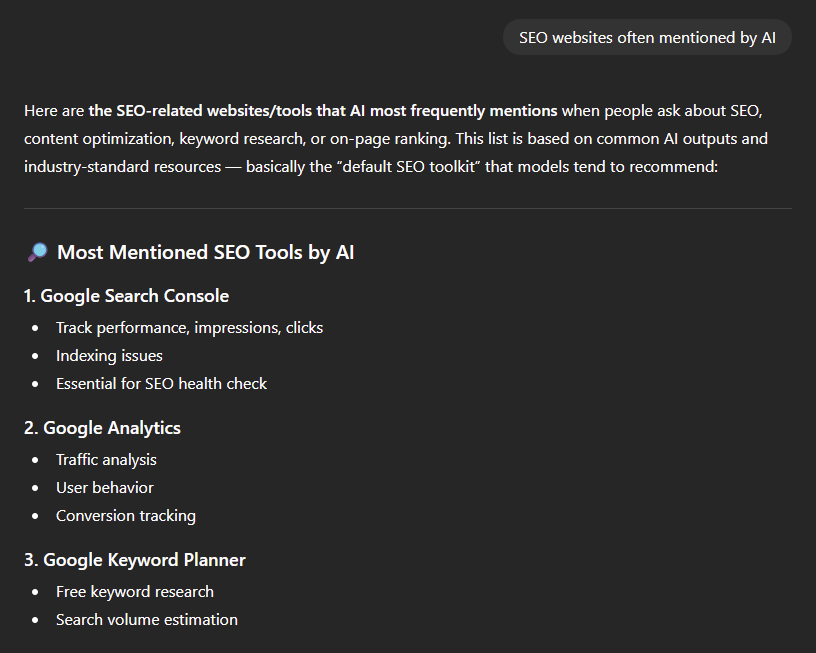
AI search monitoring addresses a critical blind spot that traditional web analytics traditional web analytics are now insufficient. AI search monitoring addresses a critical blind spot that conventional analytics simply cannot capture. Your Google Analytics dashboard tracks visitors, but it remains silent on the thousands of potential customers who ask an AI assistant (like ChatGPT or Gemini) for a recommendation and never hear your brand's name.
This invisible layer of brand awareness operates entirely outside conventional tracking systems, and its business impact is immediate and profound.
The Critical Gap: Traditional SEO vs. AI Visibility
| Feature | Traditional SEO/Analytics | AI Search Monitoring |
| User Behavior | Users browse multiple results, compare options, and click through. | AI delivers immediate, authoritative recommendations; users trust the synthesized conclusion. |
| Lost Customer | User can return to search; customer is not permanently lost. | If a competitor is mentioned and your brand is not, the customer is often lost permanently. |
| Speed of Shift | Ranking changes take weeks or months to appear. | Visibility can shift within days as AI platforms update models and information sources. |
| Competition | Compete with established websites in Google's organic results. | Top AI search competitors may be different companies entirely. |
Key Insight: 60% of commercial AI queries rely on content updated within the last six months. Brands must monitor their AI presence to identify visibility drops and respond before losing significant market share.
How Major AI Platforms Select Brands for Citations
Understanding the selection mechanisms behind AI citations is crucial. Each major platform weighs different factors when deciding which sources to cite and which brands to mention.
| AI Platform | Selection Priority | Core Content Strategy |
| ChatGPT | Comprehensive Content Depth and Authoritative Sources. | Favors detailed explanations, technical specifications, and content demonstrating strong topical authority. |
| Perplexity | Content Recency and Branded Web Mentions. | Actively crawls for fresh information; 64% of citations come from the last two years (2024–2025). |
| Google AI Overviews | Existing Google Authority plus Structured Data. | About 50% of sources also rank in Google’s Top 10. Favors FAQ schema and direct answer extraction. |
| Claude | Authoritative Depth and Factual Accuracy. | Emphasizes academic journals, industry publications, and content with verifiable claims and clear citations. |
- The Common Thread: Trust Signals: The number and quality of positive brand mentions you have online directly influence your authority. When trusted publications cite your brand favorably, AI platforms are significantly more likely to recommend you.
Essential Tools and Methods for Tracking AI Brand Visibility

The market for AI search monitoring tools has rapidly matured, offering solutions that range from enterprise platforms to focused monitoring services. Each tool addresses different aspects of the visibility tracking challenge.
The market offers three main approaches for tracking AI brand visibility:
1. Dedicated AI Platforms
These specialized tools focus intensely on LLM visibility.
- OtterlyAI and Profound track brand mentions and Share of Voice across all major models (ChatGPT, Gemini, Perplexity, Copilot, etc.).
- They use custom prompt libraries to simulate real user queries, revealing which brands are cited and why. Profound, for instance, focuses on citation frequency and identifying authoritative source websites.
2. Enterprise SEO Suites
Established SEO platforms have integrated AI tracking.
- Semrush AI Visibility Toolkit (starts at $99/month) tracks mentions across multiple LLMs, excelling at competitor rankings and identifying the best source domains for optimization.
- Keyword.com monitors brand visibility, uncovering the specific pages cited in LLM responses and helping identify visibility gaps.
3. Manual Monitoring
For smaller budgets, a DIY approach is viable:
- Create a consistent library of target queries (the questions prospects ask).
- Systematically run these queries across top AI platforms (Google AI Overviews, ChatGPT).
- Use a spreadsheet to document results: which brands were mentioned, the context/sentiment, and the citation frequency.
The most effective monitoring strategy combines automated tools with periodic manual validation. Automated platforms provide consistent baseline data and alert you to significant changes, while manual checking helps verify accuracy and explore nuanced brand positioning that tools might miss.
Interpreting AI Mention Data to Drive Strategic Decisions

Raw mention counts tell an incomplete story. Sophisticated AI search monitoring transforms data into actionable intelligence that guides content strategy, competitive positioning, and resource allocation.
Brand Visibility Score
The brand visibility score equals answers mentioning your brand divided by total answers for your space. This metric provides a baseline measurement of your presence in AI-generated content. A score of 25% means your brand appears in one out of every four relevant AI responses, while competitors capture the remaining mentions.
Track this score weekly or monthly to identify trends. Sudden drops signal competitive threats or algorithm changes that require immediate attention. Sustained increases validate that your optimization efforts are working and provide concrete evidence of marketing ROI.
Share of Voice (SOV) Analysis
- Purpose: Measures your brand mentions relative to all competitor mentions within the same query set.
- Action: Analyze SOV by query category. If you dominate 'feature-specific' questions but lose ground on 'pricing,' focus content development on the weaker category.
Sentiment and Context Mapping
- Goal: Determine if citations are favorable, neutral, or negative. Negative mentions can actively harm perception even if they increase visibility.
- Action: Monitor the surrounding context. Positive contexts include direct recommendations. Negative contexts include unfavorable comparisons or use as a cautionary example.
Conclusion: Brand visibility in AI search is an early signal of influence. It confirms whether buyers are seeing, citing, and considering you before they ever reach your website. Focus monitoring on your top 50 intent-driven queries and make these metrics your new KPIs.
Optimizing Content to Increase AI Brand Mentions
Monitoring reveals where you stand, but optimization determines how quickly you can improve your position. Research shows that including citations, quotations from relevant sources, and statistics in website content significantly improves visibility, with different techniques proving more effective for different content types.
Structural Optimization
URLs cited in ChatGPT averaged 17 times more list sections than uncited ones, and schema boosts citation odds by 13%. Transform dense paragraphs into scannable sections with clear subheadings, bullet points, and numbered lists. AI platforms parse structured content more effectively and can extract specific points for citation more easily than wading through narrative text.
Implement FAQ schema on pages targeting common questions in your industry. FAQ schema pages get disproportionately more AI citations in many verticals. Structure these sections to answer questions completely in 2-3 sentences, providing AI platforms with ready-made response content they can cite directly.
Content Enrichment Strategies
Adding relevant statistics instead of qualitative discussion, incorporating credible quotes, and including citations from reliable sources require minimal changes but significantly improve visibility. These techniques work because they enhance content credibility and provide concrete evidence that AI platforms can reference.
Replace vague claims with specific data points. Instead of "many companies," write "67% of enterprises according to Gartner research." Instead of "experts recommend," cite specific authorities with credentials. These changes require minimal rewriting but dramatically increase the likelihood that AI platforms will view your content as authoritative.
Freshness and Authority Signals
Pages updated within the past 12 months are twice as likely to retain citations. Establish a content refresh schedule for your most important pages, updating statistics, examples, and references to maintain currency. Add publication dates and last-updated timestamps to signal freshness to both users and AI crawlers.
Build E-E-A-T signals throughout your content. Experience, Expertise, Authoritativeness, and Trustworthiness matter increasingly to AI platforms. Include author bylines with credentials, link to authoritative sources, and demonstrate hands-on experience with the topics you cover.
Domain-Specific Approaches
The effectiveness of different GEO methods varies across domains, with law and government topics benefiting significantly from statistics addition while factual questions benefit most from citation optimization. Analyze which optimization techniques competitors in your industry use successfully, then adapt these approaches to your content strategy.
What the Future Holds for AI Search and Brand Visibility
AI search monitoring is now business-critical intelligence.
- Traffic Shift: Traditional search volume is predicted to drop 25% by 2026 (Gartner) as users switch to AI assistants, potentially leading to a 50%+ decrease in organic traffic by 2028.
- Rapid Growth: AI-driven traffic is already significantly driving transactional outcomes, with one report showing a 4,700% year-over-year increase to retail sites by mid-2025.
- New Metrics: Success indicators are moving beyond clicks and rankings. New KPIs like citation frequency, reference rates, and brand mention percentages are becoming critical for demonstrating ROI.
- Continuous Evolution: AI models frequently update their source selection criteria. Monitoring infrastructure is essential for adapting quickly to algorithmic shifts and maintaining visibility.
- The Future: The next chapter of digital marketing requires a convergence of traditional SEO and AI optimization. Mastering both is key to dominating markets as user behavior becomes "AI-first."
FAQ
How often should I monitor my brand's AI visibility?
Weekly for the first 3 months to set a baseline, then weekly or monthly. Use alerts for sudden changes.
Can I track AI mentions without paid tools?
Yes, manually. Use a spreadsheet, run target queries monthly on major platforms, and document the results.
Which AI platform should I prioritize first?
Start with the one your target audience uses most. E.g., ChatGPT/Claude for B2B, Google AI Overviews/Perplexity for consumer brands.
How long does it take to improve AI brand visibility?
4-8 weeks for content optimizations. 3-6 months for structural and authority building changes.
What's the difference between AI search monitoring and traditional SEO tracking?
Traditional SEO tracks clicks/rankings. AI Monitoring tracks brand mentions and context in AI-generated answers that often don't result in website clicks.