The "Citation Gap" in ChatGPT Shopping: Is Your Brand Invisible?

With the rise of ChatGPT Shopping, the competitive landscape has shifted from "ranking" to "citing." Recent data reveals a startling "Citation Gap", a massive discrepancy between brands that are mentioned by name and those that are actually cited with a clickable, transactional link. For marketers and founders, falling into this gap means your brand might be part of the conversation, but your competitors are the ones getting the checkout. Understanding the mechanics of AI citations is no longer an optional SEO exercise, it is the baseline for survival in agentic commerce.
- The 4% vs. 36% Divide: ChatGPT cites retailers nine times more often than Google’s AI Overviews, creating a high-stakes environment for direct-to-consumer (DTC) links.
- Mentions vs. Citations: A brand can be "mentioned" as a top choice without being "cited" as a source, leading to high awareness but zero referral traffic.
- The Structured Data Mandate: AI crawlers like OAI-SearchBot prioritize sites with flawless Schema.org markup over those with mere "high-quality" copy.
- Authority Consolidation: LLMs are increasingly relying on a "Circle of Trust", a limited set of 20-50 domains that influence 80% of shopping recommendations.
- The Agentic commerce Protocol (ACP): Why being "citation-ready" is the first step toward enabling automated, in-chat purchases.
Defining the Citation Gap in AI Commerce
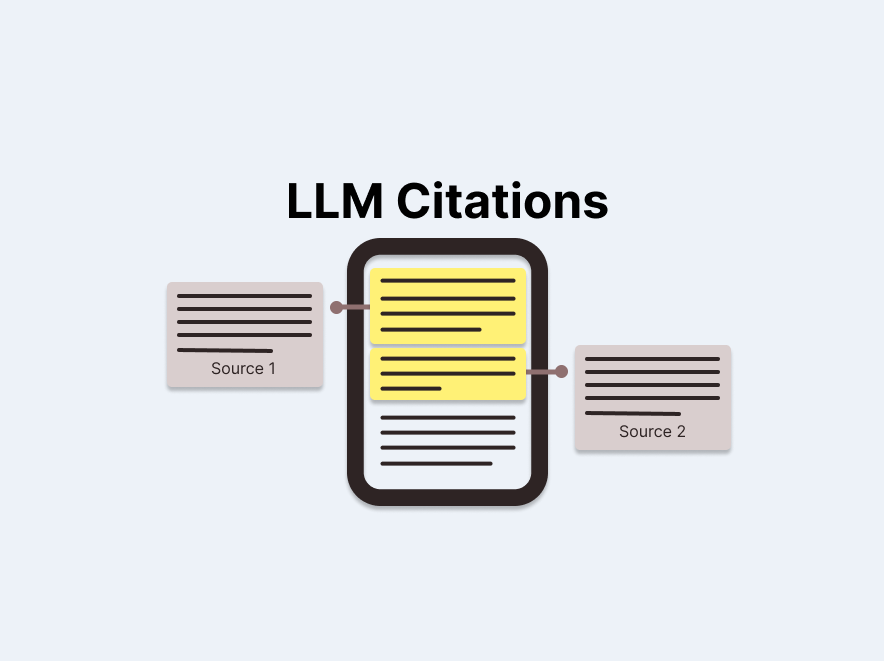
The Citation Gap is the measurable distance between your brand's presence in an LLM’s training data and its visibility in real-time shopping responses.
In traditional SEO, if you rank for a keyword, you get a link. In ChatGPT Shopping, the AI may discuss your category at length, list the benefits of your product type, and even mention your brand name yet fail to provide a citation link to your store. This happens because the AI’s "knowledge" of your brand (from training data) is often disconnected from its "retrieval" system (the live search that finds links).
Current research indicates that ChatGPT cites retailers in roughly 36% of shopping queries. If your brand appears in the other 64% as a "mention" without a link, you are effectively providing free education for your competitors. Closing this gap requires aligning your on-site technical infrastructure with the specific crawlers OpenAI uses to verify live pricing and availability.
The Hierarchy of AI Trust: Retailers vs. Editorial
ChatGPT acts as both a researcher and a storefront, which is why it favors direct retailer citations over traditional blog reviews.
Unlike Google’s AI Overviews, which often cite Reddit or YouTube to provide "community consensus," ChatGPT Shopping is designed to shorten the path to purchase. It prioritizes "Utility through Directness." This means the AI is looking for the most efficient way to answer, "Where can I buy this right now?"
While guest posting and PR still matter for "brand sentiment," they are secondary to the health of your Product Detail Pages (PDPs). If your PDP lacks clean metadata or blocks AI crawlers via robots.txt, ChatGPT will skip your site and cite a marketplace like Amazon instead, even if your site is the original source.
Technical Barriers: Why the AI "Botches" Your Citation

A brand falls into the Citation Gap when its technical architecture prevents an LLM from "verifying" its claims in real-time.
OpenAI uses specific agents, such as OAI SearchBot and ChatGPT User, to fetch live data. If these bots encounter friction, the AI will default to a "hallucinated" summary or a competitor's link. Common friction points include:
- Over-restrictive Robots.txt: Explicitly blocking OpenAI crawlers while trying to rank in ChatGPT.
- JavaScript Heavy Rendering: Content that requires complex clicks to reveal pricing or stock status.
- Schema Gaps: Missing Offer or AggregateRating schema that tells the AI your product is currently "buyable."
How it works: When a user asks for "waterproof hiking boots," ChatGPT performs a "deep research" step. It looks for pages that confirm the "waterproof" attribute through structured data. If your page only says "waterproof" in a creative paragraph but not in the metadata, the AI may not "trust" the claim enough to cite you as a definitive source.
Closing the Gap: From Mention to Transaction
Closing the Citation Gap requires a transition from Brand Awareness to Agentic Readiness.
To ensure your brand is the one cited, you must implement a machine-first content strategy. This doesn't mean writing for robots, but rather structuring your human-centric content so it is easily parsed by an LLM.
The AEO Framework for Shopping:
- Evidence Readiness: Support every product claim with a data point. Use tables and bulleted specs that an LLM can extract as a "Snippet".
- Location-Level Precision: If you have physical stores, ensure your local listings are synced. AI citations are increasingly influenced by a user’s geo-location.
- Third-Party Validation: The AI "checks your work" by looking at Reddit and expert review sites. A brand mentioned on Reddit as "the best for small apartments" gains a massive "referral weight" in the LLM's logic.
The ROI of Citation: Why Mentions Aren't Enough
In an era of zero-click search, a citation is the only way to guarantee a measurable return on your AI marketing spend.
Investors are beginning to value brands based on their "Share of Model" (SoM). High brand mentions in an LLM indicate strong historical authority, but high citations indicate current market relevance. A brand that is cited is 4.4 times more likely to convert a user than one that is simply found through traditional organic search.
The Citation Gap is effectively a leak in your marketing funnel. You are spending money to build a brand that the AI knows about, but you aren't providing the "last mile" infrastructure to let the AI sell it for you.
Conclusion: The Race for the AI Referral
The Citation Gap is the modern version of being on "Page 2 of Google", you exist, but you don't matter to the transaction. As ChatGPT Shopping evolves into a fully agentic system capable of completing purchases via the Agentic Commerce Protocol, the value of a citation will only increase. Brands that audit their AI visibility today and bridge the gap between "being known" and "being referable" will capture the first wave of conversational commerce. The future belongs not to the loudest brand, but to the most cited one.
You can try a free AI Visibility tool at mention.network to see how your brand shows up in AI answers.
If you have any questions, email us at [email protected], or book a quick call for free support with our team here
Frequently Asked Questions (FAQ)
What is an AI Citation?
It is a specific link or source attributed by an LLM (like ChatGPT) within its response, allowing users to verify information or click through to a product page.
Why is my brand mentioned but not cited?
This usually happens if your website blocks AI crawlers, lacks structured Schema markup, or if the AI finds a more "authoritative" or "verified" source for the same information (like a major marketplace).
How can I check if my brand is in the Citation Gap?
You can perform "Prompt Audits" by asking ChatGPT for recommendations in your category. If the AI describes your product but links to a competitor or an aggregator, you are in the gap.
Does traditional SEO help with AI citations?
Yes. High domain authority and quality backlinks still signal "trust" to an LLM, but they must be paired with technical "AI-readiness" to result in a citation.
Is the Citation Gap the same as a Ranking Gap?
Not exactly. A ranking gap is about position, a citation gap is about attribution. You can be the "best" result in the AI's mind but still lose the link to a more "referable" site.