
AI Visibility Tools: Built for Marketers, Not Stores
Most AI-visibility dashboards track brand share of voice for marketing teams. If you run a store, that is the wrong unit: the question is whether AI names your store in where-to-buy answers.

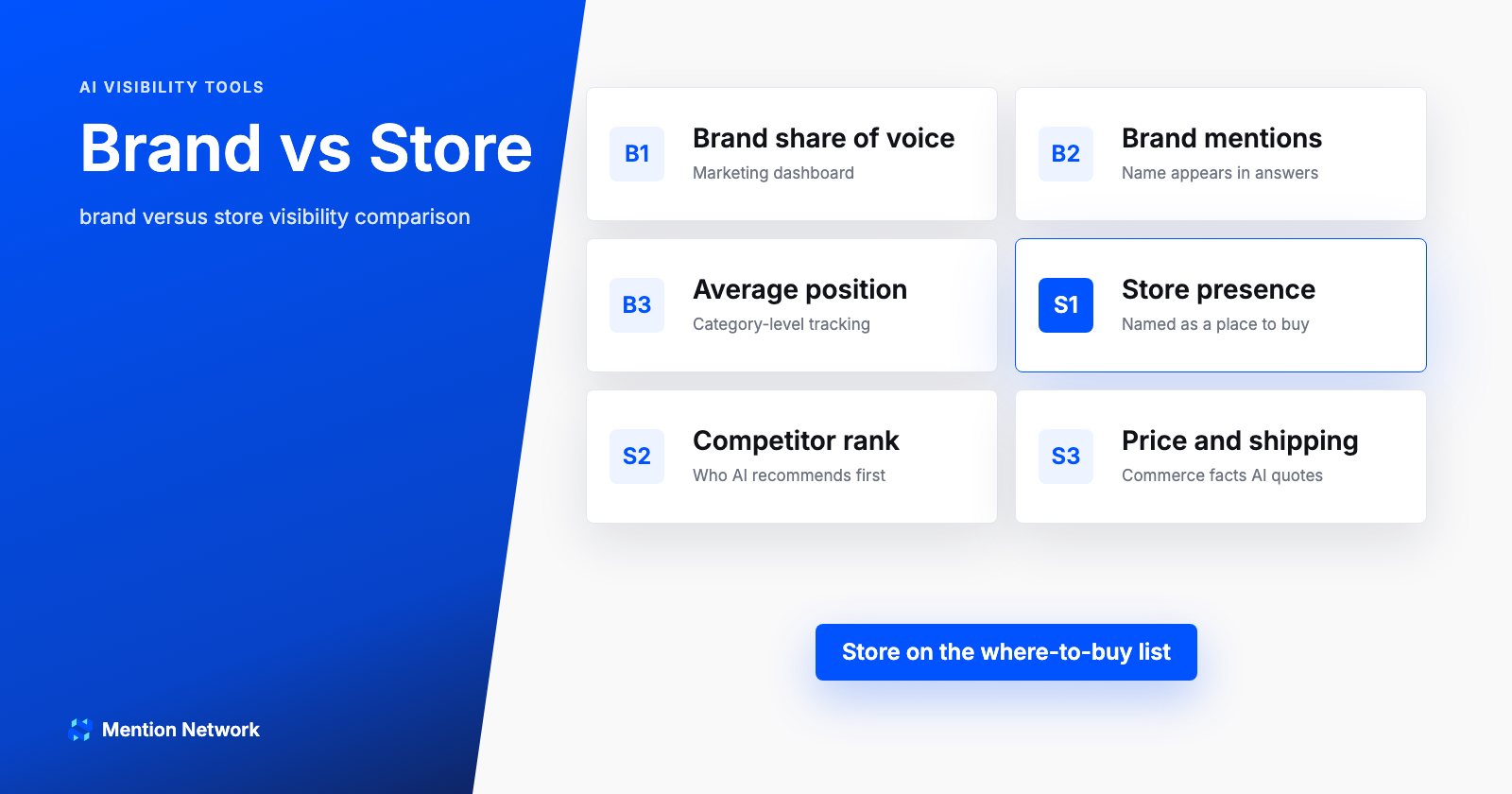
TL;DR Most AI visibility tools for ecommerce are brand-marketing tools in disguise: they track brand share of voice, not your store. The unit that pays is whether AI names your store in where-to-buy answers. Right tools, wrong buyer.
Her AI-visibility dashboard was green. The brands her store stocks were mentioned everywhere, share of voice climbing week over week. Then she asked ChatGPT the question her customers actually ask, "where can I buy this online?", and her store was not in the answer.
The tool was not broken; it was answering a brand marketer's question, because that is who it was built for. That gap is the trap hiding inside most of these dashboards.
Who the category was built for
Open the pricing pages of the leading tools and they tell you plainly. Peec AI calls itself "AI Search Analytics for Marketing teams and SEO agencies". Profound describes itself as "the full stack marketing platform for the marketer of the future". Their headline metrics are visibility score, share of voice, and average position for a brand name.
They are priced to match that buyer. Peec's self-serve plans run from about $95 a month to roughly $795 a month for agencies, with about 15% off on annual billing and extra engines as paid add-ons (per Peec's published tiers, accessed July 2026). That is a marketing-team line item.
None of this is a criticism. For a brand-marketing team, share of voice is exactly the right number.
Brand visibility tools measure a different unit
A brand-visibility tool measures how often a name appears in AI answers. A store has a different unit: whether the store and its products show up when a shopper asks where to buy.
Those are not the same measurement, and one does not stand in for the other. A store can sell famous brands, watch their share of voice climb, and still never appear in a single where-to-buy answer. The brand-versus-product visibility split is the whole reason the numbers can look green while the store stays invisible. It is also why AI visibility tools for ecommerce have to measure the store, not the brand.
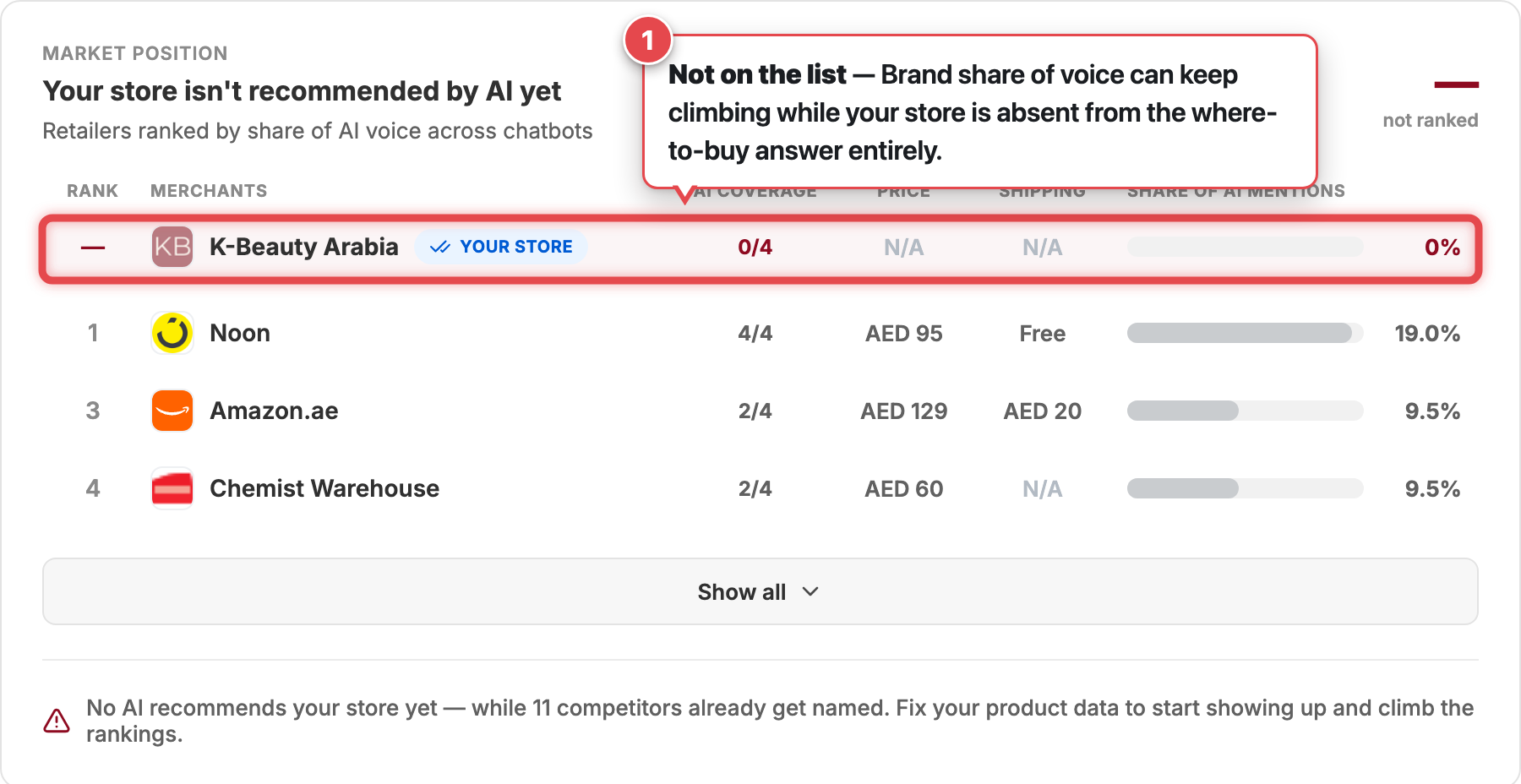
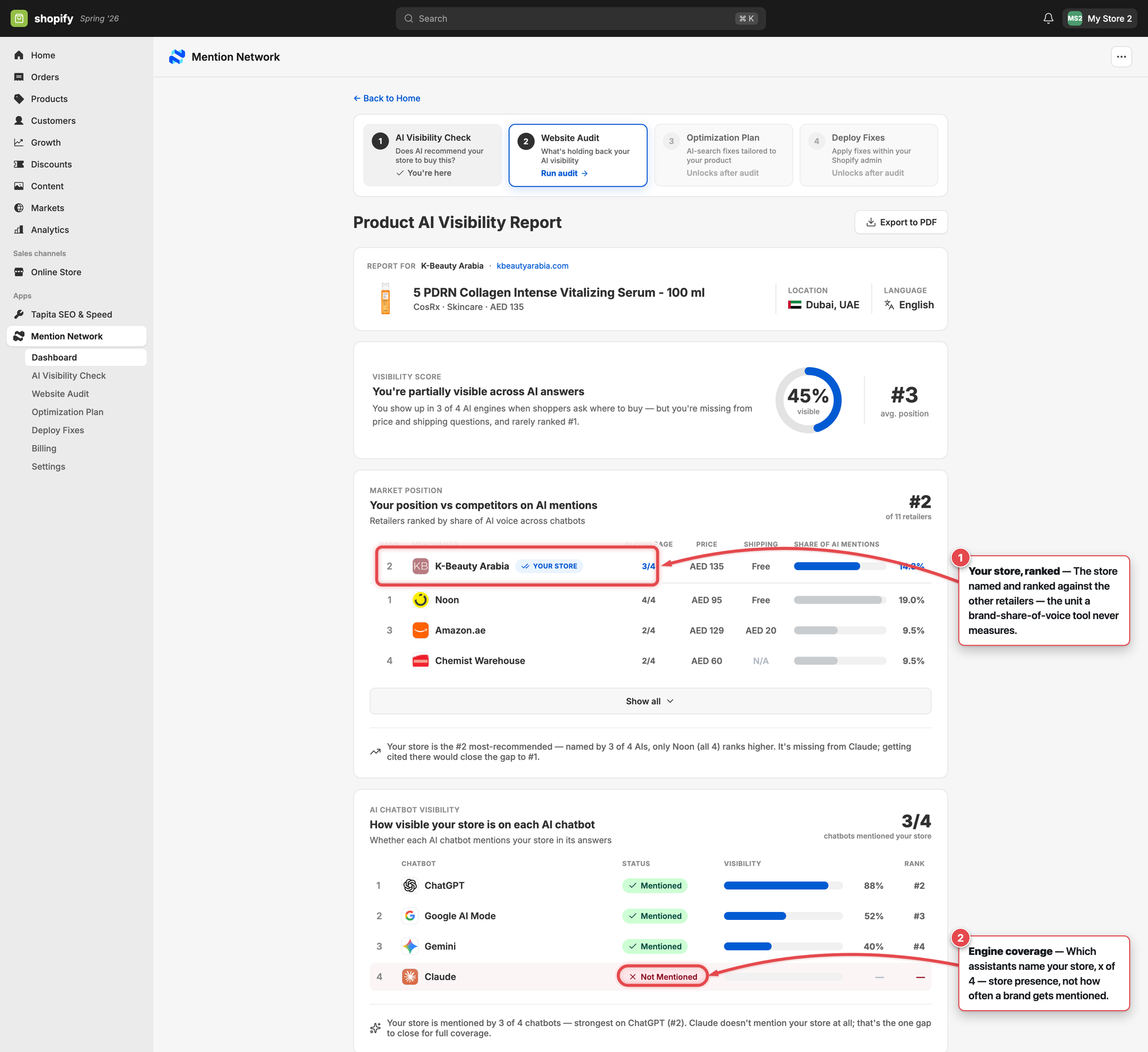
A store tool answers three questions a brand dashboard cannot:
- Is your store named in the where-to-buy answer?
- At what rank, and against which competitors?
- What price and shipping does AI quote next to your name?
Right tool, different question
Use a brand-visibility tool when the brand is yours: you have a marketing team, you care about category-level questions, and you own the name people search. It will do that job well.
It structurally cannot help when the question is where to buy. A reseller does not own the brands it stocks, and no amount of brand share of voice tells it whether AI sends shoppers to its store. For that, you need a tool whose unit is the store.
That is what an AI Visibility Check measures: it asks the where-to-buy questions the way shoppers phrase them, currently 5 buyer intents across 4 assistants (20 answers per product), and shows whether your store and products appear, at what rank, against which competitors. For a shortlist of tools by category, see the AI-visibility tools guide.
Right tools. Make sure you are holding the one built for your question.
Frequently asked questions
Are AI-visibility tools worth it for a small online store?
The popular ones are built for brand-marketing teams, priced for them, and they measure brand share of voice. For a small store the useful measurement is different: whether AI names your store in where-to-buy answers. A tool that measures store presence, not brand mentions, is the one worth paying for.
What is the difference between a brand-visibility tool and a store one?
A brand-visibility tool counts how often a name appears in AI answers and tracks its share of voice. A store tool measures whether your store shows up as a place to buy, at what rank, and against which competitors. A multi-brand store can score well on the first and still be absent from the second.
When should I use a brand-visibility tool?
When you own the brand. If you have a marketing team tracking how your name shows up in AI answers on category questions, share of voice is the right unit and those tools do it well. The mismatch only appears when the real question is where shoppers buy.