
How to get cited by AI: A marketer’s guide to winning in AI search
A practical guide to getting cited by AI: strengthen E-E-A-T, structure content for machine extraction, and build citation velocity so AI search treats you as the source.

The invisible citation economy
AI search changed what winning looks like. The prize now is getting named as a source when Gemini, ChatGPT, or Google's AI writes its answer. When an AI cites you, it drops a link, often with a thumbnail, straight into the response. That citation is the new click. It tells the model your content is a source worth trusting, and it sends real traffic your way.
The rules for earning those citations are still being written. Here's what works so far.
Key takeaways
- Authority is granular. AI often cites a single paragraph or data point, so build credibility at the sentence level, not just the page level.
- E-E-A-T plus clarity is the new SEO. Experience, expertise, authoritativeness, and trustworthiness all matter, but only when your claims are clear and verifiable.
- Structured data feeds the model. Schema markup, tables, and lists make your claims easy to extract and compare.
- Citation velocity compounds. When other trusted sources cite your data, the model reads that as strong evidence you're right.

Mastering the mechanics of AI citation
The new battleground is the gap between what a user asked and what the AI can confidently say. To fill that gap, the model hunts for the clearest, most verifiable piece of information it can find. Give it that piece and you get cited.
Traditional SEO rewarded keyword density and link volume. AI search reads deeper. The model wants to be helpful and factual, and it wants to avoid making things up, so it leans on sources that are:
- Clear and self-contained. A complete thought in one well-built paragraph is easy to lift into an answer. Rambling prose forces the model to work, so it moves on. Write each paragraph so it can stand on its own.
- Explicitly attributed. Link the sources you cite. State the methodology behind your own data. Grounded, traceable claims read as safe to repeat.
- Specific. "Top five email conversion rates for B2B SaaS in Q3 2025" beats "Email marketing tips" every time. Depth gets cited. Generic summaries get skipped.
Think of the AI as running an instant literature review. Your job is to write the executive summary it wishes it already had. That means holding your claims to a journalistic standard: say what you know, show where it came from.
💡Read more about SEO for LLMs
E-E-A-T for the AI era
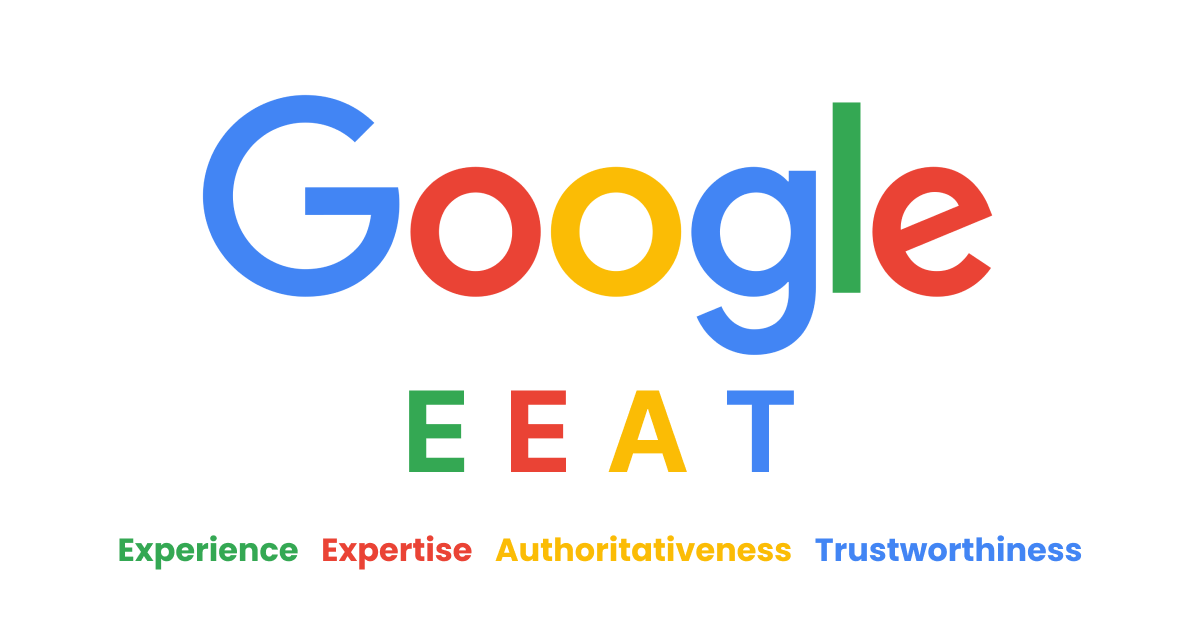
AI cares about where a claim comes from and whether real experience backs it. Google's E-E-A-T standard, experience, expertise, authoritativeness, and trustworthiness, is the filter, and that first E is pulling ahead of the rest.
A model can't shake your hand, so it infers experience from your content and everything around it. An article on scaling a Series A startup should come from someone who has actually scaled one, with their credentials and results in plain sight.
- Experience. Surface the author. Put a real byline on every post and mark it up with Person or Author schema so the model can connect the content to a verifiable person and their track record.
- Expertise and authority. Publish something new. Original surveys, proprietary data, and firsthand case studies are what AI reaches for, because it's an aggregator and new information is exactly what it lacks. When you show data, show it in clean charts and tables the model can read.
- Trustworthiness. Date every page. Keep a visible revision history. Host on a secure, reputable domain. Stale or sketchy pages get pushed down.
One useful gut check: could a machine verify your author's competence and your data's integrity in about 30 seconds? If not, the page needs better structure and clearer attribution before it'll earn a citation.
Structuring content for machine ingestion
Treat your content as a set of verifiable facts a machine can pull one at a time, not a wall of text it has to wade through.
Models are good at pattern-matching and pulling data out of structured elements. Format with intent and you're feeding the LLM exactly what it's built to extract.
- Write headings that name the content under them. "Projected 2026 ROI for hybrid cloud" tells the model exactly what follows. "What we think about the future" tells it nothing. Precise headings get indexed under precise topics.
- Lean on lists and tables. AI pulls straight from lists because each item is a discrete fact. Tables are even better for anything comparative: a table of setup cost, time-to-value, and integration complexity across three CRMs is prime citation material.
- Go past basic Article schema. Use Schema Markup that fits the content. HowTo schema turns a guide into an ordered answer the AI can reconstruct. FAQPage schema hands it pre-vetted question and answer pairs. FactCheck schema flags content that verifies or debunks a claim, which reads as high trust.
The goal is simple: make every row, bullet, and definition able to stand alone and answer one specific question. That's the unit the model actually cites.
The velocity and context of the citation network
A claim gets stronger every time the wider web repeats it. In AI search, how often and by whom your data gets cited works as a proxy for whether it's true.
Old link building chased Domain Authority. The newer game is claim authority, and it runs on a few things:
- Citation velocity. When you publish a fresh statistic and ten high-authority sites reference it within a month, the model registers fast, credible validation.
- Internal linking that backs your own claims. Say your research found 45% of shoppers prefer video over text for product reviews. Link that line back to the study it came from. That loop shows the model your insight is grounded and consistent.
- Topical depth. A cluster of 50 interlinked articles on one subject signals real expertise. A lone post on the same subject doesn't. Coverage and interlinking read as institutional knowledge.
Why it matters
A model can build confidence in your data without ever crawling your site. If your statistic shows up across enough trusted, independent domains, the AI trusts it by association. So syndicate your best insights to partners and publications you respect. The more credible places a claim lives, the faster it earns citations.
Strategy and maintenance: The AI-first content workflow
Getting cited once is luck. Staying cited is maintenance. Treat your best pages as living documents.
- Audit your citations after publishing. Run the queries your content targets through Google's AI answers, ChatGPT with browsing, and the rest. If you're missing, study the sources that show up instead: what tables, data, or author signals do they carry that you don't? Then add them.
- Recertify your facts. Data ages. A number from Q3 2024 carries less weight than one from Q3 2025. Review high-value pages every 6 to 12 months, update the numbers, and make the update visible ("Updated for 2026: Q1 conversion rates").
- Tier your content. Keep foundational guides that rarely change and hold long-term authority. Keep fast-moving pages, trackers and data feeds, that invite real-time citation. And keep timely commentary that points back to the foundational pieces.
Done well, this turns your library into the source the AI keeps coming back to.
💡Related topic: The Future of AI Recommendations: How LLMs Will Shape Consumer Choice
Frequently asked questions (FAQ)
What's the single most important change to my existing content?
Break up the walls of text. Go through your best articles and turn key concepts, steps, and comparisons into bulleted lists, numbered lists, and tables. Clear structure makes a page easier to read and far easier to cite.
Does technical SEO still matter for AI citation?
Yes. Content quality is what the AI weighs, but technical SEO is the layer underneath it. A fast, secure, mobile-friendly site is what lets Google discover, crawl, and index your work in the first place. Poor technical health keeps good content from ever being seen.
How long until a content change affects AI citations?
Structural changes and new schema markup tend to get picked up within days to a few weeks, as Google re-crawls the page. Building the deeper E-E-A-T and citation velocity that signal real authority takes longer, usually months of steady, high-quality publishing.
Is AI recommending your store? Check free.