7 ChatGPT Brand Correction Tools to Find and Fix Wrong AI Answers in 2026
ChatGPT says your flagship product was discontinued, quotes a price from two years ago, or applies a reseller’s return policy to your official store. You can correct the current chat with another prompt. The next shopper may still receive the same wrong answer.

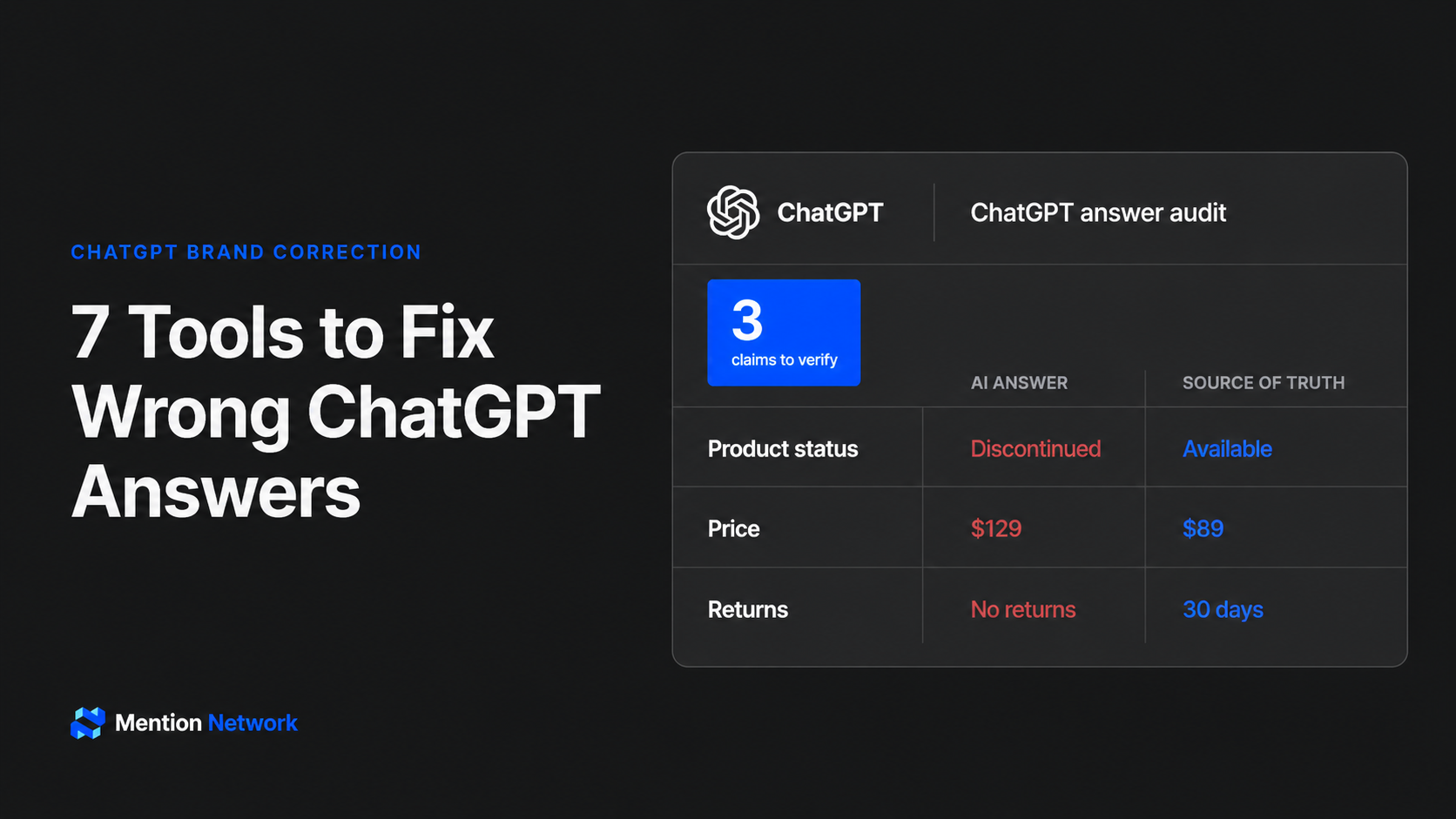
That is the gap a ChatGPT brand correction tool should help you close. It cannot edit the model on demand. It can capture the answer, verify individual claims, trace the sources behind them, help your team fix the inputs it controls, and measure what changes afterward.
OpenAI warns that ChatGPT can produce confident but incorrect answers. Even when ChatGPT Search includes citations, you still need to open each source and confirm that it supports the claim.
TL;DR: Choose Profound when claim-level fact-checking is the main job; Mention Network for Shopify product, listing, and store-level errors; Semrush for teams already working inside an SEO stack; Scrunch for agent-readable site delivery; Peec AI for source and cross-model analysis; ZipTie for content optimization after monitoring; and OtterlyAI for a lower-cost baseline. Choose by failure mode, not feature count.
Disclosure: Mention Network publishes this article and is one of the products compared. We used public product pages, documentation, and pricing reviewed on Aug 28, 2026. This was not a hands-on benchmark test, and pricing or features may change.
What should a ChatGPT brand correction tool actually do?
Visibility and accuracy are different problems. A brand may appear consistently while AI still gets its price, features, availability, or policies wrong. A visibility score alone cannot tell you whether those facts are correct.
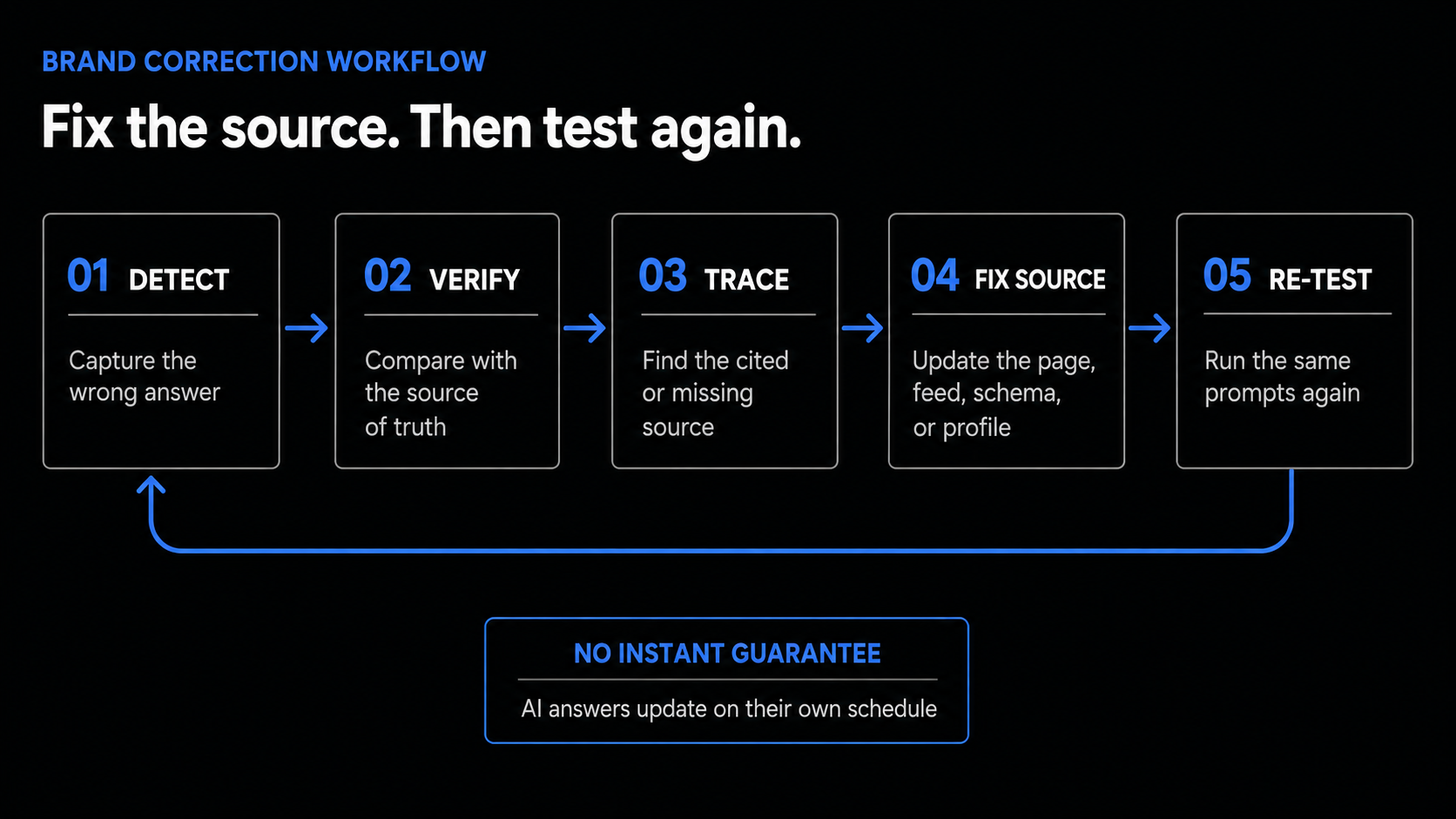
A useful correction workflow needs four layers:
- Detect: Save the prompt, model, answer, date, market, and search mode.
- Verify: Compare each material claim with an approved source of truth.
- Trace and act: Identify the URLs or product data reinforcing the error, then fix what your team controls.
- Re-test: Run the same prompt set again and measure whether the claim and its sources change.
No third-party platform can guarantee when ChatGPT will update. The tool’s job is to make the evidence, source repair, and re-testing loop repeatable. If you need the implementation steps, use Mention’s guide to correcting inaccurate brand information in ChatGPT and other LLMs. That page owns the correction workflow; this article helps you choose the right tool for it.
How we compared the seven tools
We assessed every option against the same questions: Can you inspect the full answer? Does the product help verify factual claims? Can you trace cited or retrieved sources? What action can you take next? Can you re-run the same prompts over time? Does the product work at brand, domain, store, product, or SKU level?
These layers are not interchangeable. Share of voice measures presence, while correction requires evidence about the exact claim. Use the AI visibility metrics framework to keep mention, citation, position, recommendation, and accuracy separate.
Quick comparison
Prices are in USD and reflect the public plans reviewed for this draft. Confirm plan access, quotas, model coverage, and add-ons with each vendor before buying.
1. Profound: best for claim-level fact-checking
Profound comes closest to the literal meaning of “brand correction.” FactCheck extracts factual claims, compares them with a company Knowledge Base, classifies each claim as accurate, inaccurate, or not relevant, and surfaces the associated citation URL. It also treats factual accuracy separately from sentiment, so a price claim is not evaluated like an opinion.
This makes Profound a strong fit for brands with sensitive pricing, policy, or product claims and a clean internal source of truth. Teams still need to maintain that Knowledge Base and act on the findings. The Starter plan is publicly listed from $99/month, but the pricing page does not confirm that FactCheck is included in every plan. Check entitlement before buying.
2. Mention Network: best for Shopify product and store-level errors
For ecommerce teams, the question is not only whether AI knows the brand. It is whether an assistant recommends the right product, names the right place to buy it, and states the correct sales information. That is the practical difference between brand visibility and product visibility.
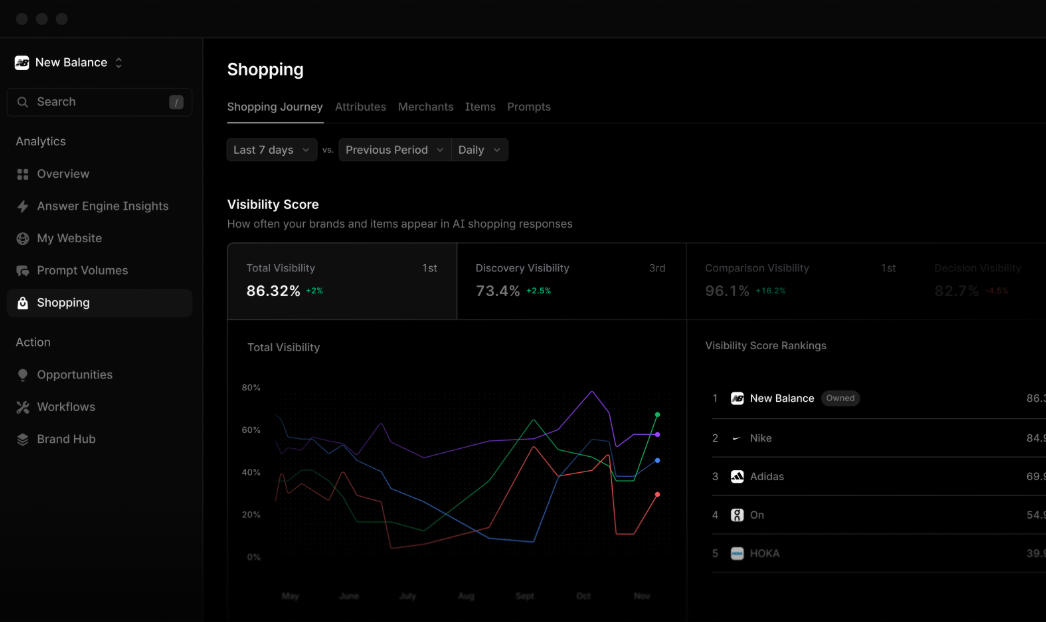
Mention Network checks ChatGPT, Gemini, Google AI Mode, and Claude, then connects the raw answers with a store and product-page audit. Results map back to a store, product, listing, or SKU instead of stopping at brand-level share of voice. Shopify merchants can review an optimization plan and apply approved product-page fixes inside the app. The first product check and audit are free; paid plans start at $19/month.
Use Mention when a wrong or missing answer is tied to Shopify product data, a listing, or a where-to-buy decision. Its deepest fix workflow currently focuses on Shopify. It also cannot prove that one product-page change caused a new AI answer, so teams should re-test the same prompts and report the scope. See how the Mention Network check works.
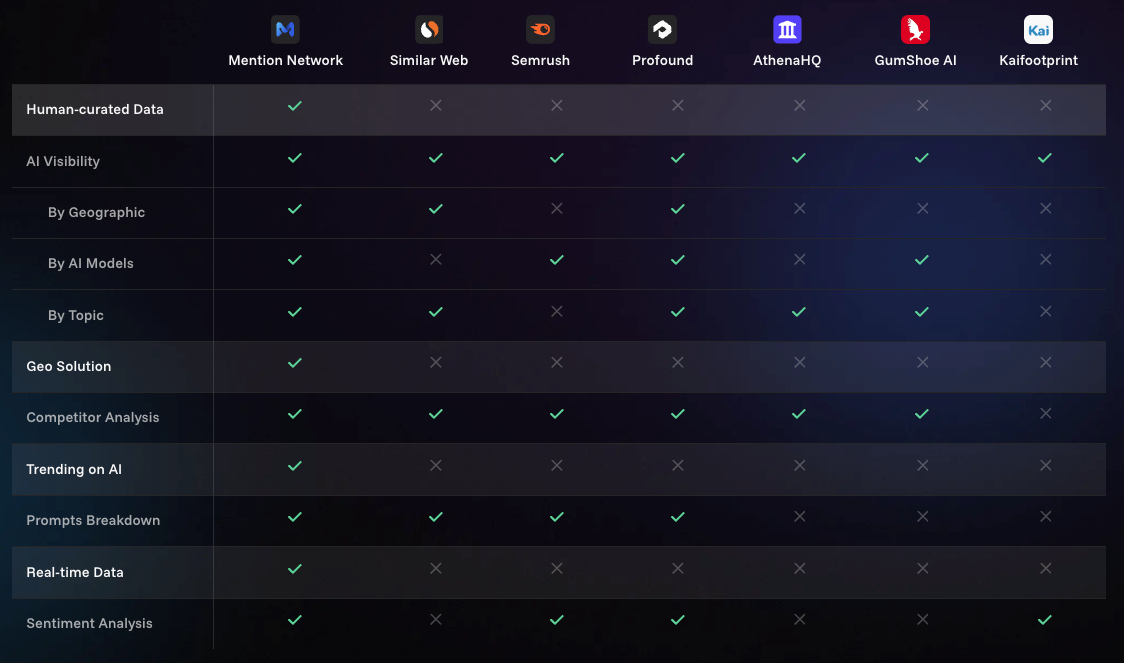
3. Semrush AI Visibility Toolkit: best for existing Semrush teams
Semrush lets teams open full AI responses, check whether a prompt includes the brand, filter by LLM, and inspect cited pages. Its Brand Performance report adds perception and narrative drivers, which can help a brand team find repeated misdescriptions rather than watching a single visibility score.
This is a practical fit when AI visibility needs to sit beside established SEO, content, and competitor workflows. The toolkit costs $99/month; Prompt Tracking updates daily, Brand Performance updates weekly, and extra domains or locations may add cost. Semrush is strongest at brand and domain analysis, not at verifying product truth at SKU level.
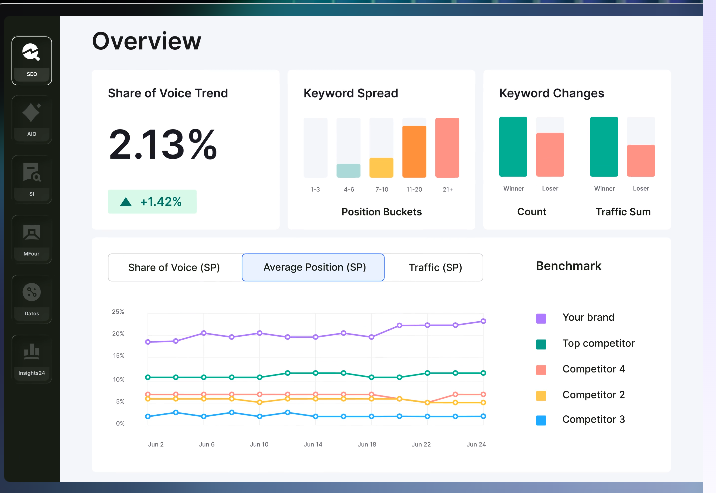
4. Scrunch: best when AI agents struggle to read the site
Scrunch combines prompt monitoring, page audits, and an Agent Experience Platform (AXP). AXP provides an agent-readable version of a site, which may help when correct content is hidden behind JavaScript or a structure that is difficult for AI agents to crawl. Scrunch publicly lists monitoring across ChatGPT, Claude, Gemini, Perplexity, Google AI Mode and AI Overviews, and Meta.
Choose Scrunch when the source of truth is already correct but its delivery layer is the bottleneck. AXP addresses owned-site access; it does not repair inaccurate reviews, directories, reseller pages, or publisher articles. Because it changes how agents receive site content, teams should evaluate it as an infrastructure decision. Pricing starts at $250/month with a seven-day trial.
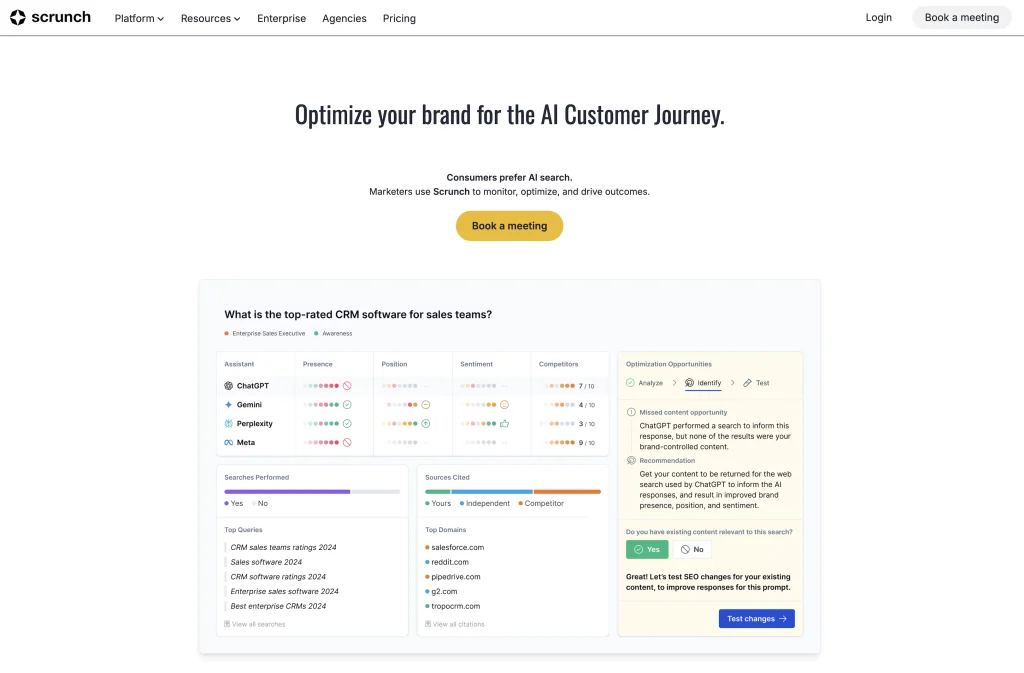
5. Peec AI: best for source analysis and cross-model gaps
Peec lets teams inspect a full chat with its prompt, response, source URL, query, and extracted product. It separates brand visibility from source visibility, helping you spot cases where a brand appears without its official domain or where the site is retrieved but the brand is still absent.
Peec also organizes opportunities into owned, earned, and user-generated-content actions. That makes it useful for teams deciding whether the next move belongs on their site, with a publisher, or in a community channel. The Brand plan starts at $95/month. Public documentation does not describe a source-of-truth fact checker equivalent to Profound, so a person still needs to decide which claims are wrong.
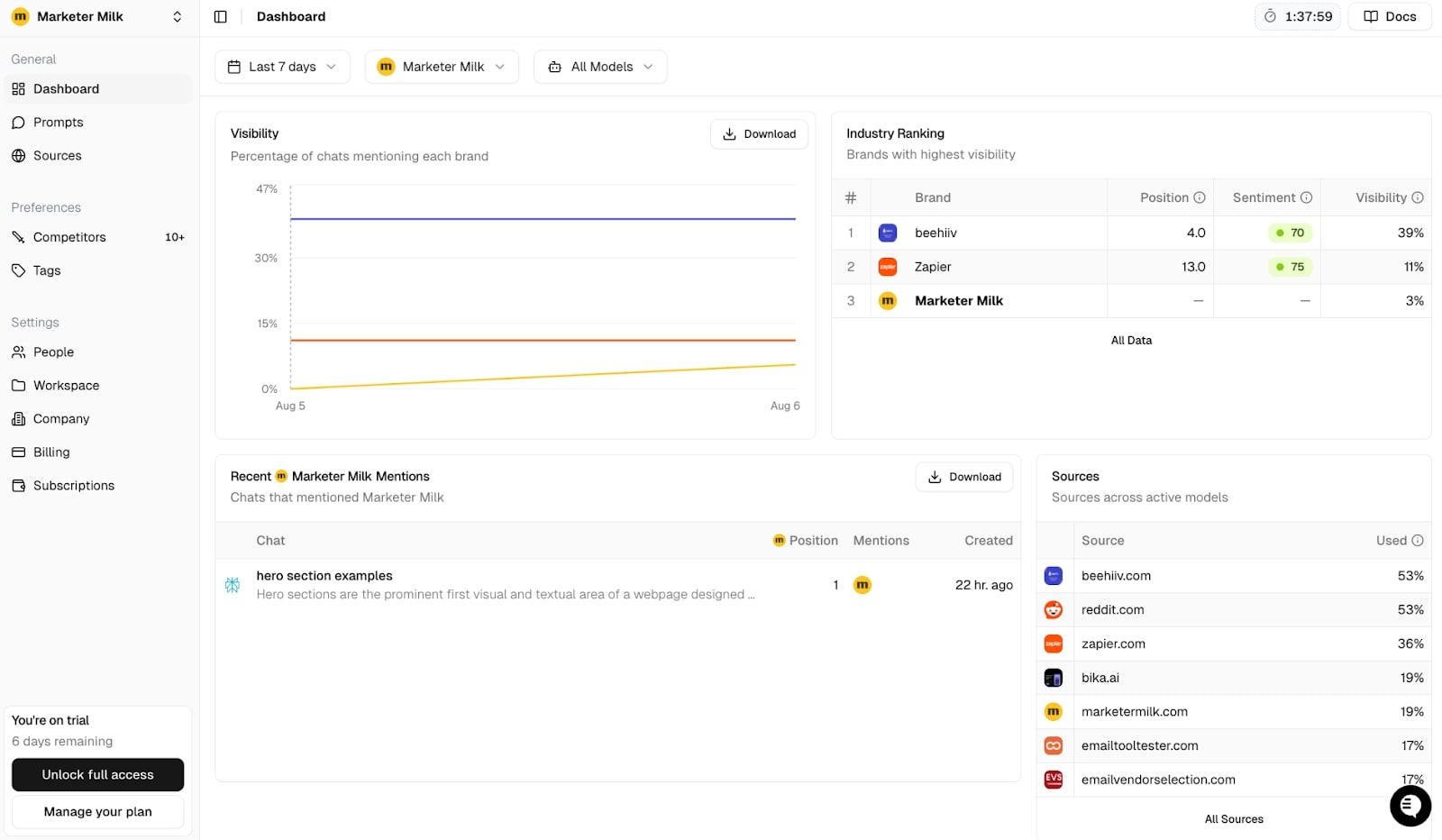
6. ZipTie: best for content optimization after monitoring
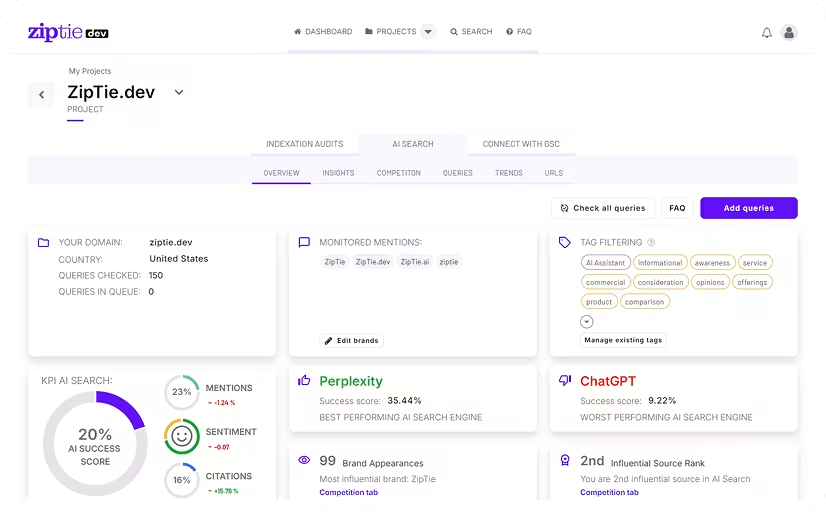
ZipTie monitors ChatGPT, Perplexity, and Google AI Overviews. It provides full responses, mentions, sentiment, citations, source attribution, and historical changes, then connects those findings with Content Optimization and Insights. Pricing starts at $69/month for 500 checks.
This is a compact workflow for content teams that want a recommended next step after they identify a source or visibility gap. It is not a dedicated claim-verification layer. Updating owned content may also be insufficient when the wrong information comes from a retailer, directory, or publisher, so trace the source before applying an optimization recommendation.
7. OtterlyAI: best for a lower-cost monitoring baseline
OtterlyAI runs prompts daily and tracks brand mentions, citations, sentiment, and answer changes over time. Base plans include ChatGPT, Google AI Overviews, Perplexity, and Copilot; Claude, AI Mode, and Gemini are add-ons. Lite monthly starts at $29 for 15 prompts.
This is an accessible baseline for a small team that needs to save answers and watch for changes without starting with an enterprise platform. The Lite quota can become restrictive across several markets, products, or intent groups. Public documentation also does not show a Knowledge Base that automatically verifies each factual claim, so accuracy review remains a human step.
Which tool should you choose for each situation?
There is no universal winner. Start with the failure you need to resolve:
You can combine several layers, but each product should answer a different question. Three dashboards that measure the same metric do not create three times the insight.
What should you do after a tool finds a wrong answer?
Keep the handoff from detection to correction short:
- Save the evidence: prompt, model, date, location, search mode, full answer, and cited URLs.
- Break the answer into material claims, then select an approved source of truth for each one.
- Fix conflicting owned pages first, contact external sources when needed, and re-test the same prompt set across several checks.
A correction is not complete because one answer changed. Look for the wrong claim to disappear or decline across the defined prompt set, for answers to use a more appropriate source, and for the corrected information to remain consistent across the models and buying intents that matter. Report the scope instead of claiming you “fixed ChatGPT” after one screenshot.
For the full implementation process, use the ChatGPT brand correction guide.
Conclusion
Choose Profound when you need claim verification against a Knowledge Base. Choose Mention Network when the error lives at Shopify store, product, listing, or SKU level. Use Semrush for brand narratives inside an SEO stack, Scrunch for agent-readable delivery, Peec AI for source analysis, ZipTie for content action, and OtterlyAI for a lower-cost monitoring loop.
The operating model stays the same: detect, verify, trace, fix the inputs you control, and re-test. No tool can guarantee that ChatGPT will rank, cite, or recommend your brand.
If you run a Shopify store, run a free AI Visibility Check with Mention Network to see whether ChatGPT, Gemini, Google AI Mode, and Claude name your store in buying answers. Your first product check and audit are free, with no credit card required.
Frequently asked questions
What is a ChatGPT brand correction tool?
A ChatGPT brand correction tool helps a business capture inaccurate brand or product information in AI answers, inspect the supporting sources, compare claims with an approved source of truth, and monitor what happens after controllable inputs are updated. “Correction” means supporting that workflow, not editing ChatGPT directly.
How is a ChatGPT monitoring tool different from a correction tool?
A monitoring tool primarily records mentions, citations, sentiment, prompt performance, and changes over time. A correction workflow adds claim review, source-of-truth comparison, source tracing, action, and consistent re-testing. Some products cover both layers; others specialize in only one.
Which tool is best for verifying specific factual claims?
Profound is the strongest fit in this list when the job is comparing extracted claims with a company Knowledge Base. Its FactCheck documentation describes accuracy classifications and associated citation URLs. Confirm which plan includes the feature before buying.
Which tool is best for wrong Shopify product or store information?
Mention Network is the ecommerce-focused option when ChatGPT or another assistant misstates or omits a Shopify product, listing, SKU, store, or place to buy. It connects raw answer evidence with a product-page audit and a Shopify fix workflow.
Do you need more than one brand correction tool?
Sometimes. A large brand might use one platform for claim verification, another for category-wide monitoring, and a product-level tool for ecommerce buying answers. Combine tools only when they cover different failure modes; overlapping dashboards usually add cost without adding evidence.