
What is fan-out queries? The database strategy powering scalability and real-time systems
Fan-out queries explained: how distributed systems and AI search engines like Google AI Mode split one question into many parallel searches, and how to optimize for it.

In this piece:
- What is a fan-out query?
- How Google AI Mode fans out (the technical breakdown)
- Why fan-out matters for ecommerce brands
- How to measure your fan-out presence
- The 4-step playbook to appear in more fan-out results
- Methodology
- Run your first fan-out visibility check
What is query fan-out?
Fan-out is how a big distributed system answers one request by asking many servers at once. Social platforms and e-commerce sites run on it. So do AI search engines.
Here's the problem it solves. When millions of people search at the same time, a single central server chokes and slows to a crawl. Modern systems get around that by splitting their data across many smaller, dedicated servers. When you send one search request, the system fans it out: it pushes the same small question to every relevant server simultaneously, gathers the individual answers, and merges them into one result before handing it back to you.
The payoff is speed. Parallel reads let the system serve millions of requests at once instead of grinding through them in line.
AI search systems (also called LLMs) like Google AI Mode and ChatGPT borrow the same idea to make their answers better.
Here's an example of how query fan-out works:
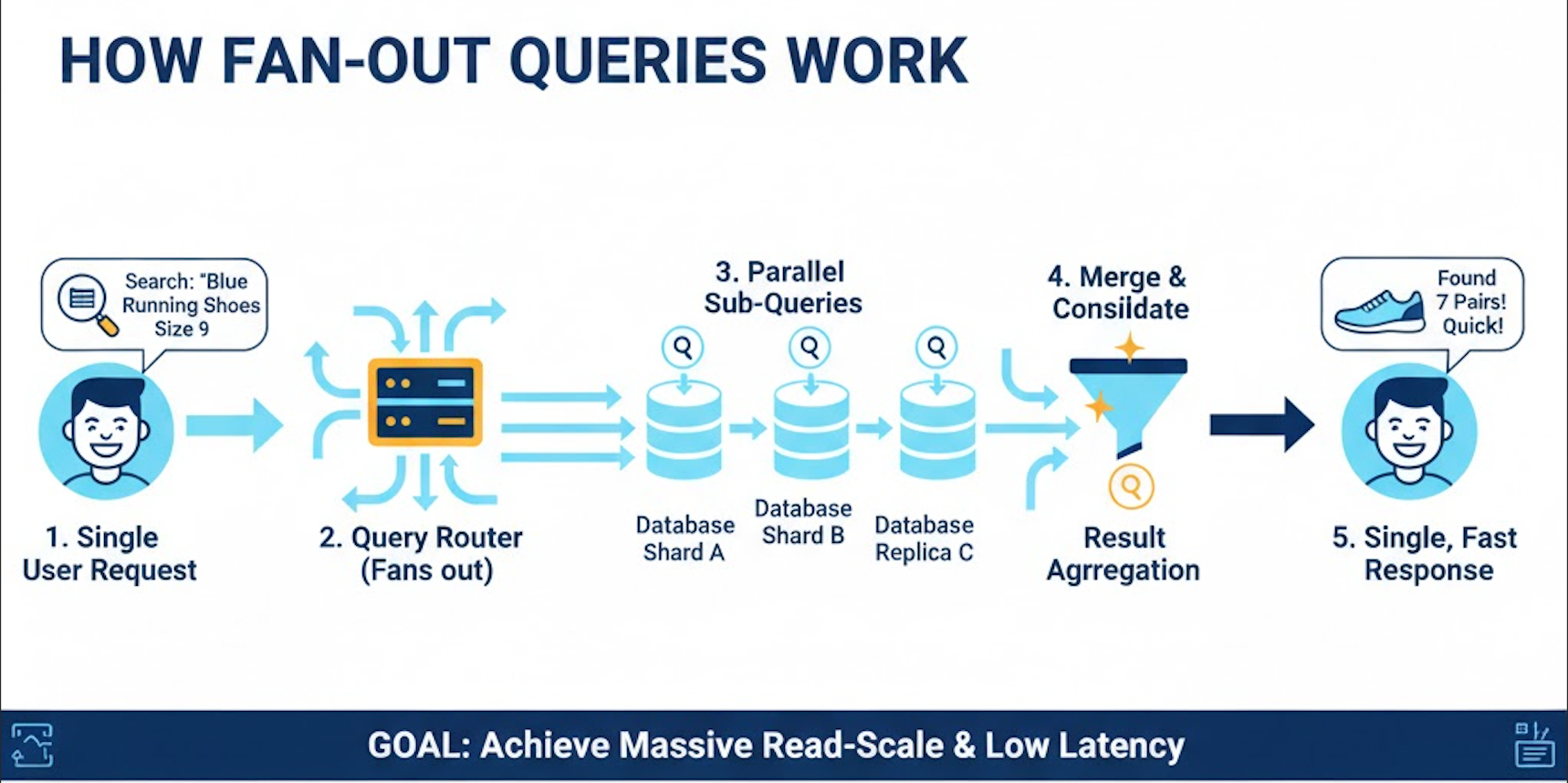
How Fan-out Queries work.
Query fan-out in Google AI Mode
Google put the term "query fan-out" in front of the public when it launched Google AI Mode, the conversational interface built directly into Google Search.
At the Google I/O 2025 keynote, Head of Search Elizabeth Reid explained it this way:
"AI Mode isn’t just giving you information, it’s bringing a whole new level of intelligence to search. What makes this possible is something we call our query fan-out technique."
"Now, under the hood, Search recognizes when a question needs advanced reasoning. It calls on our custom version of Gemini to break the question into different subtopics, and it issues a multitude of queries simultaneously on your behalf."
Search with Google AI Mode and you'll often see the model fire off several web searches as part of its reasoning.
In this example, Google split the user's original query into 19 distinct searches and returned a highly specific answer.
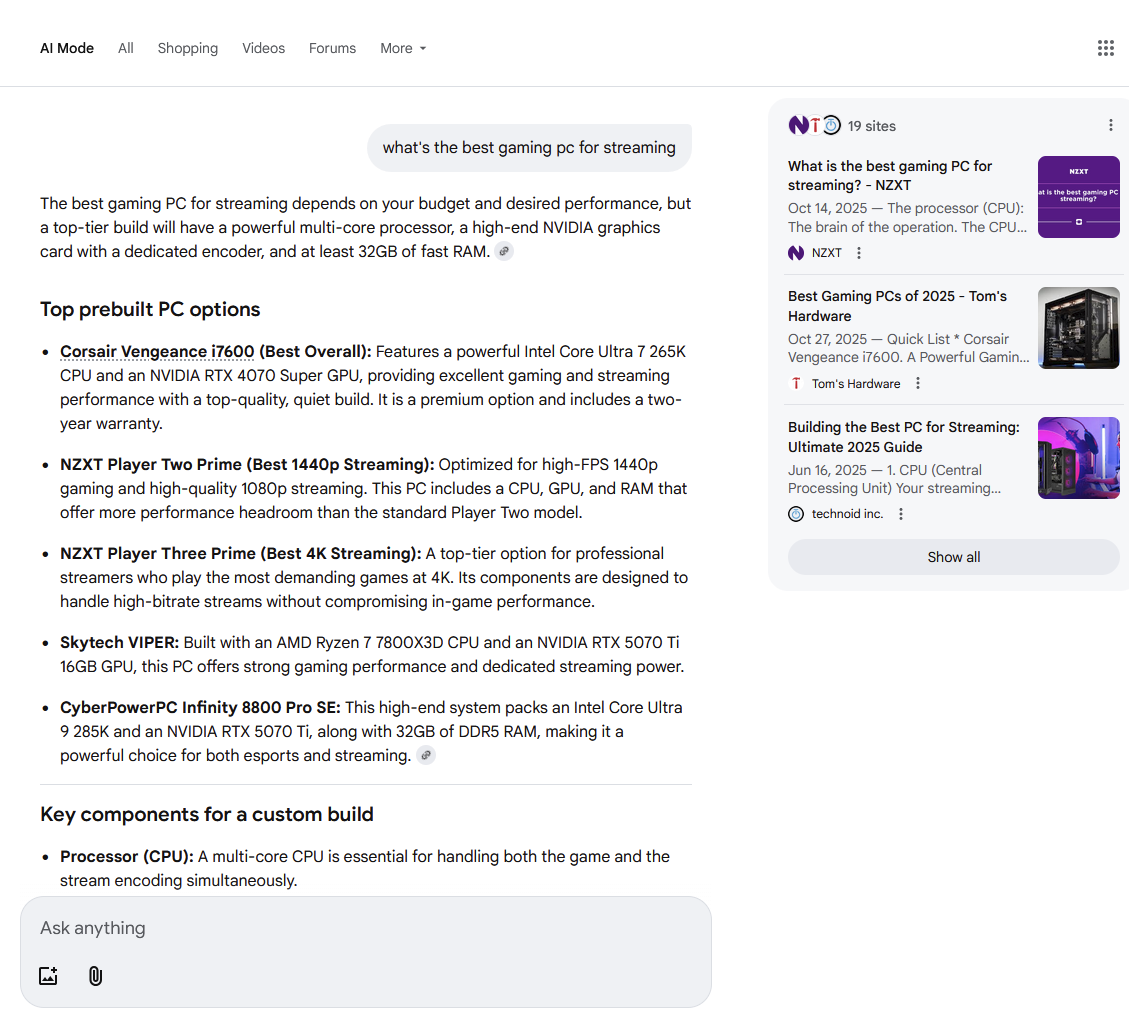
Google AI Search Mode.
Traditional search hunts for the best direct keyword match. This example shows why that falls short: sometimes no single page satisfies the whole question.
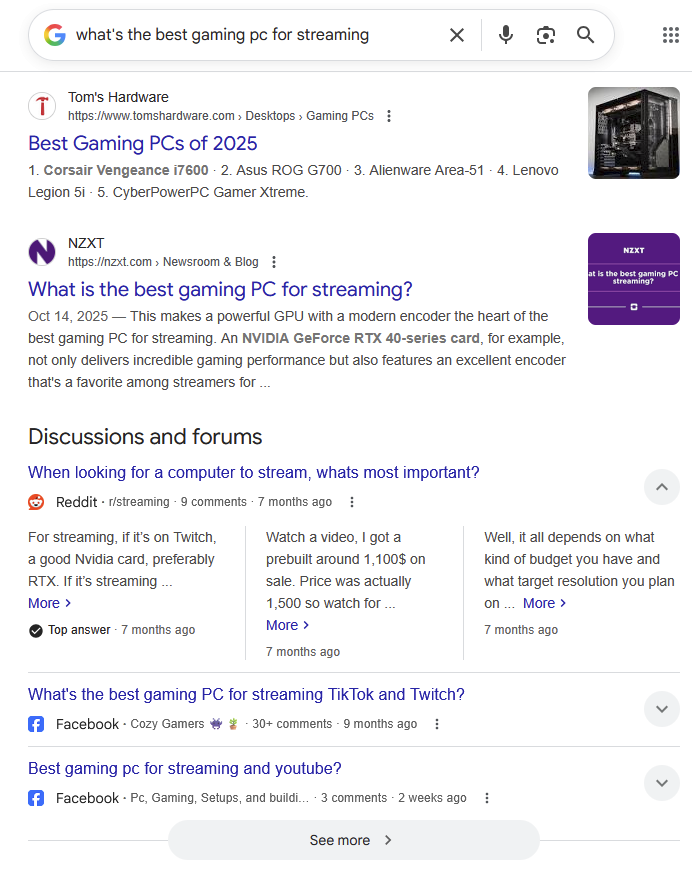
Google traditional search
Why query fan-out matters for marketers
Fan-out lets AI systems build specific, synthesized answers on the spot, which can cut a user's need to click through to any source at all.
That gives AI answers real weight over what people buy. Get your brand named, and named well, in the conversations that matter, and you reach shoppers at the moment they're deciding. AI adoption keeps climbing, so that weight only grows.
Content built for query fan-out lifts your AI visibility in two ways:
- AI mentions, where your brand is named directly inside the AI's synthesized answer.
- AI citations, the linked references to your content shown next to the answer (like the ChatGPT example below).
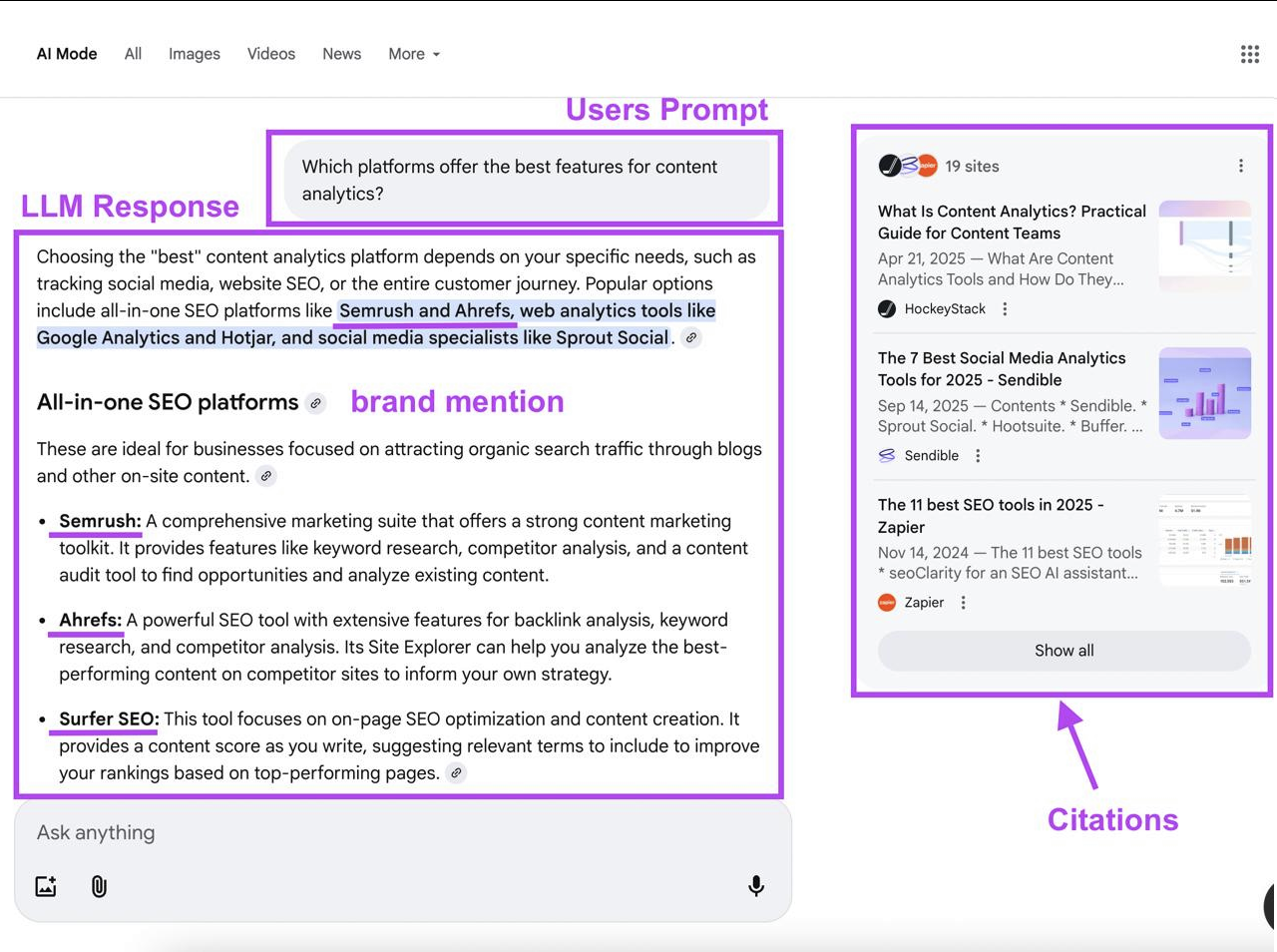
Google AI Mode response showing a user query, brand mentions, and citations from 19 web sources.
Fan-out doesn't work like a traditional ranking algorithm, so it needs its own content approach. The upside: content built for fan-out usually performs better in classic search too.
Read more: A Deep Dive into SEO for LLMs and the AI-First Search Economy
How to build AI visibility through query fan-out
Winning at fan-out takes more than traditional SEO. You identify your core topics, cover them completely, write for natural language processing (NLP), and add structured data. Put together, that content architecture is what earns you AI visibility.
1. Identify your core topics
Start with the areas where you want AI systems to treat your brand as the authority. Narrow focus beats broad ambition here.
Begin with topics tied directly to your business and what you sell. You shape how the brand gets described in AI answers, and you show up during the research stages that decide a purchase. Best of all, these are the subjects where you're the genuine expert, which hands the model a strong trust signal.
A platform like Mention Network shows which category questions shoppers put to ChatGPT, Gemini, and Google AI, and whether your brand gets named in the answers. If shoppers care more about your sustainability story than your newest feature, you'll see it, and you can prioritize that content.
Once your brand topics are solid, expand into related areas that fit your expertise. Mention Network publishes about its own AI visibility product and about the wider world of AI shopping and search, because its authority covers both.
2. Build comprehensive topic clusters
AI systems reward deep, complete coverage. Topic clusters, groups of tightly interlinked pages, are how you prove it.
A cluster runs on a pillar page that gives a broad, authoritative overview of the core topic, plus several cluster pages that go deep on specific subtopics.
Clusters map neatly onto fan-out. Every fan-out spins off a batch of sub-queries, and a well-built cluster gives the AI a matching answer for many of them. Cover every angle and more of your content can land in the response, which also builds the topical authority that makes AI systems prefer your pages.
3. Create genuinely helpful content
To satisfy the spread of sub-queries fan-out produces, your content has to be deep and genuinely useful.
Break each subtopic into more granular questions, then answer them right there in the subsections of the page.
You can surface those questions by:
- running keyword research for the exact long-tail phrases people search
- reading the FAQs and dedicated sections your competitors publish
- scanning forums and social platforms for questions that keep coming up
- asking your own sales and support teams what customers actually ask
Mention Network goes a step further and shows the exact brand and product questions shoppers ask AI directly. Answer those and you reach customers at the moment they choose what to buy.
4. Write for natural language processing (NLP)
AI systems lean on natural language processing (NLP) to read your content and pull facts out of it. Write for that process or stay invisible.
A few things that help:
- Write in chunks. Self-contained sections that stand on their own are easier for an AI to retrieve and summarize. Use full sentences and restate context where it helps.
- Define terms directly. Introduce a concept, then define it plainly. The AI may pull that definition during fan-out to set context.
- Signal your hierarchy. Descriptive subheadings and proper heading tags (H2, H3) tell the AI how your page is organized. Tables and lists give it clean, parsable facts.
- Keep the language plain. Skip the jargon, the tangled sentences, and the filler that gets between a reader and your point.
5. Add schema markup
Schema markup puts machine-readable labels on the data on your page, so AI systems read your content with far less guesswork.
Use Product schema to label a product's name and image, and Offer schema to label its price and availability. Those explicit labels make it much easier for an AI to pull the exact facts it needs when it answers a product-related fan-out query.
Check Schema.org for the types that fit your business, such as Article, Organization, or HowTo, and follow its guidance to implement them. This is the layer that hands machines real clarity.
None of this runs on guesswork.
Mention Network was built for exactly this. It measures where your brand and products show up across ChatGPT, Gemini, and Google AI, diagnoses why an answer skips you with a store audit that explains the gap, and drafts the fix for your product page so you can preview it and apply it in your store admin. Start with a free check-up and see where you stand.
Related topic: What is Mention Network? A Complete Guide to AI Visibility and GEO
FAQs
Is query fan-out the same as traditional SEO?
No. Traditional SEO matches keywords and builds links to lift a page's overall rank. Query fan-out structures content into chunks so an AI can pull out a small, verifiable fact and drop it into a synthesized answer.
What matters most for influencing an AI's synthesized answer?
Topical authority plus content structure. The AI has to trust your domain on the subject first, which is what topic clusters build. Then your content needs clear headings, definitions, lists, and schema markup so the AI can quickly and confidently grab the fact it needs for one of its sub-queries.
Should I stop writing for humans and write only for NLP?
No. The best content does both. Use clear, conversational language that people enjoy, and structure it with headings, lists, and schema that machines prefer. Good NLP content reads just as easily for a person as it parses for an AI.