What is Google AI Mode? How to Earn a Spot in the AI Answer

Google AI Mode is changing what “being visible” means in search. Instead of a classic page of blue links, users get an AI Answer that synthesizes information and highlights a small set of sources. In practice, that means you are no longer competing only for rank. You are competing for inclusion in the response itself, plus the limited set of citations and links the interface chooses to show.
For marketers, this shift creates a new gap: you can still rank well and still be absent from the AI Answer. That is why AI Visibility matters. It captures whether your brand appears, how it is described, and which sources Google’s system seems willing to rely on. If your content is hard to summarize, hard to verify, or disconnected from trusted ecosystems, your AI Visibility can stay low even when your SEO looks “fine” on paper.
What Google AI Mode Is?
Google AI Mode is a search experience that uses generative AI to synthesize answers from multiple trusted sources instead of simply ranking web pages. Rather than showing users a list of links, it delivers contextual, conversational responses reshaping how content is discovered, evaluated, and cited in search.
A separate AI-first search experience
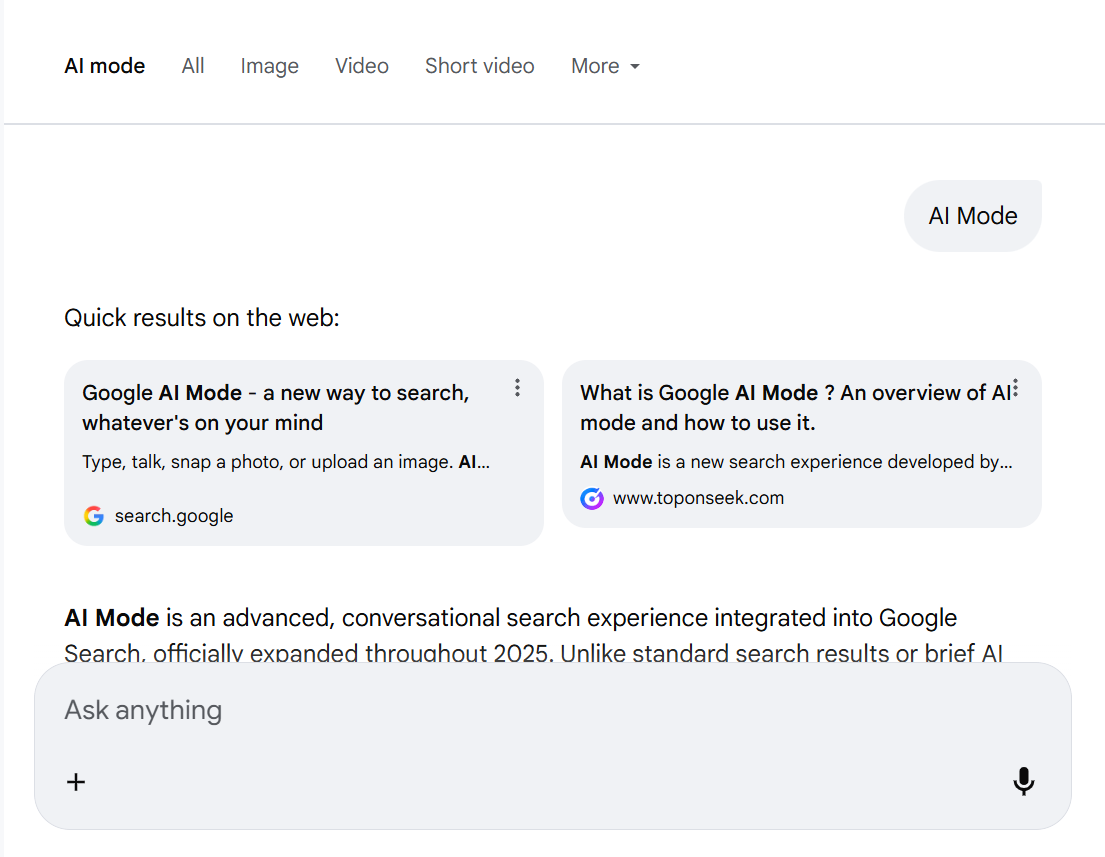
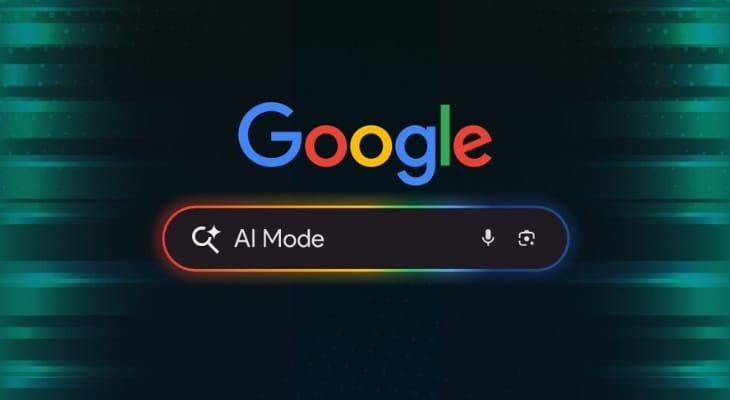
Google AI Mode is an opt-in version of Google Search that presents an AI-first layout. It appears as its own tab in Search (and can be accessed directly), designed for deeper exploration, follow-up questions, and comparisons rather than a single static snippet. It is powered by a Gemini-based system built into Google’s search environment, which is why it behaves differently from standalone chat tools.
What the interface rewards
AI Mode tends to reward sources it can confidently extract from and corroborate. The output is not only a summary. It also includes a curated set of citations, often surfaced in a sidebar format with multiple domains.
In other words, it is not “one answer, one source.” It is “one answer, a bundle of sources,” with Google choosing which sources feel trustworthy enough to support the final narrative.
Why marketers should care about AI Answers
AI Answers compress the decision journey. Users can jump from question to conclusion without scrolling or clicking much at all. That creates a new reality: your content can influence outcomes even when it does not earn a click, and you can lose influence even when you hold high positions in classic rankings. This is why AI Visibility becomes a strategic metric, not a vanity one.
How Google AI Mode Differs From Other LLMs
Unlike other LLMs, Google AI Mode is deeply integrated into Google’s search ecosystem, combining real-time indexing, ranking signals, and source attribution with generative responses. This allows it to prioritize freshness, authority, and web-wide consensus rather than relying solely on pre-trained knowledge.
Google AI Mode vs AI Overviews
AI Overviews appear inside standard Google results when Google decides they help. AI Mode is a separate, opt-in experience designed for deeper, multi-turn exploration. AI Overviews are usually more “one-and-done,” while AI Mode is built for follow-ups, comparisons, and planning.
Google AI Mode vs ChatGPT and Perplexity
Stand-alone tools like ChatGPT and Perplexity can feel more conversational, but they do not sit inside Google’s ranking ecosystem in the same way. AI Mode is tightly integrated with Google’s systems and can reflect Google’s preferences in sourcing, trust signals, and link presentation. That is why the same query can produce different “winners” across systems.
What makes AI Mode uniquely “search-native”
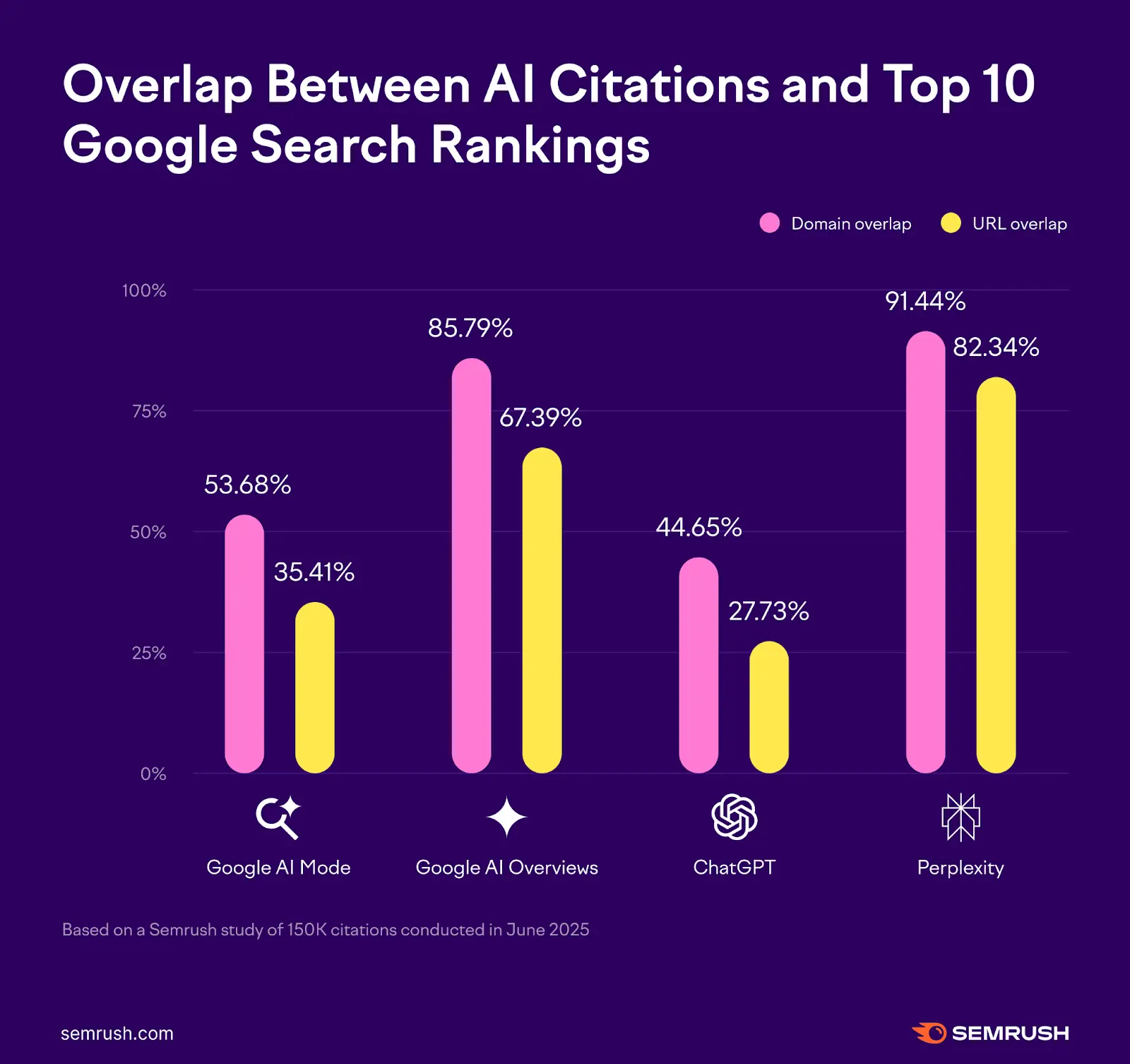
AI Mode is designed to pull from a wider range of domains and present multiple sources, often with a sidebar of citations. Research cited in the sample article suggests AI Mode responses frequently include around seven unique domains in the sidebar, and the overlap with classic top-10 results is far from complete. This creates both risk and opportunity: you might be cited even if you are not top-10, but you might also miss out even when you rank.
Comparison table: AI Mode vs other systems
| Dimension | Google AI Mode | Google AI Overviews | ChatGPT / Perplexity (typical behavior) |
|---|---|---|---|
| Access | Separate tab / opt-in AI-first experience | Appears inside standard results when triggered | Separate AI interfaces |
| Interaction style | Multi-turn exploration with follow-ups | Usually single response with links | Multi-turn chat; citation transparency varies |
| Source behavior | Curated multi-source citations, often sidebar | Supporting links inside SERP context | Often fewer sources; varies by product and mode |
| SEO relationship | Strongly tied to Google ecosystem signals | Tied to Google SERP environment | Less directly tied to Google ranking signals |
| Key marketer risk | Ranking does not guarantee inclusion | Same risk, but more limited contexts | Winners vary by model and retrieval approach |
What Google AI Mode Cites and Why Rankings Are Not Enough
Google AI Mode cites content that demonstrates authority, consensus, and real-world relevance, not just high rankings. Traditional SEO positions alone are no longer sufficient, as AI Mode prioritizes sources that clearly explain concepts, are frequently referenced across the web, and align with user intent when generating answers.
The overlap problem: domain vs URL
One of the most important practical insights is that AI Mode does not simply mirror the top 10 organic results. The sample research describes overlap patterns where domain overlap can sit around the ~50% range, while exact URL overlap can be much lower. That means “we rank” is not the same as “we get used.” The selection logic is closer to trust plus extractability than pure position.
Why clicks can drop even when you “win”
AI-enhanced search experiences can reduce click-through because users get enough information directly in the AI Answer. The sample references Pew Research indicating AI-enhanced SERPs can cut click-through rates significantly (nearly half in the cited figure). If you only track clicks, you can misread the story: you might be influencing the answer while traffic looks flat, or you might be absent while traffic looks decent.
A simple mental model for AI Visibility in AI Mode
Think of AI Mode as a filter with three gates:
- Trust gate: is the source credible, corroborated, and consistent?
- Extractability gate: can the system pull clean statements, definitions, and structured facts?
- Relevance gate: does the content match the query intent and follow-up paths?
If you fail any gate, rankings may not save you. If you pass all three, you can sometimes appear even without “perfect” classic SEO positions.
How to Optimize for Google AI Mode Without Chasing Myths
Optimizing for Google AI Mode isn’t about exploiting new tricks or shortcuts because it’s about creating clear, authoritative content that AI systems can confidently reference. Instead of chasing myths, focus on explainability, consistent topical presence, and being cited across trusted sources so your content earns inclusion naturally.
Build content that an AI Answer can safely reuse
AI systems prefer language that is scoped, factual, and easy to paraphrase without distortion. This does not mean writing robotic content. It means writing content with clear “units” the model can lift:
- A direct definition near the top of the section
- A short answer before the longer explanation
- Explicit constraints (who this is for, when it applies, when it does not)
If your best insight is buried in marketing phrasing, the model may avoid it because it cannot reuse it safely.
Structure for multi-turn exploration
AI Mode encourages follow-ups, so content that supports branching questions tends to perform better. You can design for that by anticipating the next question:
- “What is it?” then “How does it work?” then “What should I choose?”
- “Pros and cons” then “pricing” then “who it fits”
- “Common mistakes” then “best practices” then “examples”
A practical way to implement this is a clean heading hierarchy with short lead answers, followed by deeper context.
Earn “distributed trust” across the web
AI Mode citations can pull from more than your site. The sample emphasizes the importance of being present across trusted platforms: directories, communities, and reputable publishers. For marketers, this often means shifting some effort from “more blog posts” to “more credible footprints.”
A useful checklist for distributed trust:
- Keep profiles consistent (name, category, description) across major directories
- Contribute expertise in communities where people ask real questions
- Secure mentions from reputable industry publications (even unlinked mentions can help)
This is not old-school link building for traffic. It is reputation building for AI reuse.
Publish content that is citation-worthy, not just lengthy
The sample highlights that original research, clear statistics, and expert commentary tend to be more “useful per word.” In AI Mode, dense fluff is a liability. A page that provides a clean framework, a data point, and a clear conclusion is more likely to be cited than a long page that says very little.
A quick scoring approach you can apply internally:
| Element | Question | Signal of strength |
|---|---|---|
| Originality | Does this add something not found everywhere? | Unique data, unique framework, unique examples |
| Clarity | Can the key point be quoted in one sentence? | Strong lead answer + scoped definitions |
| Verifiability | Is the claim supported by sources or evidence? | Credible citations, transparent methodology |
| Usefulness | Does it solve a real decision problem? | Comparisons, tradeoffs, constraints, next steps |
Where Mention Network Fits in a Google AI Mode Workflow
Mention Network fits into a Google AI Mode workflow by helping brands understand where and how they’re being referenced across AI-influential sources. It bridges the gap between content creation and AI visibility, enabling teams to track mentions, spot authority gaps, and strengthen the signals Google AI Mode relies on when selecting sources.

Why you need measurement beyond classic SEO dashboards
A recurring problem in the sample is that traditional tools struggle to isolate AI-driven visibility. Rankings, clicks, and Search Console reports do not always show how your brand appears inside AI Answers. This is where a dedicated AI Visibility layer becomes essential.
What Mention Network helps you see
Mention Network is useful as an AI Visibility monitoring layer because it focuses on outcomes inside AI answers, not just page performance. In practical terms, it helps teams answer questions like:
- Are we being mentioned in AI Answer outputs for our core topics?
- Which narratives are being repeated about us, and are they accurate?
- Which competitors are being cited instead, and in what contexts?
When you can see these patterns, optimization becomes evidence-driven rather than guesswork.
How to operationalize it
A simple operating rhythm marketers can use:
- Track: collect AI Visibility signals across priority topics
- Diagnose: identify which pages or claims are not being reused
- Retrofit: improve structure, clarity, corroboration, and distributed trust
- Re-check: confirm whether inclusion and citations change over time
This keeps your Google AI Mode strategy grounded in measurable shifts, not opinions about what “should” work.
You can try a free AI Visibility tool at mention.network to see how your brand shows up in AI answers.
If you have any questions, email us at [email protected], or book a quick call for free support with our team here
FAQs
What is the biggest misconception about Google AI Mode?
That ranking in the top results guarantees inclusion in the AI Answer. AI Mode can cite sources outside the top 10, and it can ignore pages that are hard to summarize or verify.
How do I know if my brand’s AI Visibility is improving?
Look for increases in how often you are mentioned or cited in AI Answers across your target topics, plus improvements in accuracy and sentiment of how your brand is described. Monitoring tools help make this trackable.
Should I optimize differently for AI Mode vs AI Overviews?
The fundamentals overlap: trust, clarity, extractable structure, and distributed presence. The difference is that AI Mode is more multi-turn and comparison-heavy, so content that supports follow-ups and decision frameworks tends to perform better.
If clicks drop, is that always bad?
Not necessarily. AI-driven answers can reduce clicks even when your content influences the AI Answer. The key is to measure presence and citations, not only traffic.
If you want, paste your current outline or one target page, and I will map it to an “AI Mode readiness” checklist (structure, trust signals, extractability, and citation likelihood) using the same framework above.