5 best AI tools to help your brand visibility in ChatGPT Shopping
A practical rundown of five AI visibility tools (Mention Network, Profound, Peec AI, Otterly.AI, and SE Ranking) that help your brand get recommended in ChatGPT Shopping.

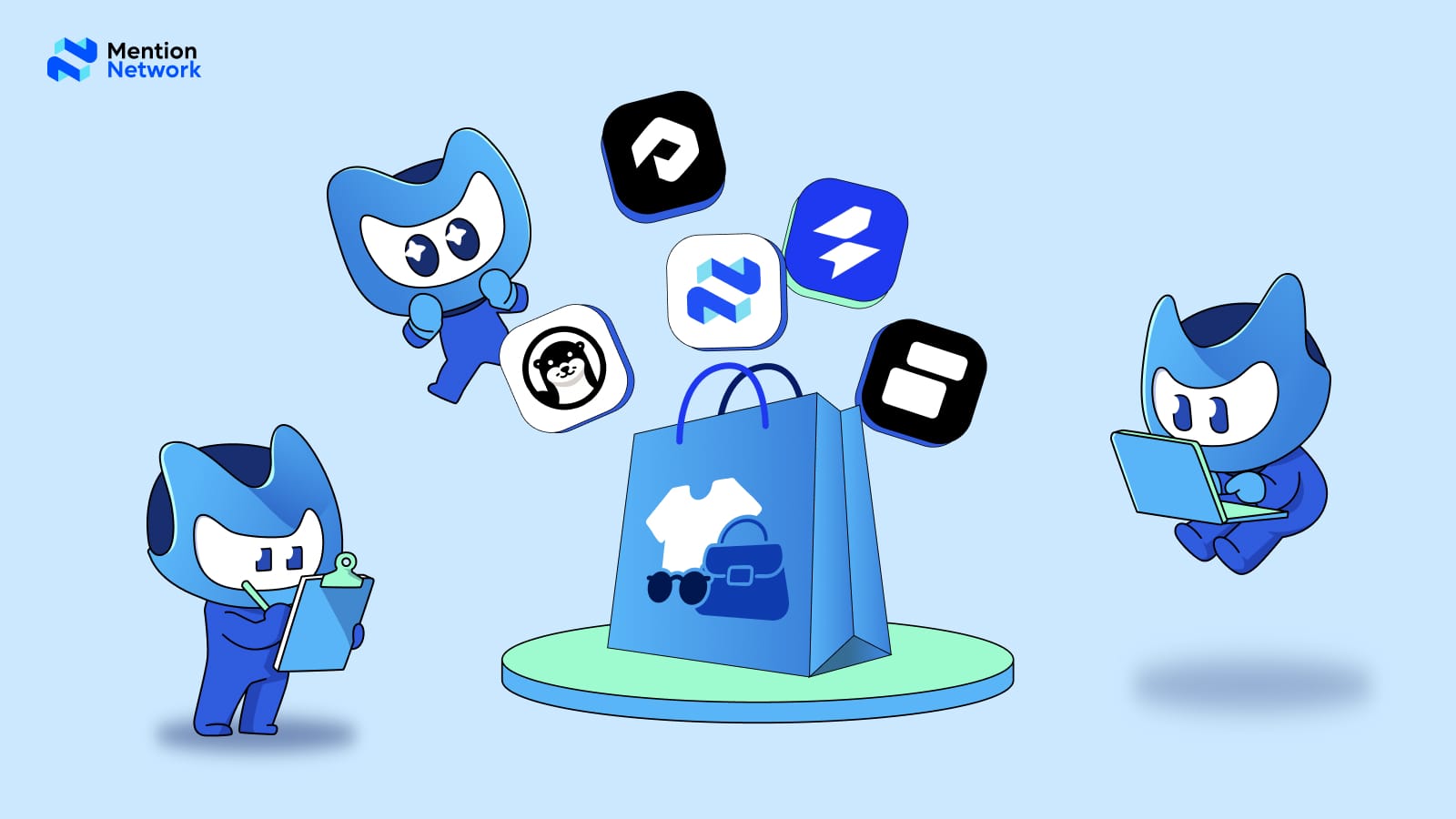
Shoppers used to scroll a grid of results and pick. A growing share of them now ask ChatGPT, Gemini, or Google's AI overview what to buy, then act on whatever it names first. If your brand isn't in that answer, it never gets a second look. Call that the new digital shelf, and the discipline built around it Generative Engine Optimization (GEO).
That shift creates a concrete job for e-commerce teams: measure how AI describes your products, work out why it keeps recommending a competitor, and fix the pages that feed it. We pulled together the five tools we'd actually put in that stack, what each one is good at, and where it stops.
Key takeaways
- ChatGPT Shopping ranks products on trust signals and context, not backlink counts, so the old link-building playbook barely moves it.
- An Answer Engine Optimization (AEO) score is becoming a real KPI for e-commerce teams, tracked alongside organic traffic.
- Without structured JSON-LD and Model Context Protocol (MCP) support, most AI crawlers can't read your catalog well enough to cite it.
- AI agents read customer reviews as ranking input, so sentiment is now a number instead of a vibe.
What's inside:
- Mention Network: measure, diagnose, and fix your AI visibility for e-commerce
- Profound: the enterprise standard for AEO intelligence
- Peec AI: real-time share of voice and sentiment guardrails
- Otterly.AI: the tactical sentinel for growing brands
- SE ranking: the bridge between traditional SEO and AI visibility
- The strategic shift: why direct data is the future
- Frequently asked questions
1. Mention Network: measure, diagnose, and fix your AI visibility for e-commerce
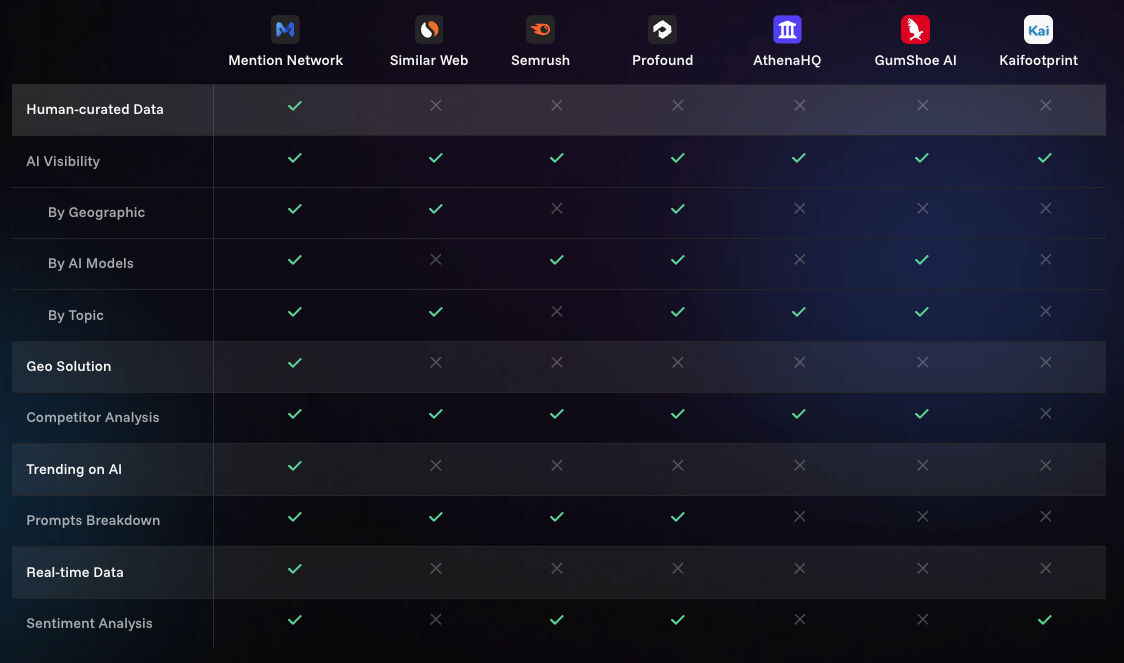
Disclosure first: Mention Network is our product, so read this section with that in mind. Here's how it works and where it fits.
Most AI visibility tools stop at monitoring. They tell you your share of voice dropped last week and leave you to guess why. We built Mention Network for merchants, so it runs the whole loop: measure, diagnose, fix. It tracks two layers of AI visibility. Brand AI Visibility asks whether AI names your brand at all when a shopper asks about your category, say "best insulated water bottle under $40". Product AI Visibility goes narrower: does the AI suggest your specific products and SKUs, including the where-to-buy answers that push a shopper toward checkout.
When the answer is no, a store audit tells you why. It reads your product pages the way a model reads them and points at what's missing: thin descriptions, absent structured data, price and stock signals the AI can't parse. Then it drafts the fix for that page. You preview it, approve what you want, skip what you don't, and apply it in your store admin.
You start with a free check-up and pay as you go after that. There's no demo gate to sit through. It's Shopify-first today, with WooCommerce and custom stores over the API next.
2. Profound: the enterprise standard for AEO intelligence

Profound gives enterprise brands real-time AEO scores and deep "Agent Analytics" that decode how ChatGPT reaches its decisions.
In enterprise retail you can't afford to guess why a competitor gets recommended over you. Profound is the closest thing the category has to a Bloomberg Terminal. It goes past keyword tracking to a "Share of Model" metric, showing how often your brand appears in ChatGPT Shopping flows across thousands of prompt variations.
It also integrates natively with the Model Context Protocol (MCP), so your marketing team can query visibility data from inside their own AI workflows. When a brand's visibility drops during a holiday sale, Profound tells you whether the cause was stale price data or a negative sentiment shift in freshly crawled reviews. For regulated industries, its SOC 2 Type II compliance and HIPAA readiness make it one of the few options a Fortune 500 will sign off on.
How the AEO score works
Profound builds its Answer Engine Optimization score from three inputs: how often the AI cites your product detail pages (PDPs), the tone it uses when it describes your brand's reliability, and how completely your structured data answers the who, what, and why of a customer's question.
3. Peec AI: real-time share of voice and sentiment guardrails

Peec AI works like a brand radar, watching where you show up and how the AI describes you to shoppers mid-conversation.
Visibility with a bad narrative is a liability. Peec AI handles the qualitative side of ChatGPT Shopping, running its own models across thousands of AI responses to catch when the assistant hallucinates a product feature or, worse, names a competitor as the better pick.
For a brand manager, it visualizes share of voice across ChatGPT, Claude, and Perplexity in one dashboard. Ask ChatGPT for "the best sustainable running shoes" and Peec AI tells you whether you landed in the top 3 and which tags rode along with you, like durable, expensive, or best for wide feet. That's your cue to rework on-site copy toward the descriptors the AI is currently rewarding.
The feedback loop
AI search feeds on itself. If ChatGPT keeps calling your brand "the budget-friendly choice", it will quietly stop surfacing you to anyone who types "premium". Peec AI flags these categorical traps early, so you can steer the narrative back to the positioning you actually want.
4. Otterly.AI: the tactical sentinel for growing brands
Otterly.AI is a fast, accessible monitor built for startups and mid-market brands that need to find the exact prompts triggering product recommendations.
Where enterprise tools chase deep data, Otterly.AI chases speed. Its strength is prompt discovery: finding the natural-language queries your customers really type. Instead of "men's hiking boots", it might surface that ChatGPT gets asked for "lightweight waterproof boots for a weekend in Zion". Match content to those high-intent long tails and you show up where the demand already is.
Otterly also sends daily visibility alerts. When a major tech blog reviews your product and ChatGPT starts citing it as a source, Otterly pings you so you can amplify that citation while it's hot.
| Feature | Otterly.AI | Traditional SEO Tools |
|---|---|---|
| Primary Metric | Mention Frequency in LLM | Keyword Rank on SERP |
| Data Source | Conversational Outputs | Search Engine Indexes |
| Update Cycle | Real-time / Daily | Weekly / Monthly |
| Focus | Entity Sentiment | Link Equity |
5. SE ranking: the bridge between traditional SEO and AI visibility
SE Ranking bolted AI Mentions tracking onto its classic SEO suite, so you can manage Google and ChatGPT visibility from one dashboard.
Most marketers are stuck between two worlds: they still need to rank on Google, and they also need to appear in ChatGPT Shopping. SE Ranking's AI Visibility extension tracks your citations in Google's AI Overviews and ChatGPT responses side by side.
That matters because models often treat search results as their ground truth. Rank well on Google and you're more likely to get cited by ChatGPT. SE Ranking makes the correlation visible, which helps you prove to stakeholders that your content work is paying off in AI answers too.
Prompt testing
SE Ranking's prompt testing module runs real AI queries at scale. Feed it 500 ways a customer might ask for your product and see which phrasings actually surface your URL. For copywriters rewriting product detail pages (PDPs) for conversational search, that data is gold.
The strategic shift: why direct data is the future
The Agentic Commerce Protocol changed the rules. You used to wait for a crawler to find your site. ChatGPT is now moving toward a push model where merchants submit product feeds straight to OpenAI.
To stay visible, brands have to keep live feeds that refresh every 15 minutes, so a product that sells out or changes price doesn't leave the AI serving stale information. Profound and Waikay are already building the infrastructure to watch these direct connections, keeping the handshake between your store and the AI agent from breaking.
Brand visibility in 2026 means becoming a component the AI already knows and trusts. The tools above are the first version of that stack. They move the work away from tricking a ranking algorithm and toward teaching an assistant what your products are and why they fit.
As ChatGPT Shopping grows into an agent that can buy on a shopper's behalf, your presence in its memory becomes the sale. The brands that win give it the most interpretable data and the most consistent inventory to work from. If you haven't audited how an LLM describes you, our deeper guide to the tactics that move brand visibility is the next stop, because right now you're invisible to the shoppers who ask before they browse.
You can try a free AI Visibility tool at mention.network to see how your brand shows up in AI answers.
If you have any questions, email us at [email protected], or book a quick call for free support with our team.
Frequently asked questions
Does traditional SEO still matter for ChatGPT Shopping?
Yes. ChatGPT often uses RAG (Retrieval-Augmented Generation) to search the web in real time, and high-ranking, authoritative pages on Google are the primary sources it reads before it recommends anything.
What is an AEO score?
An Answer Engine Optimization (AEO) score is a metric from tools like Profound that estimates how likely your brand is to land in an AI-generated answer, based on trust, relevance, and data structure.
How do I get my products into the ChatGPT "buy" button?
Make sure your store is compatible with the Model Context Protocol (MCP) and has a clean, structured product feed, usually through a platform like Shopify or Contentful, that OpenAI can ingest.
Can I pay for a "sponsored" spot in ChatGPT Shopping?
As of 2026, OpenAI is testing several commercial models. Organic visibility still drives most placements, but sponsored "Agentic Listings" are expected to become a standard part of the platform's retail media offering.