
What is the Model Context Protocol (MCP) in ChatGPT Shopping?
The Model Context Protocol (MCP) lets ChatGPT query live store data (stock, pricing, checkout), turning AI shopping from static answers into real agentic commerce.

ChatGPT can now read your store's live inventory: the real stock count sitting in your Shopify admin at the moment a shopper asks. What makes that possible is the Model Context Protocol, an open standard that lets a large language model talk to external systems the way a developer talks to an API. MCP is why ChatGPT Shopping stopped guessing from old training data and started querying Shopify and Amazon directly.
Key takeaways
- MCP is a standard interface, so ChatGPT can connect to an external database without a custom, one-off integration built for each store.
- It reads live data: current stock levels, prices, and shipping windows, straight from your backend. That kills the "recommended a product discontinued months ago" problem.
- It lets AI agents act, not only answer. An MCP tool can build a cart or start a return.
- Anthropic built it. OpenAI and the Linux Foundation now back it, which makes it an open standard rather than one vendor's walled garden.
- It carries context, not just text: user history, product specs, the details that make a recommendation actually fit.
What is MCP? The architecture of conversational commerce
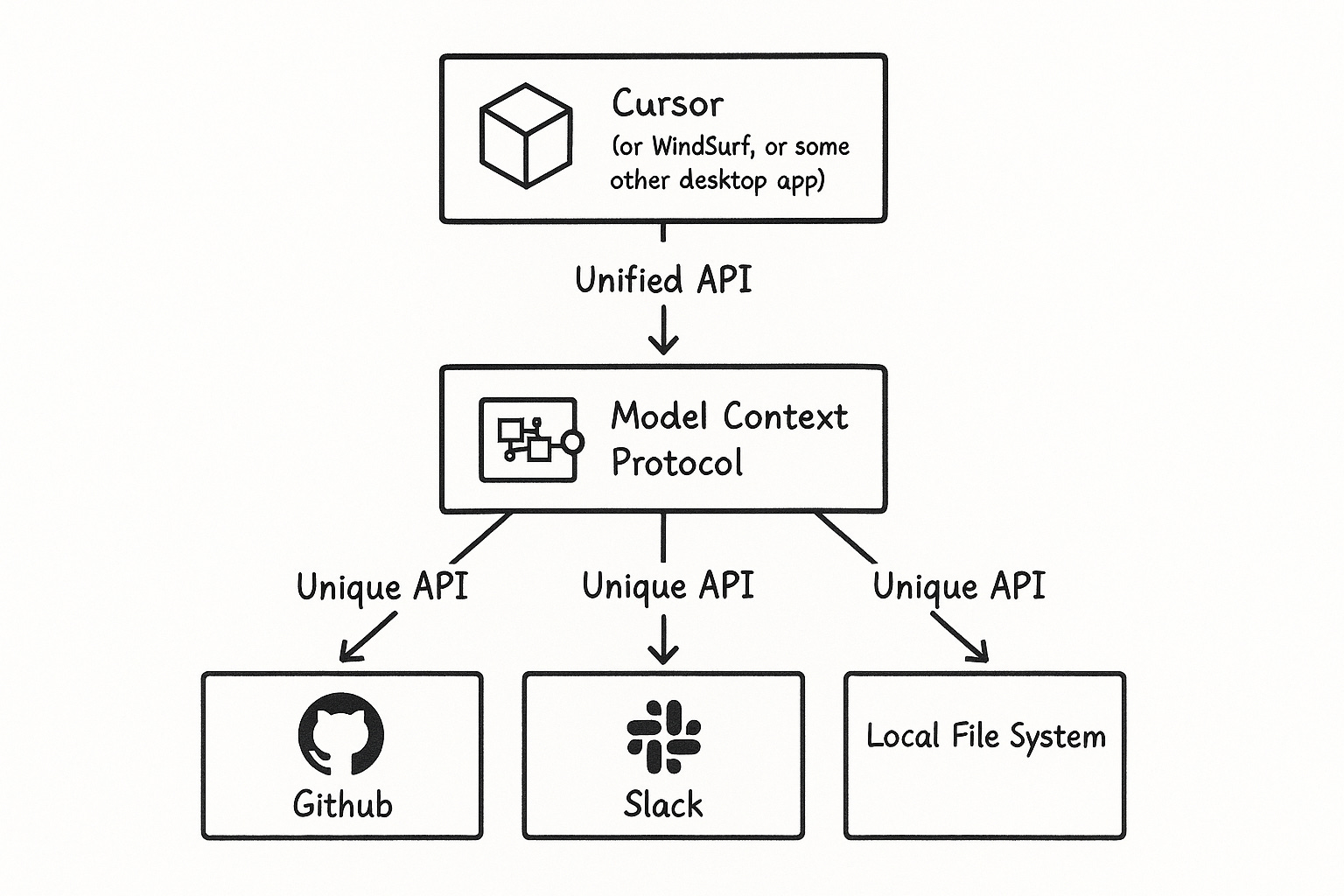
Model Context Protocol Architecture.
MCP is a standard communication layer that lets an AI model query external systems securely, the same way a developer would hit an API.
Think of it as a shared socket. Before MCP, wiring ChatGPT into your Shopify inventory meant building a proprietary plugin. Want to add Amazon or a custom ERP next? You start over. MCP swaps that for a client-server setup: the AI is the client, your store runs a server, and the client discovers what the server can do on its own.
That changes how ChatGPT Shopping works under the hood. Instead of scraping the web or leaning on stale training data, the AI asks your database directly: is the blue running shoe available in a size 10 in the New York warehouse? Build the MCP server once and it answers ChatGPT, Claude, and whatever agent ships next.
How MCP powers the "real-time" digital shelf
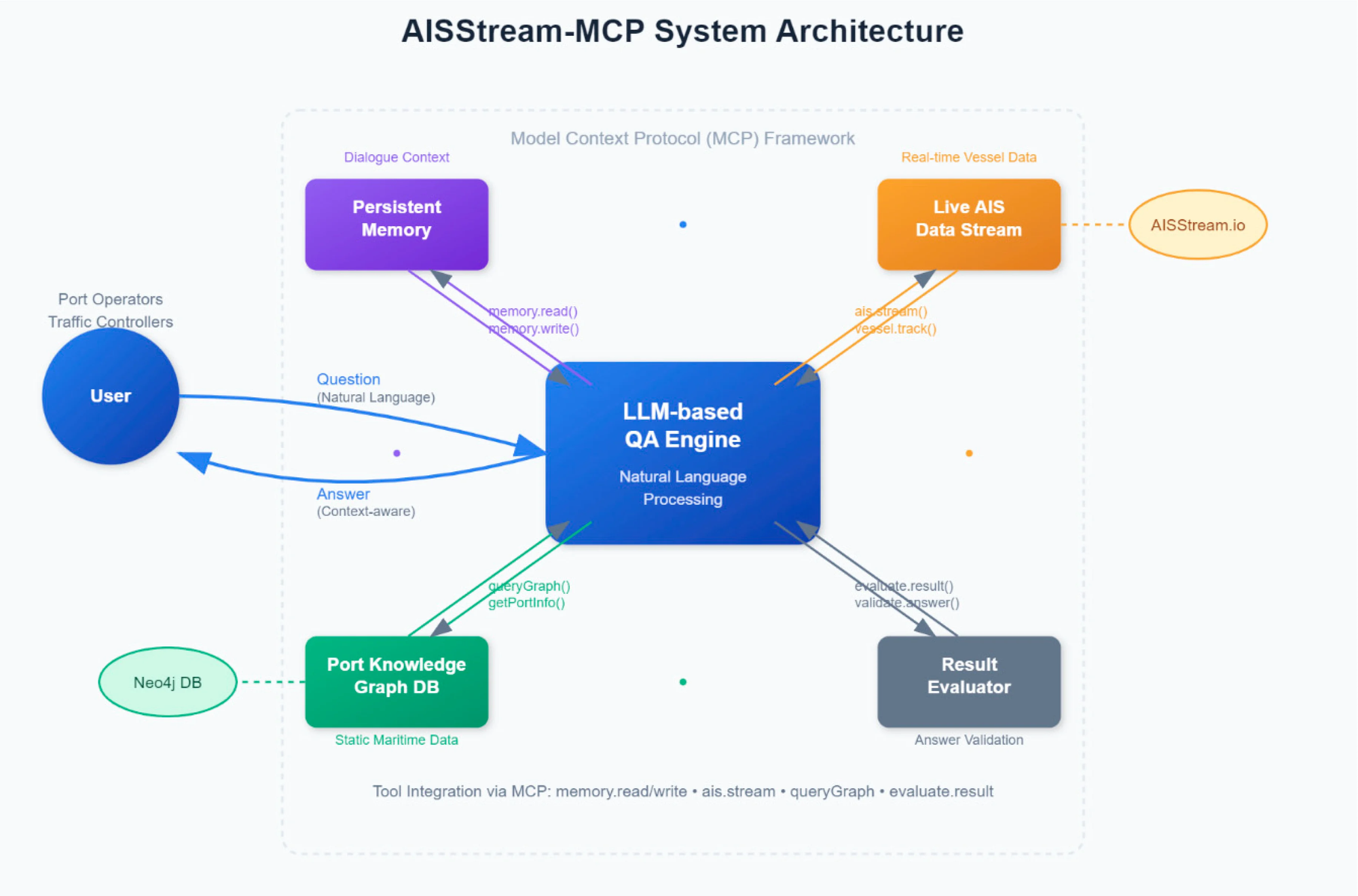
Model Context Protocol workflow
MCP closes the gap between your backend and the AI's answer, so every recommendation it makes is one a shopper can act on.
The old failure mode was the out-of-stock recommendation. A model reads about a product in its training data and suggests it, then the shopper clicks through to find it was discontinued in spring. MCP fixes that by letting the AI check the current state at the moment of the question, what its docs call dynamic discovery.
| Feature | Without MCP (Old AI Shopping) | With MCP (New ChatGPT Shopping) |
|---|---|---|
| Inventory Status | Often hours or days out of date | Live, millisecond-sync with Shopify/Amazon |
| Pricing | Static, misses flash sales/coupons | Real-time price fetching and discount applying |
| Actionability | Redirects to a link (high friction) | Can add to cart and trigger checkout in-chat |
| Scalability | Custom code for every new tool | Connect once, works across every model |
Why it matters
MCP cuts your integration debt. You don't need a big engineering team to make your brand "AI-ready." Stand up one MCP server and your product data becomes a structured asset any major model can read and sell from.
From discovery to agency: The rise of shopping agents
MCP is the engine under agentic AI. It's what lets a shopper hand over the whole task instead of doing the buying themselves.
In classic search, you find the product and do the work of purchasing it. With MCP-enabled ChatGPT Shopping, you give the intent ("find me a high-end espresso machine for a small kitchen") and the AI runs the logistics.
The protocol lets the AI call tools. A tool might be search_catalog, get_shipping_quote, or create_checkout_session. Because MCP hands the AI a precise schema for each tool, the model can reason through a real purchase: compare two machines, check your loyalty points through a CRM, pick the best delivery day. All of it because the AI is wired straight into your business logic.
The developer advantage: Building once for every model
MCP lets developers spend their time on data quality instead of the plumbing between the model and the data.
It runs on standard transports: JSON-RPC over HTTP or WebSockets. OpenAI folded the MCP SDK into its Apps framework, so you can build "ChatGPT Apps" that sync to-do lists, CRMs, and, the part that matters here, e-commerce catalogs.
The mechanics are short:
- You host a small service that exposes your Shopify data. That's the server.
- You hand over a JSON manifest of what the AI is allowed to do (say, "I can list products by category").
- When a shopping session starts, ChatGPT connects to your server and learns your store's capabilities on the spot.
Decoupling the model from the data source means your integration survives the next model release. GPT-5 ships, your MCP server keeps working. The protocol is the constant.
Why investors and founders should pivot to MCP today
MCP closes the Citation Gap and the Visibility Gap at once, which makes it one of the most valuable SEO assets you can build in 2026.
We're moving into a market where Share of Model beats Share of Search. If your brand can't be reached over an MCP connection, you're invisible to the shoppers who start inside ChatGPT.
Investors have started hunting for agent-native companies: brands whose inventory, supply chain, and support are all exposed through protocols like MCP. That openness makes you the safer pick for the AI. Give an agent two products to recommend and it takes the one where it can verify the price, confirm the stock, and close the sale through a secure MCP handshake.
MCP standardized how AI reaches private data and commercial systems, and that's what made ChatGPT Shopping possible. The read for merchants and developers is simple: adopt it now and you're laying the track that AI commerce will run on.
You can try a free AI Visibility tool at mention.network to see how your brand shows up in AI answers.
If you have any questions, email us at [email protected], or book a quick call for free support with our team here
                    [
                        Book a call for free support
                    ](https://cal.com/mentionnetwork)
Frequently asked questions (FAQ)
Is MCP the same as an API?
No. MCP uses APIs, but it's a protocol that standardizes how those APIs get described and called by AI models, so the model can discover them without custom coding.
Does MCP work with Shopify and Amazon?
Yes. Shopify already shipped its "Storefront MCP" tools, and third-party developers have built MCP servers that bridge Amazon Seller Central data to LLMs.
Is my data secure when using MCP?
Yes. MCP is sandboxed. The AI only sees the tools and data points you choose to expose, and it can't get around your existing authentication or security layers.
Do I need a special developer to set up MCP?
No. Any developer comfortable with Node.js, Python, or standard web APIs can stand up an MCP server using the open-source SDKs from Anthropic and OpenAI.
How does MCP affect my Google ranking?
MCP is built for AI search, but the clean, structured data it needs (Schema.org markup, for one) also lifts your traditional SEO and Google Merchant Center performance.