
AEO vs GEO: Where the Two Actually Diverge for Stores
AEO and GEO get treated as one term. Our API-channel test across three AI engines shows where the two answer surfaces actually pull apart, and which one your store should fund first.

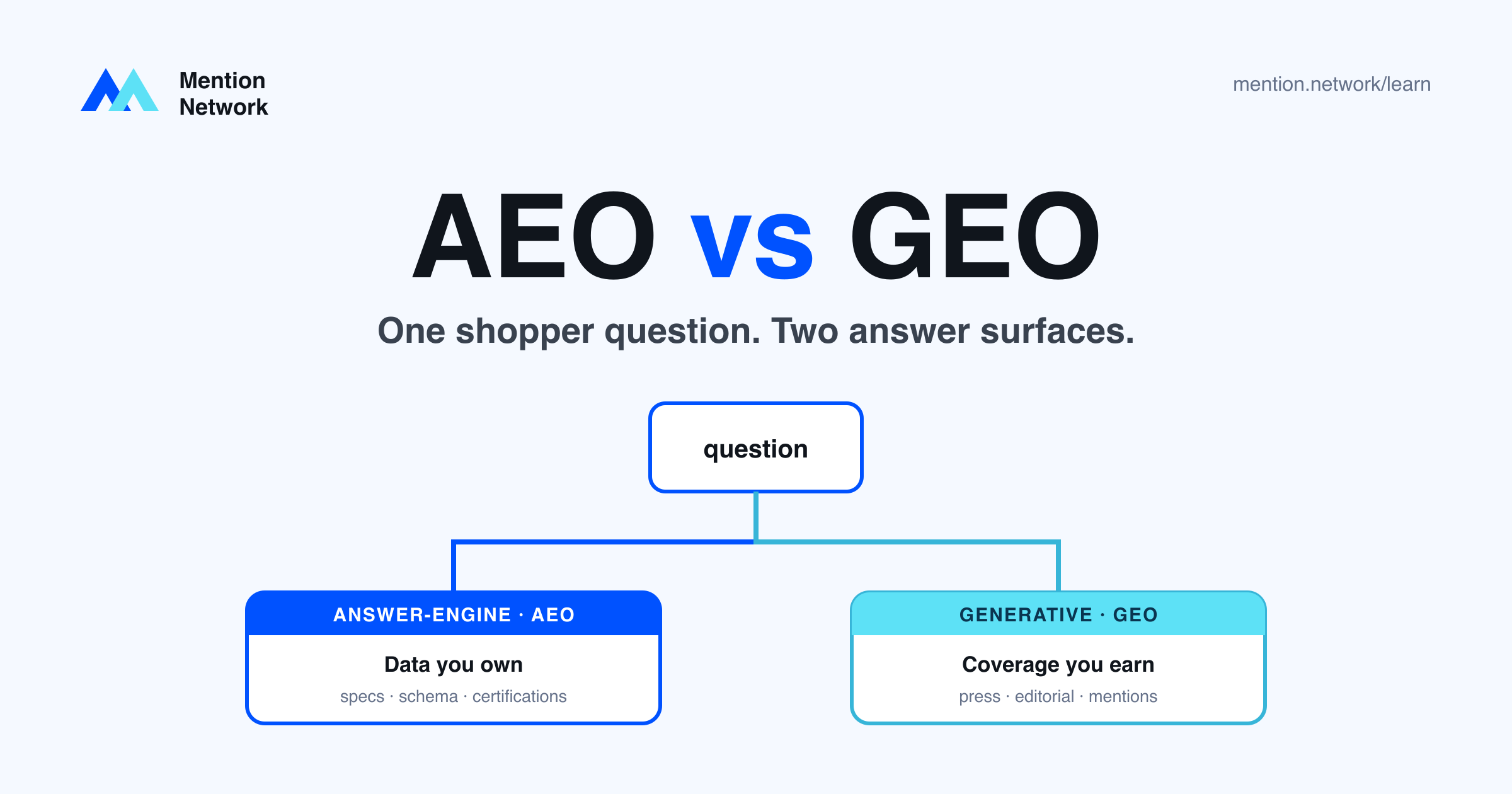
Most teams blur AEO and GEO together because both end in an AI answer. That is useful shorthand, but it hides an expensive planning mistake: AEO improves the extractability of the data you own, while GEO improves the evidence ecosystem that causes a model to name you.
This page is the comparison satellite. For the canonical AEO definition, read What is Answer Engine Optimization?. For the canonical GEO framework, read GEO: The complete guide to generative engine optimization.
TL;DR Our API-channel test shows AEO vs GEO splitting cleanly along the answer surface. Direct where-to-buy and product-spec questions rewarded structured product data you own, while best-store and editorial recommendation questions rewarded earned media coverage you build. For most online stores, get the answer-engine basics right first, then fund the editorial coverage that feeds generative recommendations.
How they stack up:
- Why the AEO vs GEO question keeps coming up
- How we tested it
- AEO vs GEO: the verdict at a glance
- Where AEO and GEO actually diverge
- What most guides get right, and where our data pushes back
- Which one to prioritize for your store
- Frequently asked questions
- Next steps
Why the AEO vs GEO question keeps coming up
For ten years the job was easy to describe: rank on page one. You tracked positions, built links, fixed crawl errors, and traffic followed. Then shoppers started asking ChatGPT and Perplexity where to buy things, and there is no page one in that answer. There is one response, and your store is either in it or it isn't. That shift is why old SEO tactics stall with LLMs.
It is also why two new acronyms started fighting for the same slot on your to-do list. Answer engine optimization and generative engine optimization both promise to get your brand into AI answers. Plenty of smart people say they are one job under two labels. Digiday's rundown of GEO and AEO quotes agency leads calling AEO and GEO "two names for one strategy."
They have a point on terminology. Our own test says the label argument skips the part that actually changes your work: the answer surface. When 35% of US consumers now reach for an AI tool at the product-discovery stage, against 13.6% who start with traditional search (Omnibound, citing Similarweb and Adobe), the surface a shopper lands on decides whether you show up.
How we tested it
Here is the test setup before we get into the results.
- Sample: 22 answers. 8 shopping questions across 3 engines, with 2 GPT responses excluded after timeouts.
- Categories tested: sustainable yoga mats, running shoes for flat feet, eco sneakers, beginner home-gym gear, non-toxic skincare, athletic wear, beginner coffee makers, and everyday sustainable fashion.
- AI engines: openai/gpt-5.5, google/gemini-3.5-flash, and perplexity/sonar-pro.
- Query design: four questions written to trigger direct answer extraction, four written to trigger comparative recommendation.
- Test period: 2026-07-10.
Channel: API-channel test via OpenRouter. Consumer apps may answer differently, and results move with category, timezone, and model version. This is a directional snapshot, and it will move.
AEO vs GEO: the verdict at a glance
Summary: the two answer different questions on different surfaces, and in our sample the same brand rarely dominated both. Manduka landed a top-three yoga-mat spot on all three engines in the extraction surface, while a single glowing editorial mention put CRZ Yoga at the top of one engine's athletic-wear recommendation but not a top pick on the others.
Where AEO and GEO actually diverge
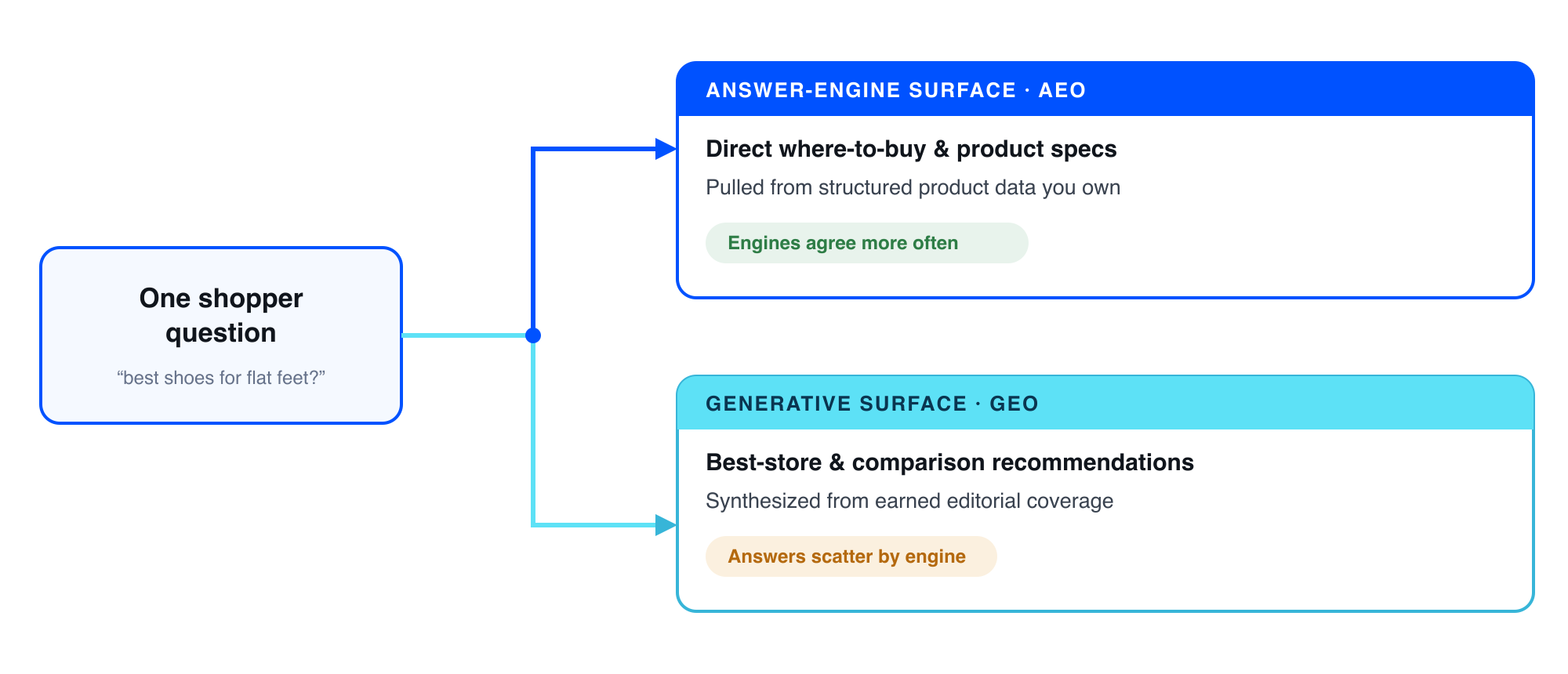
The design split the eight questions into two buckets. The gap between them is the whole point.
1. What earns your brand the citation
On the direct questions, engines pulled from product content they could read and verify. GPT linked brand homepages and specific Target product pages; Perplexity cited nine review and editorial sources on yoga mats; every engine extracted material credentials like GOTS, FSC, and PVC-free straight from structured product data.
On the recommendation questions, the sources changed. Citations pointed to editorial roundups: Vogue, Harper's Bazaar, Business Insider, Wirecutter, CoffeeKev. On the sustainable-fashion question, not one engine cited a brand product page. Every source was a style-publication roundup, and the only brand in all three engines' top five, Eileen Fisher, is also the one with decades of editorial presence.
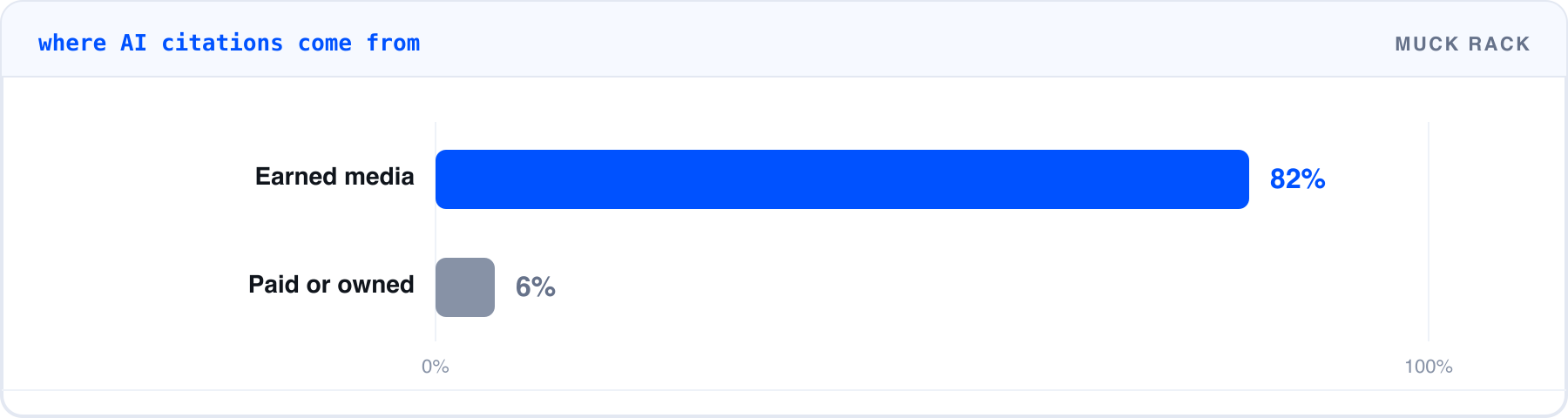
This tracks with the wider pattern: 82% of AI citations come from earned media and only 6% from paid or owned content, and brand mentions correlate about three times more strongly with AI visibility than backlinks do (0.664 against 0.218), per Muck Rack and Ahrefs data. Stores structured for extractable answers appeared more often in the direct-question surface; that is an observation about which content the engines could quote, not proof that schema forces a citation. If you want the mechanics, we covered earning citations inside AI answers separately.
2. How much the engines agree
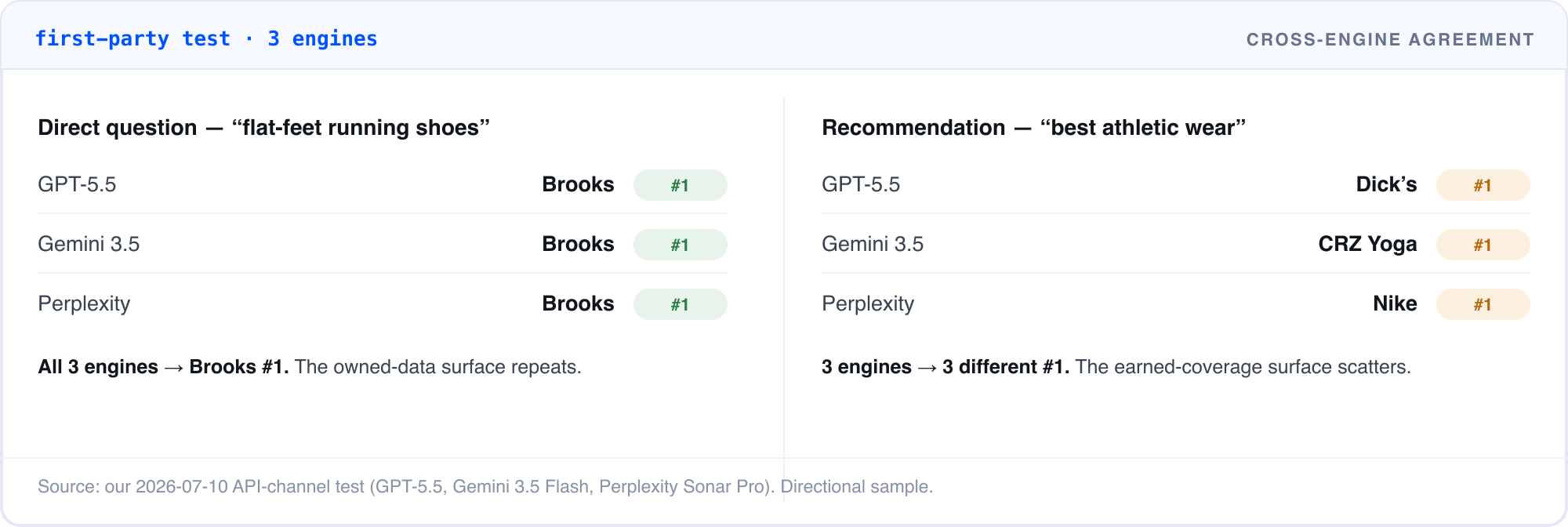
Agreement was the sharpest divide. On the direct questions the engines converged. Brooks ranked first for flat-feet running shoes across all three, citing the same authority sources like the APMA and Runner's World.
On the recommendation questions they scattered. The athletic-wear comparison produced three different number-one picks: Dick's Sporting Goods on GPT, CRZ Yoga on Gemini, and Nike on Perplexity. The sustainable-fashion question split the same way: Kotn led on Gemini while Eileen Fisher led on Perplexity, with the two engines sharing almost none of their top order. When an answer is synthesized from whichever editorial coverage an engine holds, the winner shifts with the source pool. Extractable-answer surfaces simply repeat across engines more often.
3. What answer engine optimization actually optimizes
The answer-engine side is the work of making your product content directly extractable, so an engine can lift a clean fact into its reply: FAQ schema, machine-readable product tables, JSON-LD, short structured answers. Jasper's GEO vs AEO breakdown frames it as a tactical extraction layer sitting on top of your SEO.
For a store, that runs on two tracks at once. Yotpo's AEO guide for ecommerce makes the point that you need both the onsite technical signals, like clean JSON-LD and product tables, and the offsite ones, like reviews and forum mentions. Yotpo also reports that brands cited in AI Overviews earn 35% more organic clicks and 91% more paid clicks than uncited competitors on the same queries. Start with how answer engines pick their sources if this surface is new to you.
4. What generative engine optimization actually optimizes
The generative side is the work of being cited as trusted reference material inside a synthesized recommendation. It runs on authority, data density, and earned coverage rather than clean markup. The academic Princeton and Georgia Tech GEO study found that adding statistics lifted content visibility in AI answers by 41%, that citing external sources raised it by up to 115% for lower-ranked pages, and that GEO techniques boosted visibility by up to 40% overall.
That is a different muscle from schema. It is closer to digital PR and content depth, which is why it compounds slowly and why it drove the messy recommendation answers in our test. If you want the framework, these are the four pillars that make content quotable.
What most guides get right, and where our data pushes back
The industry is not wrong about the overlap. It has not standardized the terms, and the tactical overlap is real.
Digiday's framing is that the only real distinction is terminology, not execution: both mean optimizing content so AI engines cite it as a trusted answer. On the shared tactics, that is right. Where our data pushes back is on the outcome: the direct surface and the recommendation surface behaved differently enough that a store treating AEO vs GEO as one bucket will over-invest in the wrong one. You can win clean extraction with product data this quarter and still be invisible in the "best store for X" answer, because that one is decided by coverage you have not earned yet.
Which one to prioritize for your store
Pick based on what you already have: clean product data, or real press coverage.
Best for direct product discovery: the answer-engine side. Structured product data and certifications get you into where-to-buy and spec answers, and those wins hold across engines.
Best for showing up in best-store recommendations: the generative side. Editorial coverage is what feeds comparative answers, and no amount of schema substitutes for it.
Best for a new store with clean data but little press: start on the answer-engine side. You control it, you can ship it this week, and it is the safer bet.
Best for an established brand with real editorial coverage: lean into the generative side. Your press already exists, so the job is making sure engines can find and quote it.
Keep tracking your SEO ranks, and add these AI search optimization checks beside them. Fix the owned-data surface first; spend on editorial coverage after that.
Frequently asked questions
Is AEO the same as GEO?
They overlap on tactics but optimize two different answer surfaces. Answer engine optimization makes product content extractable for direct questions like where-to-buy and specs. Generative engine optimization earns the coverage that gets you named inside synthesized recommendations. In our test, the same brands rarely won both.
Should I do GEO vs AEO first for an ecommerce store?
Answer-engine work first, but the useful question is when to switch spend. Treat your data as clean enough to start funding generative coverage once your top products carry complete structured data, visible certifications, and extractable reviews, and once your own spot-checks show you turning up in direct where-to-buy answers. Move earlier and the editorial budget leaks, because the surface you already own is still dropping citations.
Why did the AI engines pick different top stores?
On comparative questions each engine synthesizes from the editorial coverage it holds, so the answer moves with the source pool. One athletic-wear question returned three different top picks across our three engines. Direct product questions produced far more agreement.
Does structured data guarantee an AI citation?
No. In our test, stores with structured, certification-rich product data appeared more often in the direct-answer surface, but that is a correlation we observed, not a guarantee. Engines still weigh authority, recency, and their own source access.
Next steps
- Audit which surface you are losing. Run five real shopping questions for your category through two AI engines and note whether the misses are direct answers or recommendation answers.
- Fix the answer-engine basics first. Clean product schema and certification data are the fastest wins, and they repeat across engines.
- Build the coverage that feeds recommendations with our full GEO playbook once your data is clean.