
Products in AI Answers: 6-Step Ecommerce Checklist
Products in AI answers need more than FAQ schema. Use this 6-step ecommerce checklist for crawlable pages, product data, feed eligibility, trust, and answer receipts.

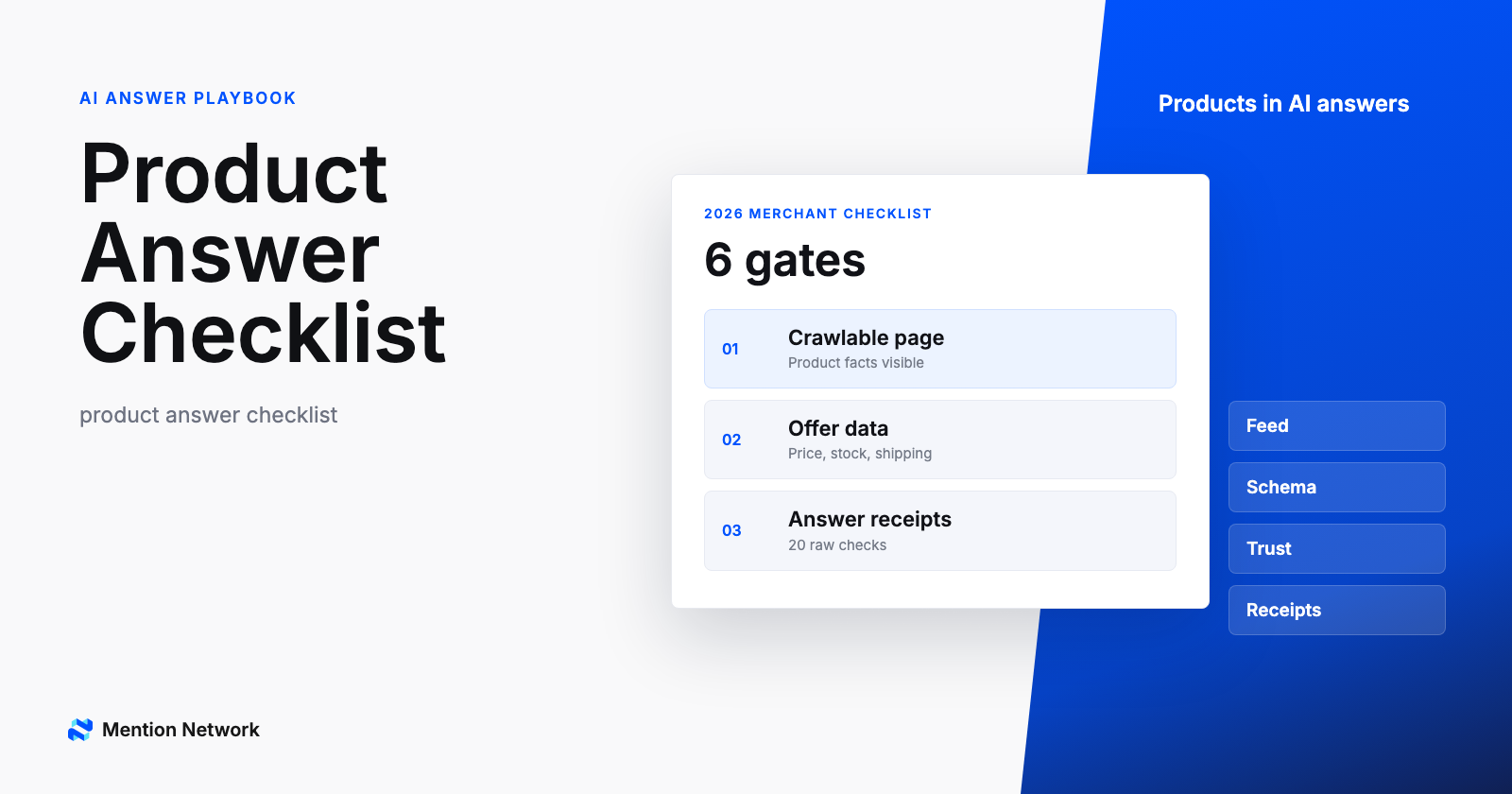
Getting products in AI answers starts before the prompt. A store can publish FAQs and still lose the buying answer if the assistant cannot read the product, verify the offer, or trust the seller.
Start with the Answer Engine Optimization pillar if you want the full discipline. This checklist is narrower: the 6 gates a product page has to pass before an AI answer is likely to name it.
TL;DR: Products in AI answers need 6 gates: crawlable pages, product identity, offer data, feed eligibility, buyer-question content, and answer receipts. Skip one and the assistant has a reason to name another seller.
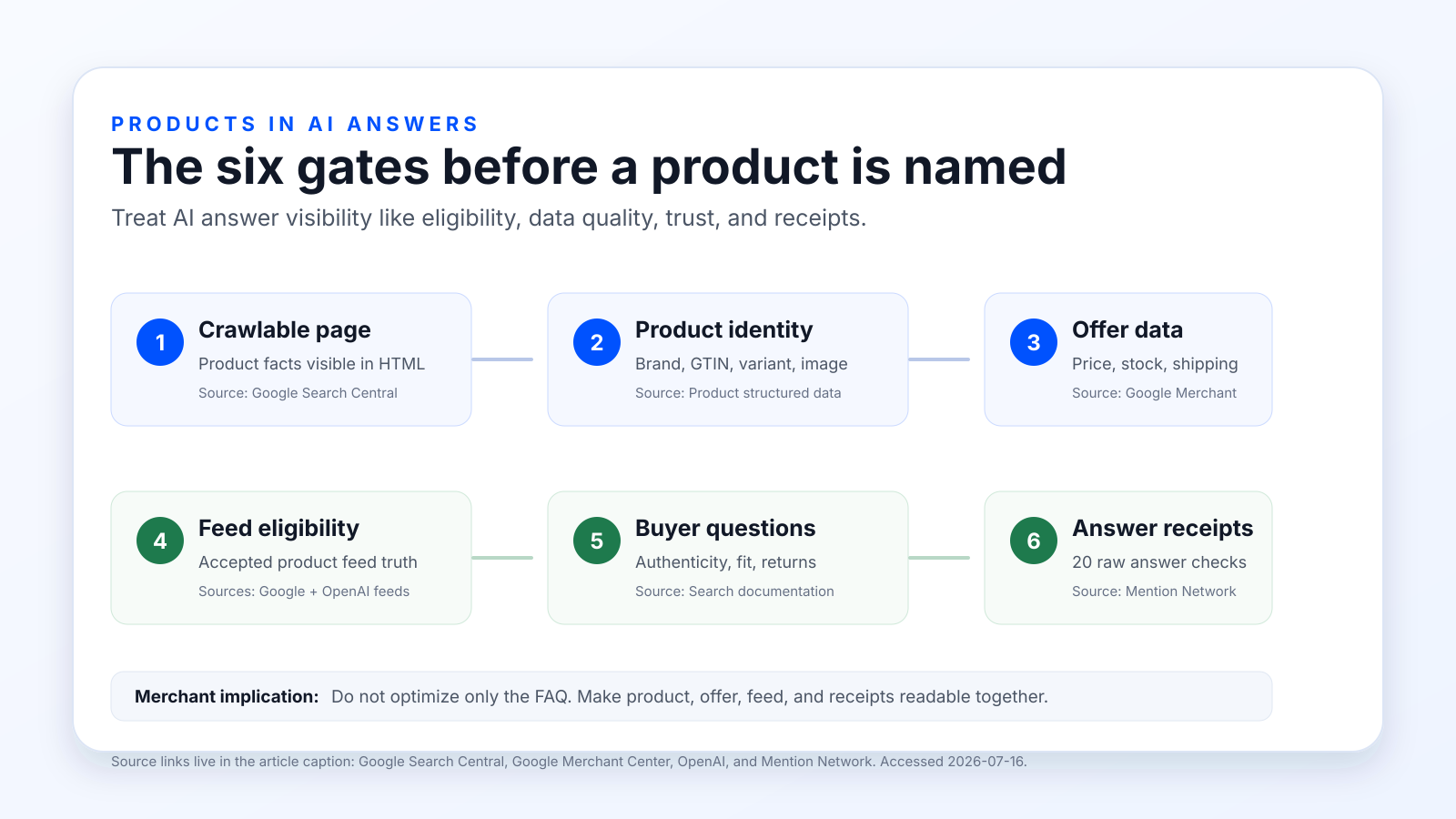
Step 1: make the product page crawlable
A crawlable product page is the first gate. The important product facts should exist in readable HTML: product name, brand, variant, price, availability, shipping area, return policy, and the reason a buyer should trust the seller.
Verified as of 2026-07-16, Google's generative AI optimization guide says AI responses can include product listings and product information. That only helps if the product page and related data are available to the systems that build the answer.
For SEO teams, this is familiar. If the old crawler could not read it, the AI answer surface probably cannot rely on it either.
Step 2: lock the product identity
Product identity is the set of fields that tells an answer engine which exact item it is looking at. A product without a clear brand, model, variant, GTIN or MPN, image, and category can collapse into a similar product.
Google's Product structured data guidance says product information can appear in richer Search results, including price, availability, review ratings, shipping information, and more. For ecommerce AEO, those fields are not decoration. They disambiguate the product.
Use the same product name, brand, and variant language across the page, schema, feed, and collection links. Mixed identity is how a serum becomes somebody else's serum in the answer.
Step 3: expose the offer, not only the description
Offer data is the part that turns a product mention into a buying recommendation. The assistant needs to know whether the product is in stock, what it costs, where it ships, and what the buyer gets from this seller.
Google's merchant listing documentation says merchant listings can highlight price, availability, shipping, and return information. Google's Merchant Center product data specification also says product data helps Google match products to the right queries and prevent disapprovals or display issues.
Treat visible page copy, Product and Offer schema, and feed data as one contract. If price or stock disagrees across them, the answer engine has a trust problem.
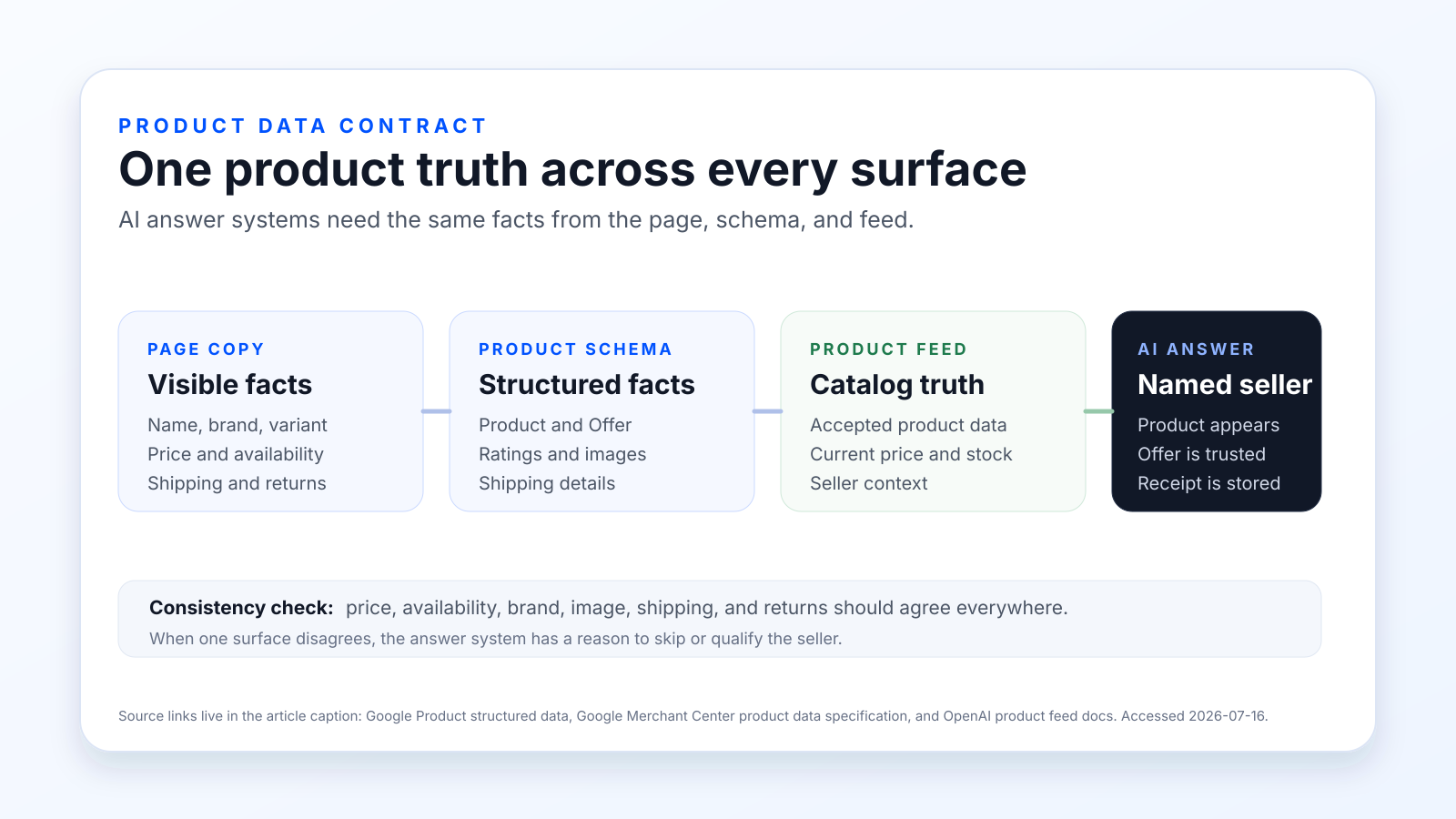
Step 4: keep product feeds eligible
A product feed is the machine-readable catalog layer. Verified as of 2026-07-16, OpenAI's commerce docs say a structured product feed helps ChatGPT index and display products with up-to-date price and availability.
Google points in the same direction through Merchant Center. Product data is the matching layer between a buyer query and the products Google can show or use across Search experiences. If a product is missing, stale, or disapproved there, the page may still exist but the product is weaker in answer surfaces.
For product feed AI search work, start with the boring fields: id, title, description, link, image, price, availability, brand, identifiers, shipping, and returns.
Step 5: answer buyer questions on the page
Buyer-question content is where FAQ schema helps, but only as one layer. A page should answer the questions a shopper asks before AI can recommend the product: authenticity, compatibility, size, use case, ingredients, warranty, shipping speed, return policy, and free-shipping threshold.
This is where the tactical article connects back to the broader AEO for ecommerce frame. AEO is not a schema plugin. It is the work of making the product, offer, seller, and proof easy to extract.
FAQ schema can label a useful Q&A block. It cannot fix a thin product page, a missing brand field, or an offer feed that says something different from the page.
Step 6: measure answer receipts
Answer receipts are the proof layer. A rank tracker will not tell you whether ChatGPT, Gemini, Google AI Mode, or Claude names your store when a shopper asks where to buy a product.
Mention Network's shipped AI Visibility Check currently runs 5 buyer intents across 4 engines, which creates 20 raw answer receipts for one product, one location, and one language. The useful audit is 20 of 20 raw answers, because "where to buy" and "cheapest place to buy" can name different sellers.
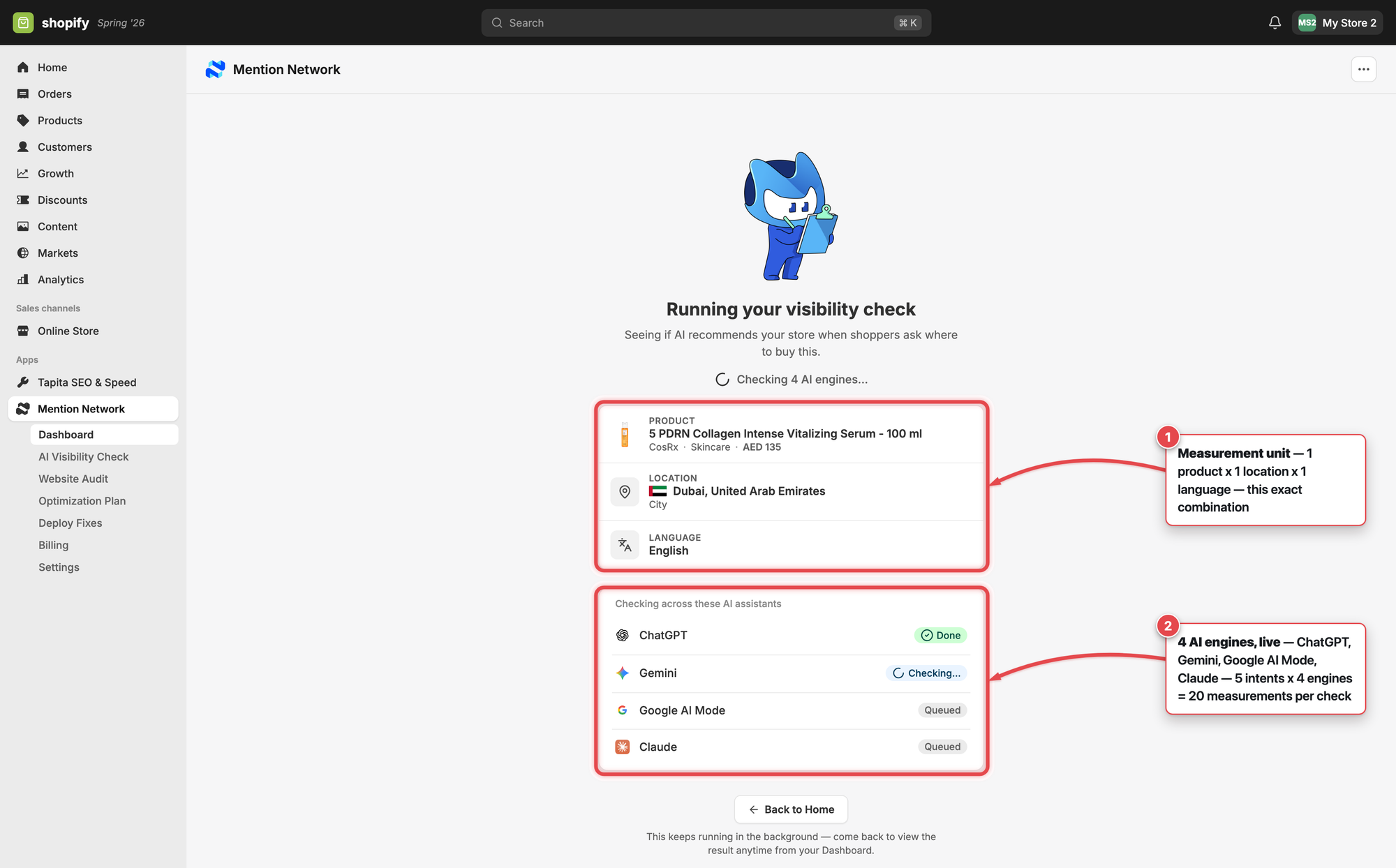
Read the raw answers before you rewrite the page. The where-to-buy answer anatomy gives you the fields to score: presence, rank, competitors, and price plus shipping.
What to fix first
Fix the gate closest to the missing answer. If the product is not crawled or feed-eligible, schema copy will not rescue it. If the product is eligible but AI names competitors, the page probably needs stronger buyer information, better offer clarity, or more store trust.
Put the checklist next to your AI product visibility workflow:
- Confirm the product page is crawlable.
- Match product identity across page, schema, and feed.
- Verify price, stock, shipping, and returns.
- Check Merchant Center or product feed status.
- Add buyer questions the page does not answer.
- Re-run the product answer prompt set.
Want the 20-answer receipt grid for one product? Run a free check.
Frequently asked questions
How do I get products into AI answers?
Make each product page crawlable, complete product identity fields, expose price and availability through Product and Offer data, keep feeds accurate, answer buyer questions on the page, and measure raw AI answers across buyer prompts.
Is FAQ schema enough for product AI answers?
No. FAQ schema can help answer extraction, but product answer visibility also needs product identity, offer data, feed eligibility, visible buyer information, trust signals, and measurement.
What should ecommerce stores measure first?
Start with where-to-buy, best-place-to-buy, authentic, cheapest, and free-shipping prompts for one product, one location, and one language. Then compare whether the store appears, who outranks it, and which fields AI states.