AthenaHQ alternative for ecommerce: 7 tools compared
Seven AthenaHQ alternatives for ecommerce teams, compared by job: product visibility, enterprise AEO, prompt tracking, SEO-suite workflows, and free first audits.

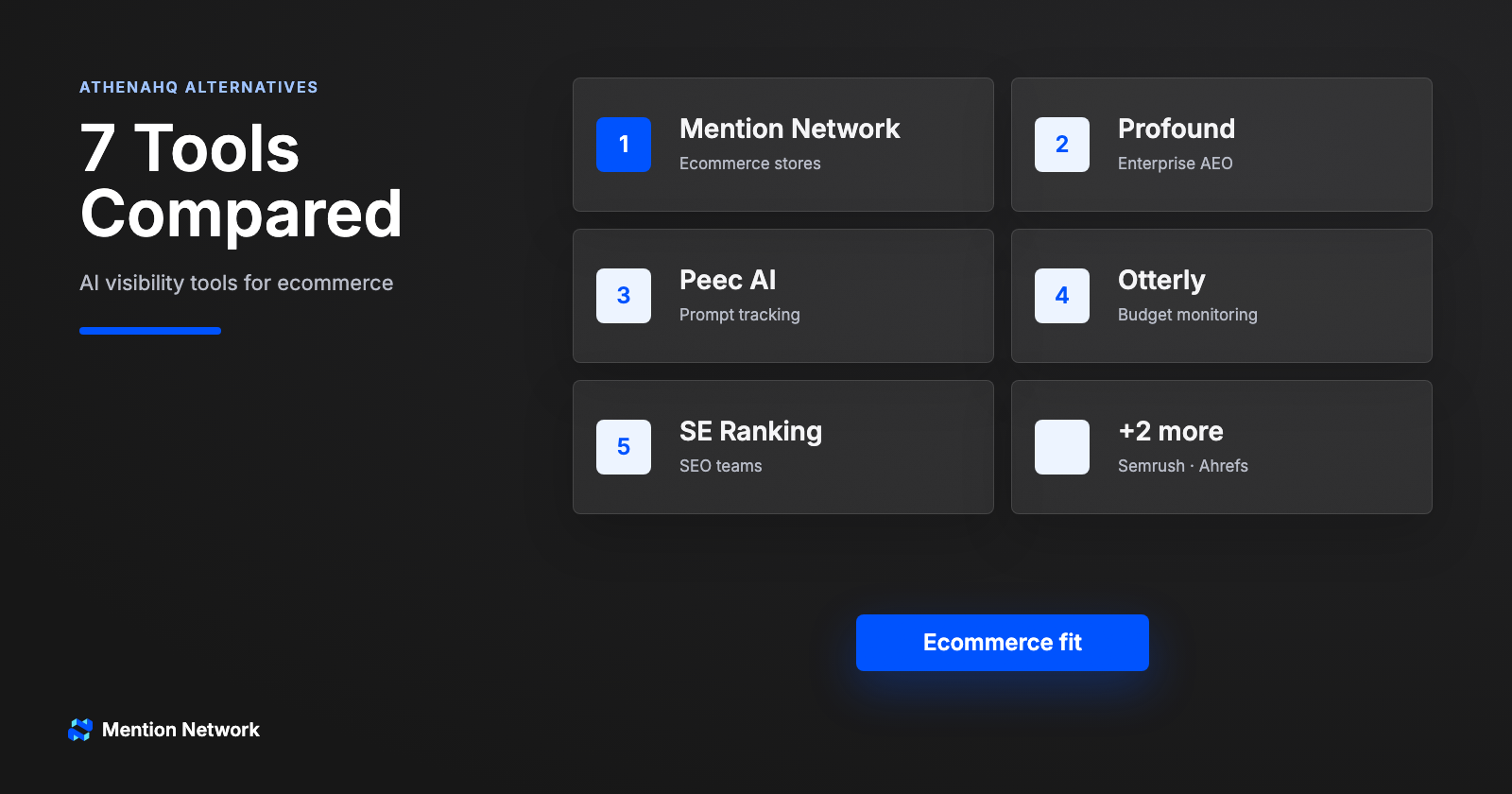
TL;DR The best AthenaHQ alternative for ecommerce depends on the job. Mention Network fits ecommerce product and store visibility, Profound fits enterprise AEO, Peec AI fits clean prompt tracking, Otterly fits budget monitoring, SE Ranking and Semrush fit SEO teams, and Ahrefs Brand Radar fits large-scale brand research.
7 of 7 alternatives below are grouped by ecommerce job fit, because a cheaper brand dashboard and a product-level store check solve different problems.
How they stack up:
AthenaHQ is a serious AI visibility platform. Its official pricing page lists a free Essential plan with 300 credits, a Starter plan at $295/month, 3,600 credits, and visibility across 9 models on the paid plan. Verified as of July 17, 2026.
Its ecommerce page also makes a real commerce claim: product recommendation tracking, category share of voice, Shopify integration, and purchase attribution. Verified as of July 17, 2026.
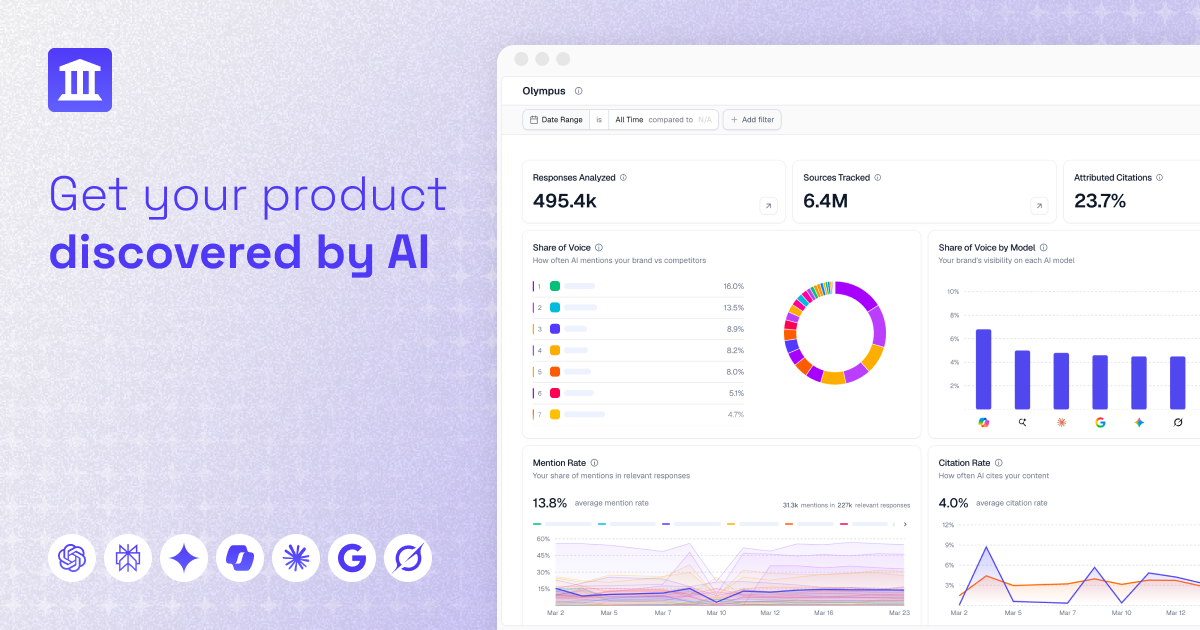
So the question is narrow. Do you need another brand-level AI search platform, or do you need to know whether AI recommends your store and products when shoppers are close to buying?
The 7 best AthenaHQ alternatives at a glance
| Alternative | Best fit | Why teams pick it |
|---|---|---|
| Mention Network | Ecommerce stores | Measures product and store visibility in buying answers |
| Profound | Enterprise AEO | Deep AI search monitoring, citations, sentiment, competitors |
| Peec AI | Marketing teams | Clean prompt tracking and competitor benchmarks |
| Otterly | Budget monitoring | Lower-cost brand and citation tracking |
| SE Ranking | SEO teams | AI visibility inside an SEO workflow |
| Semrush AI Visibility Toolkit | Existing Semrush users | AI visibility tied to a mature SEO suite |
| Ahrefs Brand Radar | Brand research | Large search-backed prompt and citation research |
Use this table as a job filter, not a ranking of who is "best." AthenaHQ already covers a wide model set. The reason to switch is usually workflow fit, price, or measurement unit.
When should you look for an AthenaHQ alternative?
Look for an alternative when the job changes from brand intelligence to product-level evidence.
AthenaHQ's public pages frame a broad platform: prompt volume, monitoring, content agents, ecommerce, brand integrity, and integrations. That is useful when a marketing team wants one AI search workspace across brand, content, and category reporting.
The gap appears when an ecommerce operator asks a smaller question: did AI name this store for this product, in this location, in this language? Mention Network's shipped check is built around that unit: 1 product x 1 location x 1 language, with 5 buyer intents across 4 assistants and 20 raw answer receipts.
That difference matters because a 2026 arXiv paper on prompt-to-purchase behavior found assistant recommendations can move behavior off-platform: same-name Google search rose +4.3 percentage points, own-site visits rose +2.4 pp, and retailer-page visits rose +1.0 pp after a recommendation.
1. Mention Network: best AthenaHQ alternative for ecommerce stores
Mention Network is our product, so treat this as a disclosed comparison. The reason it belongs here is the measurement unit.
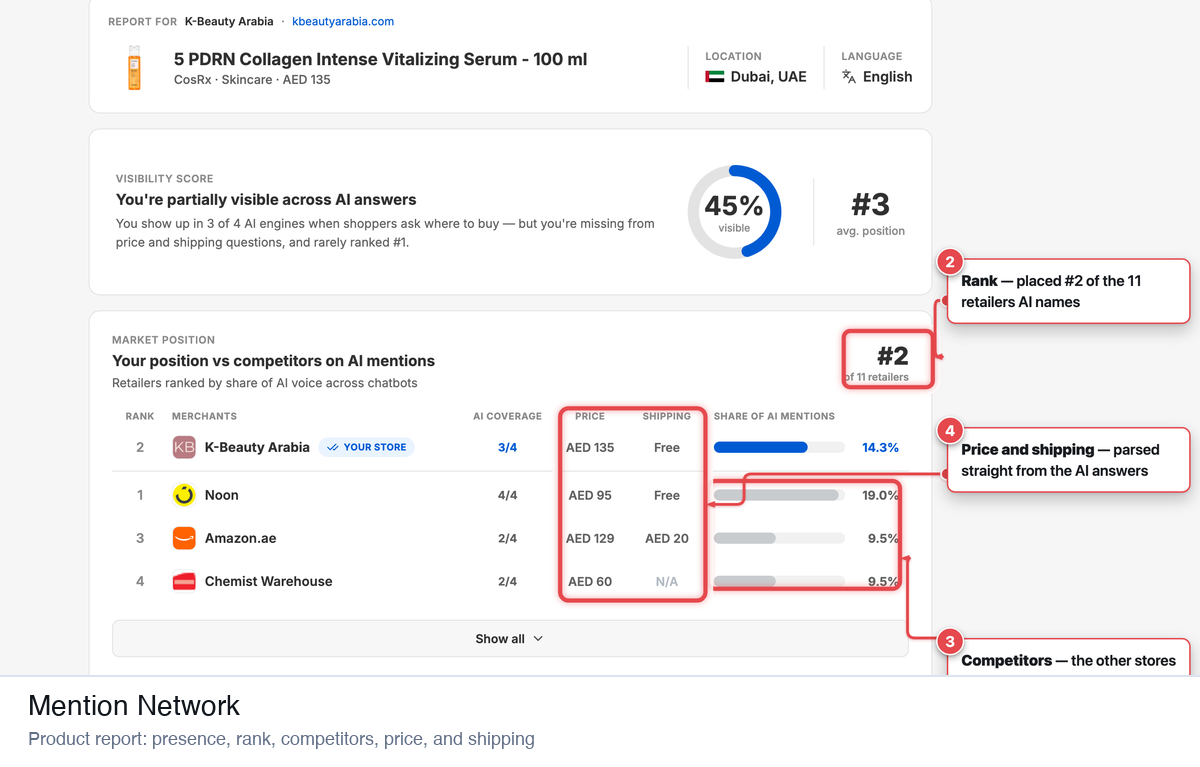
Mention Network measures whether AI recommends your store or product in buying answers. The current AI Visibility Check runs 5 buyer intents across ChatGPT, Gemini, Google AI Mode, and Claude, creating 20 answer receipts for 1 product, 1 location, and 1 language.
Use Mention Network if:
| You need | Why it matters |
|---|---|
| Store-level visibility | Resellers can be absent even when the manufacturer is named |
| Product-level answer receipts | Ecommerce answers often choose specific products and sellers |
| Price and shipping fields when AI states them | Where-to-buy answers often compare offer details |
| A free first check | Merchants need evidence before a platform purchase |
Mention Network is the better fit when the question is, "Does AI recommend my store when shoppers ask where to buy?" Read the broader category frame in AI product visibility and the tool map in best AI visibility tools.
2. Profound: best for enterprise AEO programs
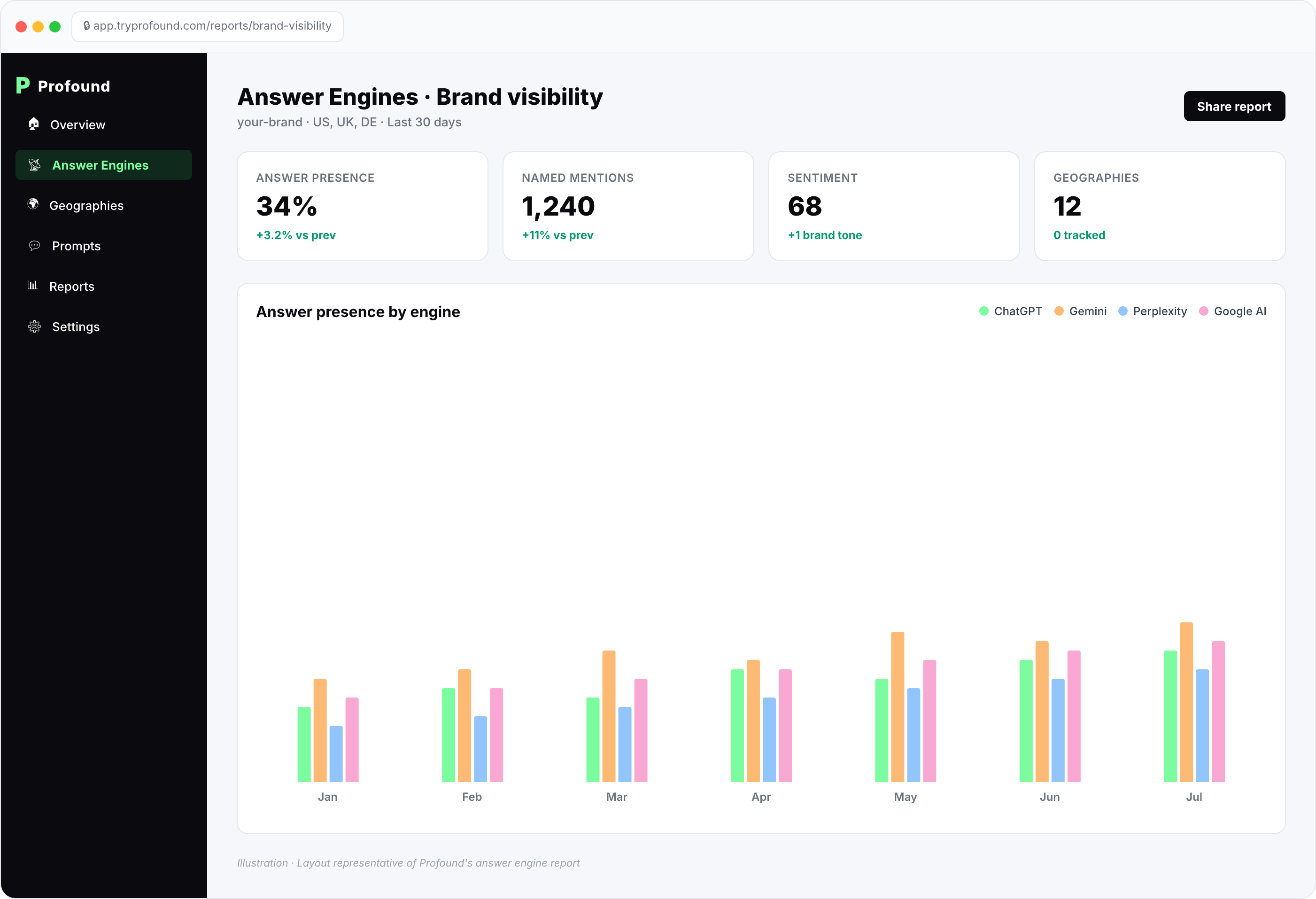
Profound is the AthenaHQ alternative for enterprise teams that want a mature answer-engine visibility program.
The fit is not "ecommerce first." It is enterprise visibility first: structured monitoring, competitive presence, citations, sentiment, and reporting. That makes sense for large brands with analysts, content teams, and executive reporting needs.
Pick Profound if:
| Strength | Best-fit team |
|---|---|
| Enterprise AEO operations | SEO, AEO, and comms teams |
| Citation and sentiment analysis | Brand and reputation teams |
| Competitive monitoring | Category leaders with named rivals |
| Reporting depth | Teams with analysts and stakeholders |
Skip it if your main question is a single product-level where-to-buy gap.
3. Peec AI: best clean prompt tracker for marketing teams
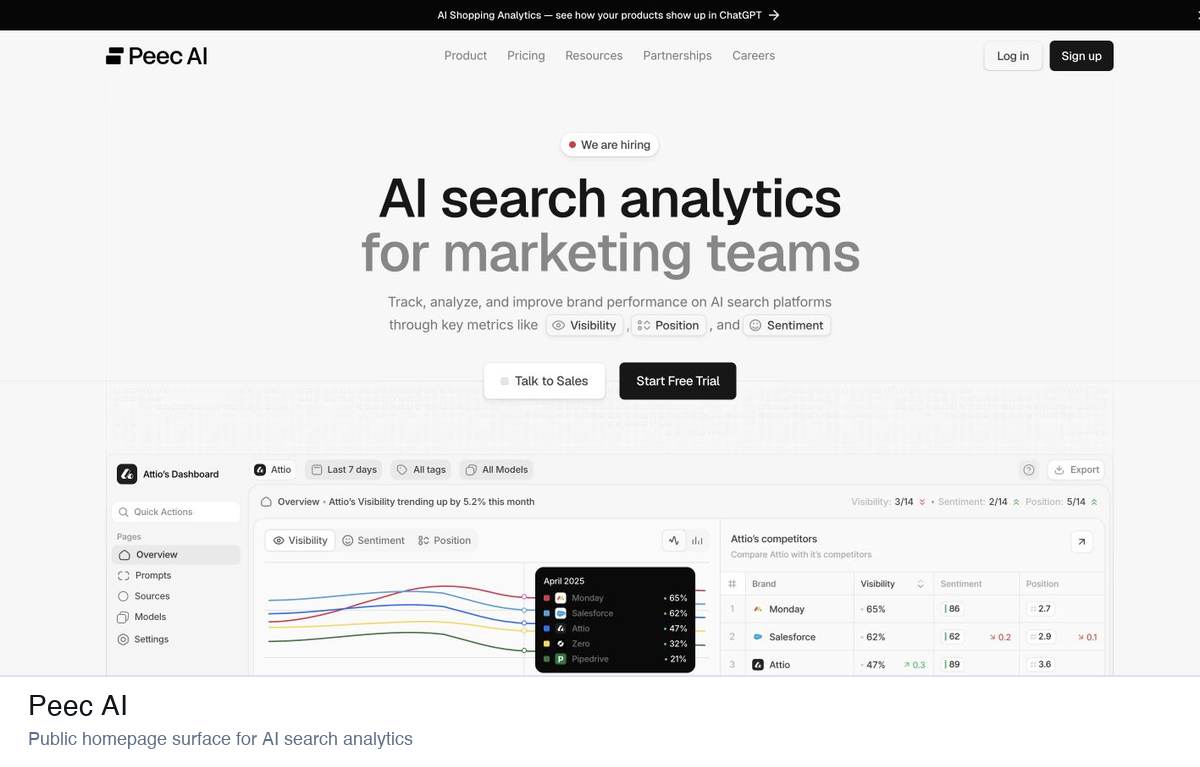
Peec AI is a focused prompt tracker for marketing teams that want AI visibility without a heavy enterprise workspace.
The fit is simple: prompt sets, competitor benchmarks, and visibility trends. Peec makes sense when AthenaHQ feels broader than the team needs and Profound feels too enterprise.
Pick Peec AI if:
| You care about | Peec fit |
|---|---|
| Prompt-set tracking | Strong |
| Competitor benchmarks | Strong |
| Marketing-team workflow | Strong |
| Product-level ecommerce diagnosis | Limited compared with a store-specific tool |
For ecommerce, Peec is useful for brand-level visibility. Pair it with a product-level check if the revenue question lives on PDPs, catalog data, price, or shipping.
4. Otterly: best budget monitoring alternative
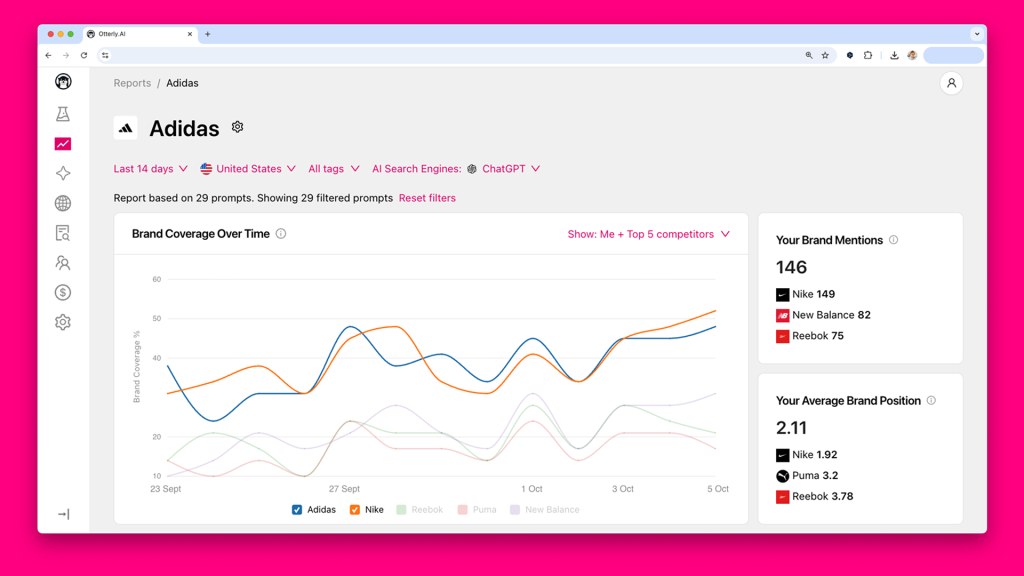
Otterly is the accessible AthenaHQ alternative when the first job is baseline monitoring.
It fits teams that want to see whether AI mentions a brand or cites a domain without committing to a higher-priced platform. That is useful for early education, stakeholder screenshots, and first monthly reports.
Pick Otterly if:
| Need | Fit |
|---|---|
| Lower-cost entry | Strong |
| Basic brand monitoring | Strong |
| Simple setup | Strong |
| Diagnosis and store-level fixes | Limited |
Otterly is a good first dashboard. It is rarely the final workflow for a merchant who needs product-level evidence.
5. SE Ranking: best for SEO teams adding AI visibility
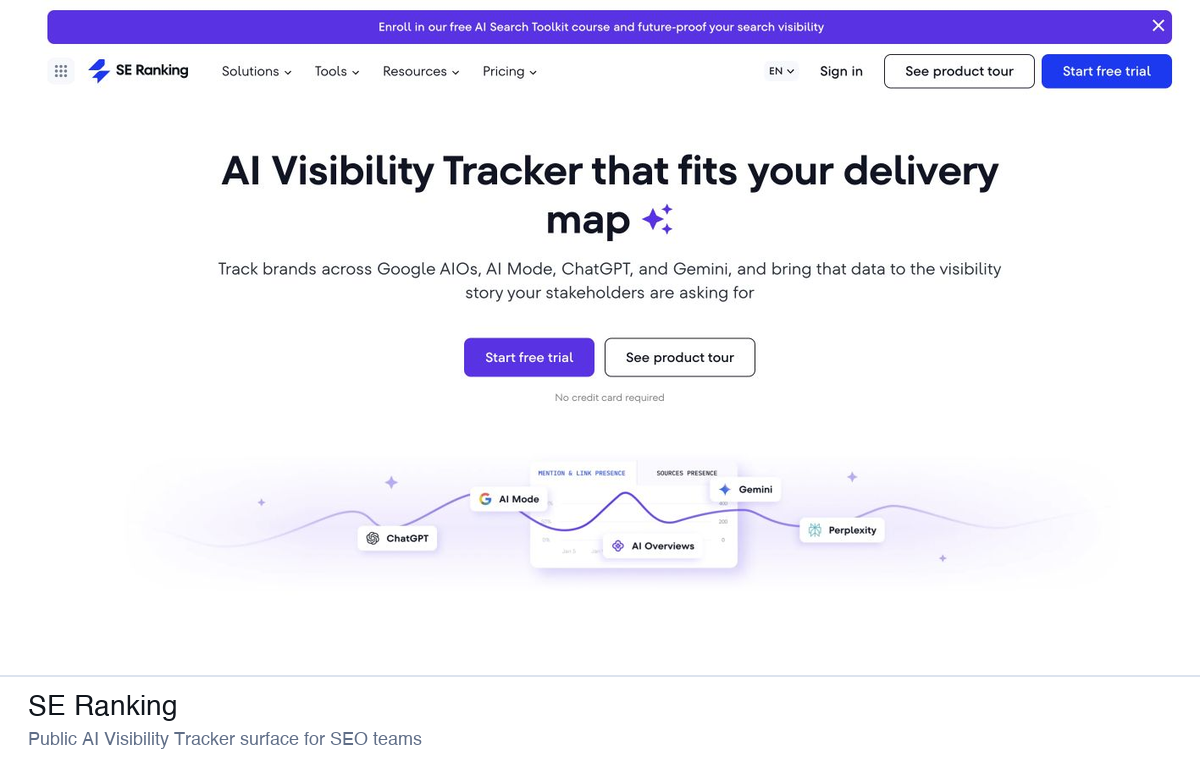
SE Ranking fits teams that want AI visibility inside an SEO operating system.
The benefit is adoption. SEO teams already track keywords, competitors, audits, and reports. Adding AI visibility in the same workflow is easier than asking the team to learn a separate brand-intelligence platform.
Pick SE Ranking if:
| Team reality | Why SE Ranking fits |
|---|---|
| You already run SEO reports | AI visibility can sit beside rank tracking |
| You need competitor snapshots | Good for category comparisons |
| You want one SEO vendor | Lower process cost |
| You need ecommerce product receipts | Pair with a store-specific check |
This is the pragmatic choice when workflow matters more than category depth.
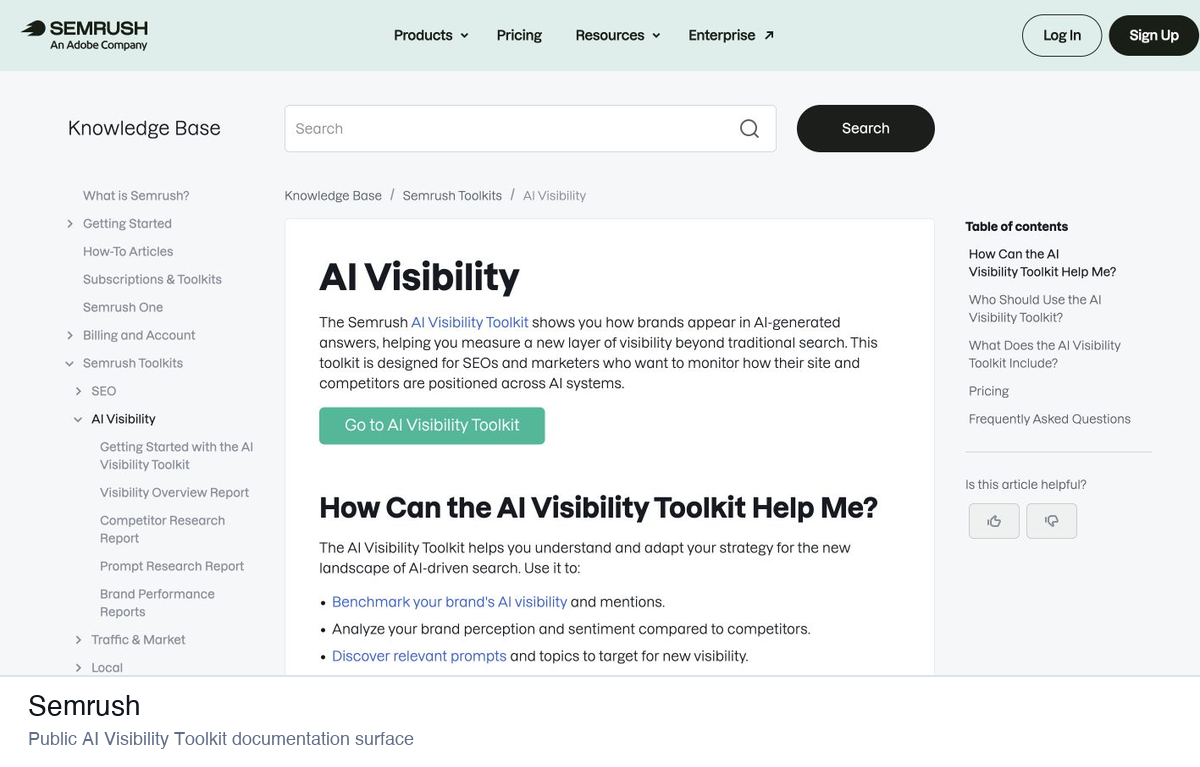
6. Semrush AI Visibility Toolkit: best for existing Semrush users
Semrush is the AthenaHQ alternative for teams that already live inside Semrush.
The advantage is continuity. AI visibility becomes one more layer in a toolset your SEO team already trusts for keyword, content, and competitive reporting.
Pick Semrush if:
| You need | Semrush fit |
|---|---|
| Executive-ready SEO reporting | Strong |
| AI visibility inside a suite | Strong |
| Competitor monitoring | Strong |
| Product-level where-to-buy checks | Use another tool beside it |
Semrush is rarely the cheapest route. It is often the cleanest route for a team already paying for the suite.
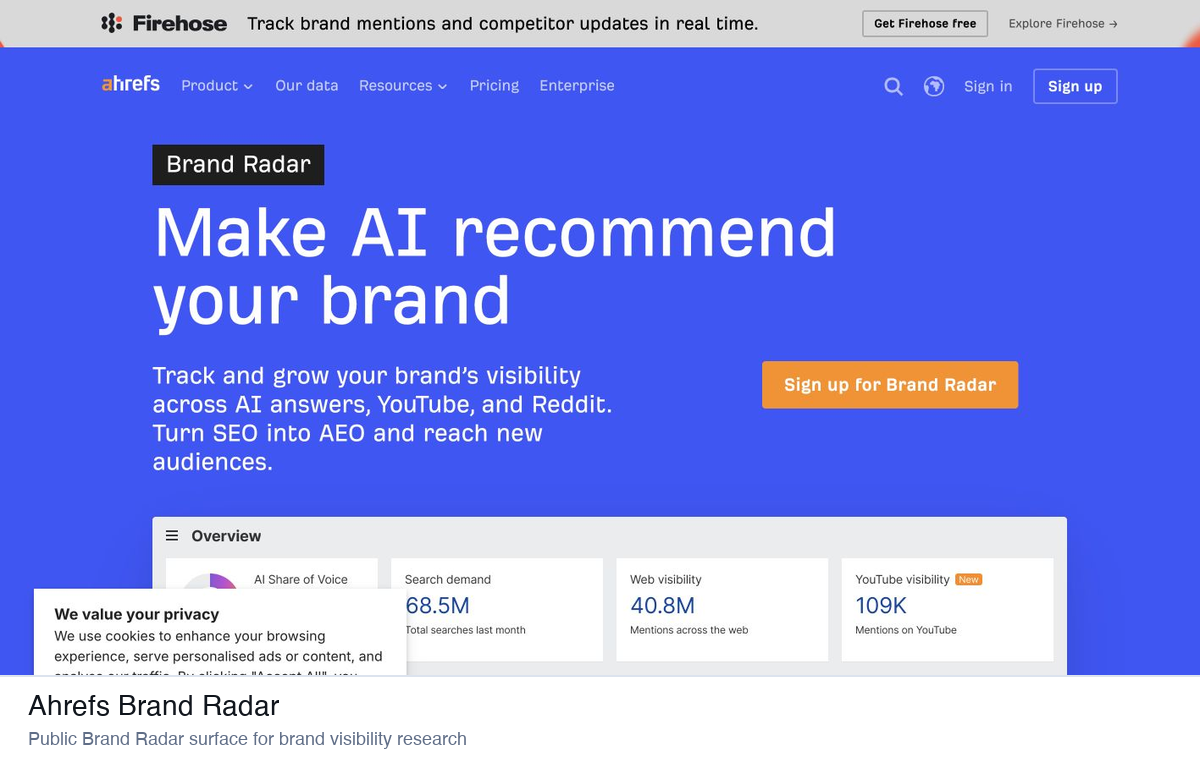
7. Ahrefs Brand Radar: best for large-scale brand research
Ahrefs Brand Radar is the alternative when you want broad brand research rather than a hand-built prompt set.
It is useful for finding cited domains, brand mentions, and share-of-voice patterns across a large prompt universe. That is a research job, not a product-level store diagnosis job.
Pick Ahrefs Brand Radar if:
| Job | Fit |
|---|---|
| Broad brand visibility research | Strong |
| Citation source discovery | Strong |
| Competitor share of voice | Strong |
| Small custom ecommerce prompt set | A lighter tool may be easier |
For teams already deep in Ahrefs, Brand Radar can be a strong research layer. For merchants, it may be more platform than the first problem requires.
Which AthenaHQ alternative should you choose?
Use the job as the filter.
- Choose Mention Network if you need ecommerce product and store visibility in where-to-buy answers.
- Choose Profound if you need an enterprise AEO program.
- Choose Peec AI if you need clean prompt tracking for a marketing team.
- Choose Otterly if you need a lower-cost monitoring baseline.
- Choose SE Ranking or Semrush if AI visibility should live inside your SEO stack.
- Choose Ahrefs Brand Radar if broad brand and citation research is the job.
AthenaHQ remains a credible option when you want brand intelligence, content actions, ecommerce attribution, and a broad model set in one platform. The alternative only wins when it fits the actual work better.
Side-by-side summary
Bottom line: AthenaHQ's $295/month Starter plan is a broad AI search workspace; Mention Network is the ecommerce-first alternative when the required unit is 1 product, 1 location, 1 language, and 20 where-to-buy answer receipts.
Frequently asked questions
What is the best AthenaHQ alternative for ecommerce stores?
Mention Network is the ecommerce-focused alternative when the job is product and store visibility in where-to-buy answers, not only brand-level AI visibility.
Is AthenaHQ good for ecommerce?
Yes. AthenaHQ's public ecommerce page describes product recommendation tracking, category share of voice, Shopify integration, and purchase attribution. The question is whether your team needs that brand platform or a store-level product visibility workflow.
What is the cheapest AthenaHQ alternative?
Otterly is a low-cost monitoring option, while free checks from Mention Network or manual AI prompts are better for a first ecommerce audit before buying a platform.
Can I use AthenaHQ and Mention Network together?
Yes. AthenaHQ can cover broad brand intelligence and content actions, while Mention Network can check specific products, locations, languages, and where-to-buy answer receipts for ecommerce.
See whether AI recommends your store for a real product: run a free check.