
How to master keyword optimization with AI agents: A simple guide
A practical guide to keyword optimization with AI Agents: intent-based research, keyword mapping, structured content, technical SEO, and ongoing performance monitoring.

Mastering keyword optimization is now a core part of brand visibility. With the rise of AI-powered tools like AI Agents, brands must rethink traditional keyword strategies. Instead of relying on basic keyword lists, AI Agents now allow for a more refined, intelligent approach to keyword optimization.
Here’s how to use AI Agents to strengthen your SEO strategy, with techniques that go beyond traditional methods and keep your content optimized for the future of search.
What is keyword optimization and why it matters
Keyword optimization is the process of researching, selecting, and strategically placing keywords into your content to improve your ranking on search engines. However, with the rise of AI Agents and advanced search algorithms, keyword optimization has evolved from a simple task of stuffing keywords into content to a more strategic process that focuses on content relevance, context, and user intent.
Why traditional keyword optimization is changing
Traditionally, keywords were the primary factor for ranking content on search engines. Brands would research high-traffic keywords and strategically place them on webpages to achieve a high ranking. But with AI-powered systems like Google’s AI Search and other Generative AI models, the focus has shifted.
AI Agents, such as ChatGPT, now generate answers based on keywords, context, semantics, and user intent. This means that keywords alone are no longer enough to guarantee visibility.
The role of AI in keyword optimization
AI-driven keyword optimization has changed the rules of SEO. AI Agents rely on a broader set of signals beyond simple keywords, which means optimization now involves understanding how LLMs interpret and prioritize content. AI SEO and AI SEO Optimization are about ensuring your content works for traditional algorithms and for the way AI models understand and retrieve information.
You can try a free AI Visibility tool at mention.network to see how your brand shows up in AI answers.
If you have any questions, email us at [email protected], or book a quick call for free support with our team.
How to do keyword optimization with AI agents
Successfully optimizing keywords with AI Agents requires a different approach compared to traditional SEO methods. Below are five key steps to mastering keyword optimization for AI-powered search results.
1. Keyword research and grouping
Keyword research is still the starting point of any SEO strategy, but with AI agents, it’s important to focus on grouping keywords based on user intent, rather than focusing purely on search volume or competition.
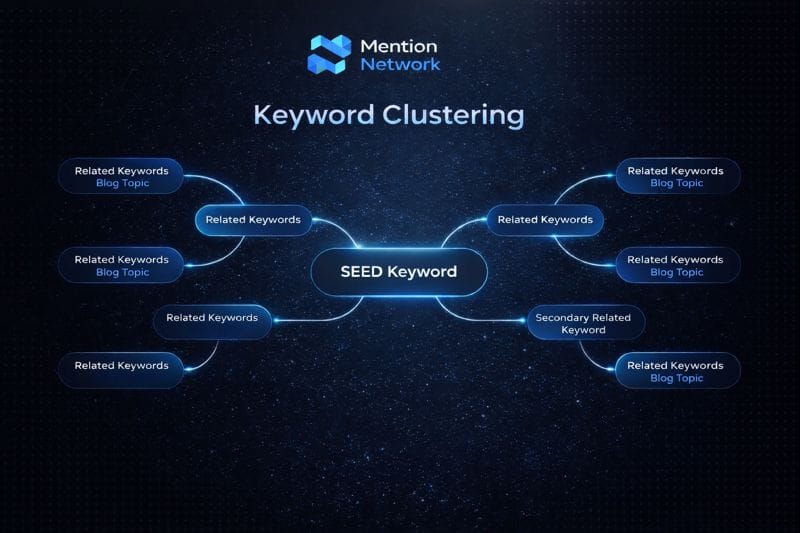
- Use AI-powered tools: AI-powered SEO tools, like AI for SEO platforms, can analyze keyword performance across various AI models, such as ChatGPT, Google AI, or Gemini. This allows you to understand which terms are most relevant to your brand and which queries your audience is most likely to use.
- Focus on intent: Instead of solely looking at keywords with high search volume, consider the intent behind each search. AI-driven searches are increasingly context-sensitive. The underlying intent behind a search query is just as important as the keyword itself.
By grouping your keywords based on intent and relevance, you can ensure that your content is aligned with the way AI models are prioritizing search queries.
2. Map your keywords
Once you have your keyword groups, the next step is to map those keywords to the appropriate sections of your content. AI Agents, like ChatGPT or Google’s AI models, prioritize clarity and structure when interpreting content.
- Create a content map: Organize your keywords into the sections of your content where they naturally fit. This helps AI models easily extract relevant information and improve your AI Visibility.
- Use semantic grouping: With AI-driven systems, what matters is how keywords are used within the context of the content. For example, instead of repeating the word "AI SEO" multiple times, group it with synonyms and related terms to make the content more semantically rich.
This mapping ensures that AI models can identify and categorize your content more effectively, leading to better rankings in AI-generated answers.
💡Learn more: 2026 SEO Strategy: Optimize AI Content to Beat Google's Algorithm
3. Create quality content
AI models are trained to prioritize high-quality, relevant content. To optimize for AI Agents, content must be clear, concise, and structured to align with user intent.
- Prioritize clarity and relevance: Your content should focus on answering specific questions and offering value to the user. For example, instead of a broad article about “AI SEO,” focus on how AI SEO impacts specific industries or use cases.
- Structure your content for AI readability: Break your content into digestible sections with headings, bullet points, and clear definitions. AI Agents prefer structured content that is easy to parse and understand.
By creating high-quality content, you improve your chances of ranking on search engines and increase your visibility within AI-driven search results.
4. Technical optimization elements
AI models also depend on the technical structure of your website to determine content relevance. These elements include page speed, mobile responsiveness, URL structure, and schema markup. Proper technical optimization can significantly enhance AI Search Visibility and your overall SEO performance.
- Schema markup: Implementing schema, such as FAQ or Product schema, helps AI models quickly identify key elements of your content, improving the chances of being included in AI-generated answers.
- Mobile optimization: Most AI-driven searches take place on mobile devices, so your website needs to work flawlessly on mobile.
- Page speed: Faster load times ensure that AI models can crawl your content without interruptions, improving your chances of ranking higher.
These technical elements improve AI Search Visibility by making your content more accessible to AI models, which enhances your chances of appearing in AI answers.
5. Monitor keyword performance and refine your content
AI models evolve rapidly, and so should your content. Regularly monitoring the performance of your keywords is essential for keeping up with changes in AI Search and ensuring long-term success.
- Use AI-powered SEO tools: Tools like Mention Network or other AI SEO tools can provide real-time insights into how often your brand or content is mentioned across different AI models and how it compares to competitors.
- Adjust based on data: As you gather data on which keywords perform best in AI-driven searches, refine your content to better align with those keywords and optimize your AI SEO strategy.
Continuous monitoring ensures that your keyword optimization efforts remain relevant and effective.
💡Read more: SEO Content vs AI-Friendly Content: Same Page, Different Outcome in AI Visibility
The future of keyword optimization with AI agents and why it still matters for SEO
As AI-driven search engines continue to evolve, the importance of keyword optimization will not diminish. In fact, the role of AI SEO will only increase as more consumers turn to AI-powered platforms for answers.

AI Visibility will be the key to future SEO success. Traditional SEO strategies, while still important, must be adapted for the way AI Agents understand, rank, and reference content.
AI SEO Optimization will continue to focus on ensuring content is easily consumable by AI systems, using structured, clear, and fact-driven content. In the future, AI Agents will play an even bigger role in driving visibility and brand awareness, which makes optimizing for AI search engines a necessity for modern SEO strategies.
Keyword optimization with AI Agents comes down to clarity, structured content, and continuous performance tracking. Get those right and AI systems can trust, reuse, and recommend your content.
FAQs
How does AI SEO differ from traditional SEO?
AI SEO goes beyond keyword ranking. It focuses on ensuring that content is trusted, clear, and easy to extract by AI models. It is about improving visibility in AI-driven search engines like ChatGPT, Gemini, and others.
What are the most important elements for AI SEO optimization?
Key components for AI SEO optimization include clear definitions, well-structured content, schema markup, semantic grouping of keywords, and continuous monitoring of keyword performance.
Why is content structure important for AI SEO?
AI models prioritize structured content because it is easier for them to process and understand. Well-organized content increases the likelihood of being included in AI-generated answers.
How can I track my AI SEO performance?
Using AI-powered tools like Mention Network, you can track your brand’s AI Search Visibility and keyword performance across different AI models. These tools help you identify areas for improvement and optimize your AI SEO strategy.