
The Three Layers of AI Visibility (and Which One Pays Your Store)
Brand mentions, where-to-buy presence, and agentic checkout are 3 different measurements sold under one name. Which layer does your business actually get paid on?

TL;DR AI visibility is 3 measurements sold under 1 name: brand mentions (layer 1), where-to-buy presence (layer 2), and agentic checkout readiness (layer 3). Most tools measure layer 1. Stores get paid on layers 2 and 3. One number shows the split: a proper check of a single product currently runs 5 buyer intents across 4 assistants, 20 measurements, and not one is a brand mention.
For 10 years, search visibility had one shared definition: where you ranked. A candle shop and a Fortune 500 tracked the same number.
AI visibility never got that luxury. The term covers 3 different measurements, and they serve different businesses. So when a tool, an agency, or a LinkedIn thread promises to improve your "AI visibility," the useful first question is: which layer?
The three AI visibility layers, in one pass:
- Brand visibility. Does AI talk about your brand?
- Product visibility. Does AI list your store as a place to buy?
- Agentic readiness. Can an AI agent complete the purchase?
Layer 1: does AI talk about your brand?
Brand mentions, share of AI voice, sentiment. This is what most AI visibility tools measure today, and it's the closest cousin to the brand monitoring we did in the SEO era: PR tracking with a new surface.
If you own a brand and run a marketing team, layer 1 is a real metric. Nike wants to know how assistants describe Nike.
Layer 2: does AI list your store as a place to buy?
Commercial-intent queries moved to assistants too. A shopper asks ChatGPT "where can I buy Brooks Ghost 16 in Toronto" and gets a shortlist of stores. Your store is on that list, or it's invisible for that sale.
The unit changes between these layers. Layer 1 counts a name; layer 2 checks whether your store and product make a specific answer. In SEO terms: layer 1 is brand SERP monitoring, layer 2 is ranking for the money keyword. We broke this split down fully in the product visibility guide.
Layer 3: can an AI agent actually buy from you?
The newest layer, and the easiest one to miss. Assistants are turning into agents: ChatGPT can complete a purchase through Instant Checkout and the Agentic Commerce Protocol, while MCP lets agents talk to commerce backends directly.
Being named in the answer gets you considered. The sale still depends on whether the agent can parse your product feed, trust your data, and get through your checkout. A store can win layer 2 and lose the purchase at layer 3.
In SEO terms, this is the jump from ranking to conversion, except the visitor is software.
Which layer is your money in?
Put the three AI visibility layers side by side and the mismatch is easy to spot:
A brand marketing team lives in layer 1. A store lives in layers 2 and 3, and that's where the mismatch bites: most of the tooling on the market measures layer 1, so stores buy mention dashboards and learn how famous Nike is.
Here's a concrete way to feel the difference. Our free check currently runs 5 buyer intents across 4 assistants (ChatGPT, Gemini, Google AI Mode, Claude): 20 measurements for 1 product in 1 location, and 0 of 20 count a brand mention. All 20 ask a version of the only question a store gets paid on: who does AI send the shopper to?
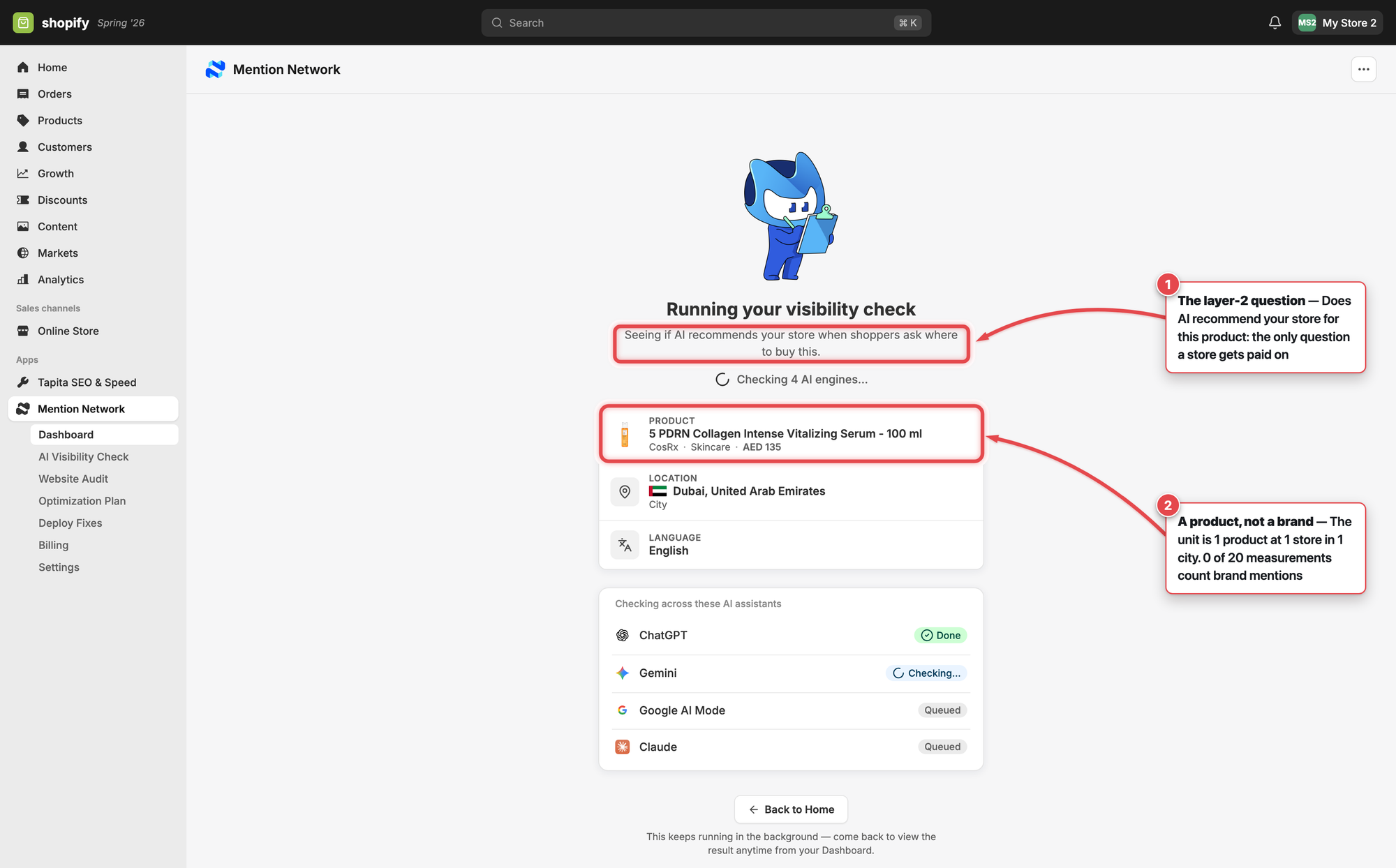
Keep the mention tracker if you own a brand; it does its job. If you run a store, measure layer 2 this week with a free check, and put layer 3 on your radar before AI agents start doing your customers' buying for them.
Frequently asked questions
What are the three layers of AI visibility?
Layer 1 is brand visibility: does AI mention your brand. Layer 2 is product visibility: does AI list your store as a place to buy in where-to-buy answers. Layer 3 is agentic readiness: can an AI agent parse your product data and complete a purchase. Each layer is measured differently and serves a different business.
Is agentic commerce the same as AI visibility?
It's the third layer of it. Classic AI visibility asks whether AI mentions or recommends you. Agentic commerce asks whether an AI agent can transact with you: read your feed, trust your data, and traverse checkout through standards like ACP and MCP. Being named gets you considered; being transactable gets you the sale.
Which layer should a Shopify store care about?
Layer 2 first: whether AI names your store in where-to-buy answers for the products you carry. Then layer 3, as assistants add agent checkout. Layer 1 brand tracking matters mainly if you own the brand you sell and run marketing for it.